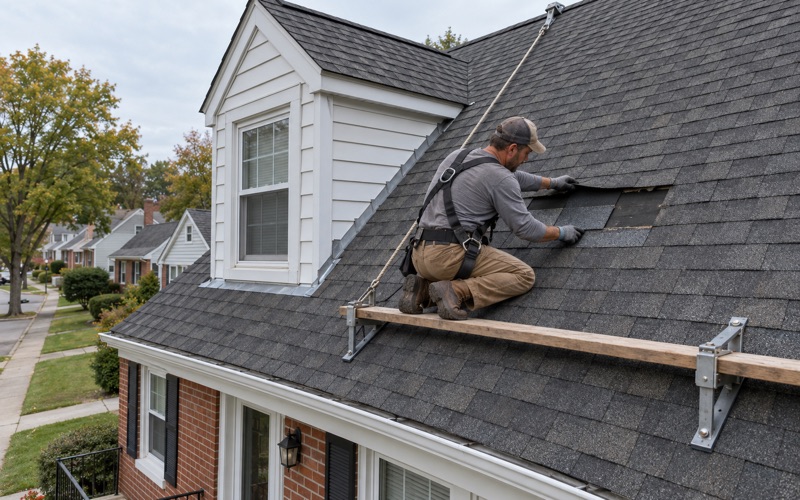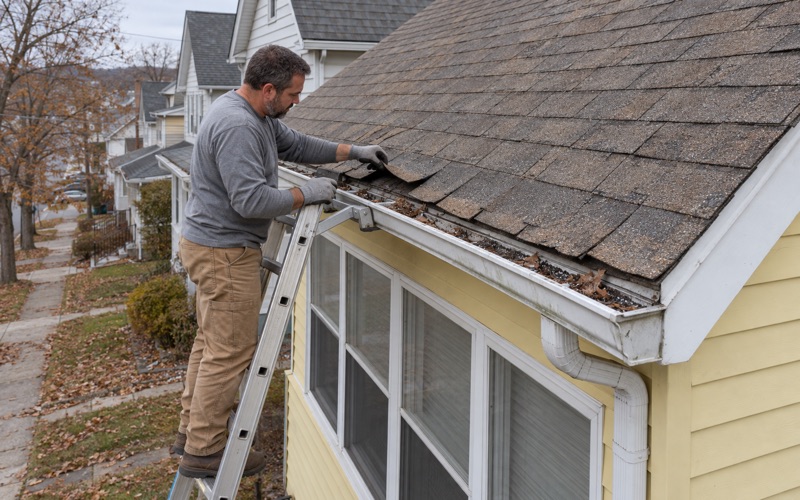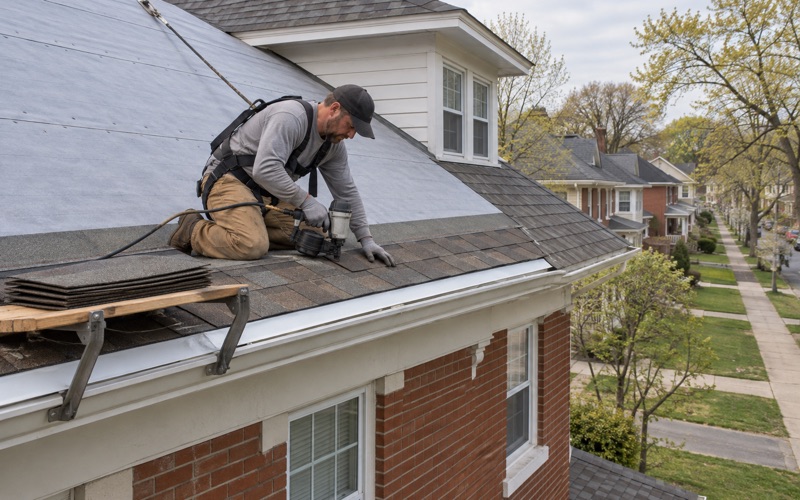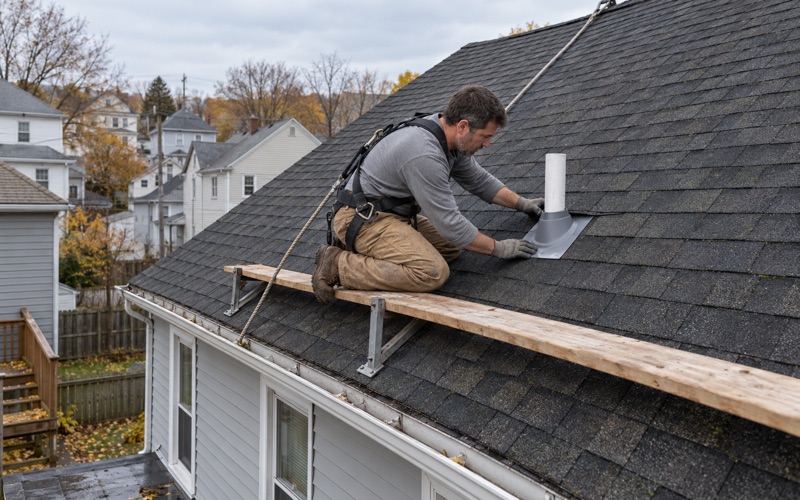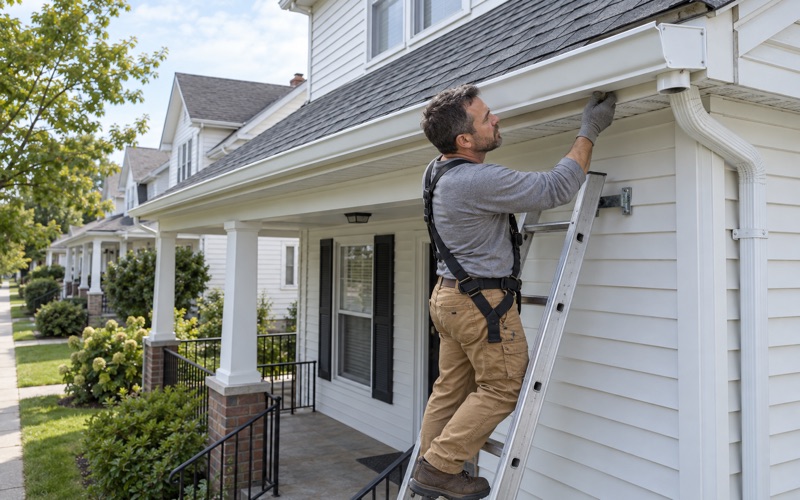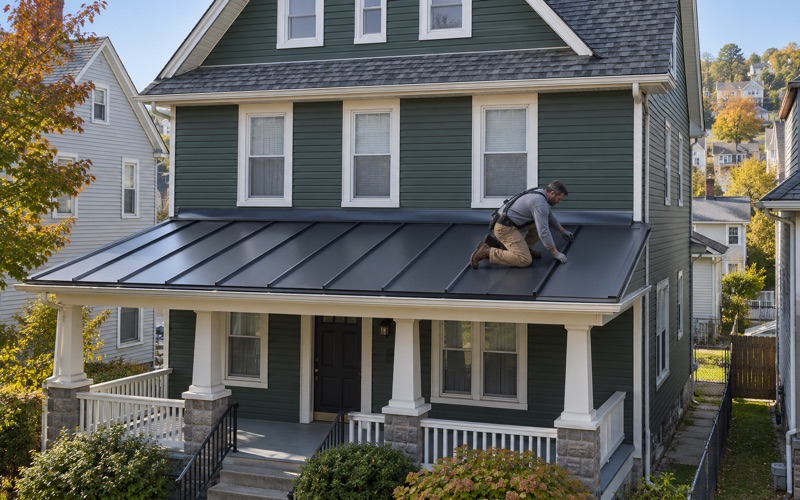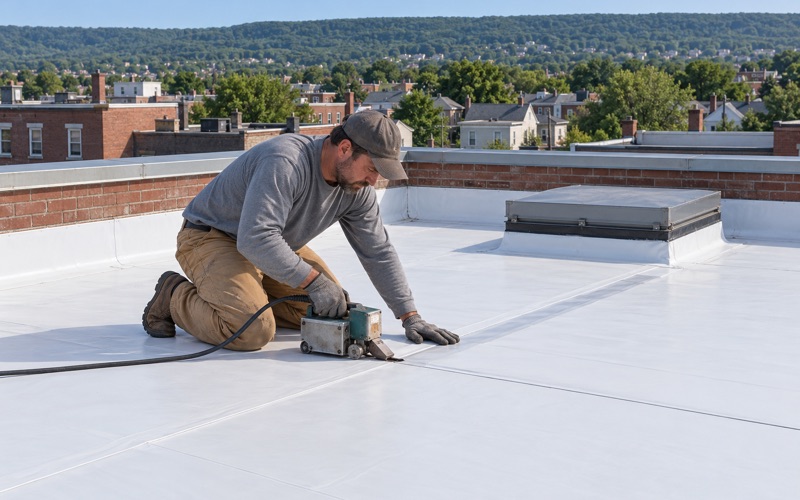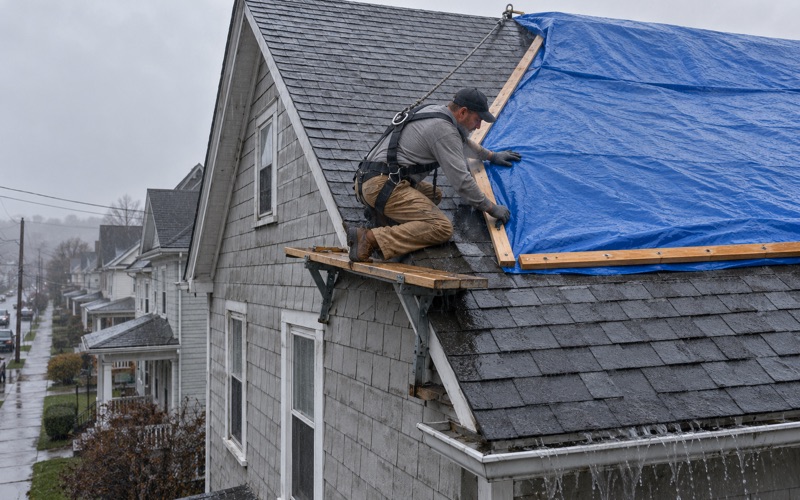
Scranton Quality Roofing has spent more than 20 years on roofing in Wilkes-Barre and the surrounding valley, and the first thing we do on a city job is the paperwork question, not the ladder. Wilkes-Barre writes roofing into its own permit rules by name, so we confirm what the city asks for on your address before a single line of the estimate is priced.
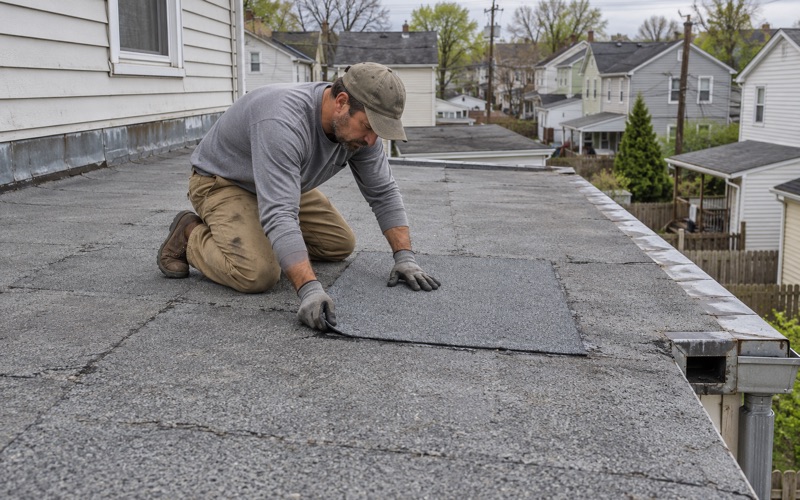
From there the work follows the same order every time. A leak call gets a look from the attic side as well as the shingle side, because the stain on a bedroom ceiling rarely sits under the spot where water actually enters. You get a plain answer on whether the roof can be repaired before anyone mentions a replacement.
When a new roof is the right call, the written scope breaks out tear-off, decking, underlayment, flashing, ventilation and gutters as separate lines. That lets you hold our number next to anyone else’s and compare them item by item instead of guessing what a lump sum includes.
Roofing Sits on Wilkes-Barre’s Building Permit List
Plenty of Pennsylvania municipalities leave homeowners guessing about whether a roof needs a permit. Wilkes-Barre does not. The city’s Building Permits page lists the types of work that require one, and the building line reads “framing, roofing, sheetrock, siding, etc.” Roofing is named outright, next to electrical, plumbing, HVAC, and driveways and curb cuts.
Who is allowed to apply
The same page limits who can pull that building permit. Applications come from approved Wilkes-Barre City licensed contractors, or from homeowners working on their own primary residence. A homeowner who owns a second house or a rental in the city cannot use the homeowner route for that property, because the page ties it to the primary residence only.
The page also closes a gap some people try to use. Journeymen cannot apply for permits to work under a homeowner’s contract, so a tradesman cannot borrow the owner’s eligibility to file paperwork for a job he is being paid to do. An application only counts once a code enforcement employee approves it.
What that means when you hire a roofer
For an owner, the practical takeaway is simple: ask who is pulling the permit and under what standing. If the answer is the homeowner, the job has to be on the house you live in. If the answer is a contractor, the contractor has to be one the city has approved.
We check the permit rule for each municipality we work in before we price the job, and Wilkes-Barre is a good example of why. The rule here is written down, it names roofing, and it controls who may file. Getting that right at the start keeps a re-roof from stalling halfway through a tear-off.
The code behind the permit
Wilkes-Barre opted in to the Pennsylvania Uniform Construction Code on June 11, 2004, with amendments, and the city’s Code Enforcement office says it enforces the UCC “in its entirety.” That means the 2021 International Residential Code as adopted in Pennsylvania sets the details a roof is built to, including the IRC R905.1.2 ice barrier at the eaves and the IRC R908 reroofing provisions with their two-layer limit. We size a self-adhering ASTM D1970 ice barrier to the overhang on every house, because ice dams form on older valley homes winter after winter.
Looking for roofing closer to Gouldsboro? See Roofing in Gouldsboro.
The City’s Roofing & Siding Contractor License
Wilkes-Barre runs its own contractor licensing, separate from anything the state does. Pennsylvania has no state roofing license, so the city license is the local layer, and its list of categories includes one called “Roofing & Siding” alongside General Contractor, Jobbing Contractor, Mason and Specialty.
What the license requires on paper
The city’s Contractor Licenses & Renewals page says licenses require passing the contractor’s examination, payment, and a copy of an insurance certificate naming the City of Wilkes-Barre as the certificate holder. Every category renews on June 30. The fee for all contractor licenses is $200, with a late charge of $25 for 1 to 45 days and $100 for 46 to 365 days.
The same page also says, “At this time, the City is not offering contractor’s examinations.” The clerk’s office provides a list of testing sites instead. Anyone telling you the city itself is giving the test right now is not reading the current page.
Why the certificate holder line matters to you
The insurance certificate is the part an owner can actually use. Because the city requires the certificate to name the City of Wilkes-Barre as holder, insurance is part of the licensing file rather than a promise made at the kitchen table. Asking any roofer for a copy of the current certificate is a fair question, and so is asking which license category they hold.
The license is a city credential, not a guarantee of workmanship. It sits on top of the statewide rules that already govern every home improvement contract, including the three-business-day right of rescission and the one-third deposit cap on contracts over $5,000. Our contracts carry that cancellation notice and keep deposits inside the legal limit on every job, in Wilkes-Barre or anywhere else.
Questions worth asking before you sign
A short list covers most of it. Who is pulling the building permit, and is that person or company approved by the city to do so? Is there a current insurance certificate on file? Does the written scope show flashing and decking as their own lines, so a change order later has a price already attached?
Permit, Inspection and Dumpster Fees at Code Enforcement
Permits are handled by Code Enforcement on the first floor of City Hall, 40 East Market Street. The office handles code enforcement, licensing and contractor testing questions, and its Building Permits page publishes the fee bands that applied as of April 15, 2025.
The published permit bands
Residential and commercial building permits are priced by the value of the work, and each band includes a $4.50 state fee. Work from $0 to $2,499.99 is $59.50. Up to $4,999.99 is $114.50, up to $7,499.99 is $169.50, and up to $9,999.99 is $224.50. Work at $10,000 and above follows the city’s full schedule, which we read at the counter for each job rather than estimating from memory.
On top of the permit, the city charges an inspection fee: $60 for residential work and $75 for commercial. A small repair that crosses the permit line still carries both the permit band and the $60 inspection fee, which is worth knowing before you compare two quotes where one includes city costs and one does not.
Dumpsters and street space
A tear-off fills a container fast, and Wilkes-Barre prices that too. A dumpster permit on its own is $34.50 for five days. Added to a building permit, it drops to $30 because the state fee is waived. If a job needs a meter space or a no-parking zone for the construction site, the city charges $25 per space per day.
Our written scopes show permit, inspection and dumpster costs as their own line, so you can see exactly what goes to the city and what goes to the roof. At the end of each work day the driveway, yard and gutters are cleaned, including a magnet sweep for roofing nails, which matters on tight city lots where the dumpster and the sidewalk are a few feet apart.
When the house is being sold
Wilkes-Barre also runs a Buyer Notification inspection when a property is purchased, rating it “Approved,” “Not-Approved” or “Conditional,” with a fee of $90 per unit. The city’s page does not mention roofs, so we do not treat that inspection as a roof sign-off. If a sale is coming, a separate roof inspection with photos gives the seller something concrete to put on the Pennsylvania seller property disclosure statement.
Pre-1940 Houses and Attached Homes Across Wilkes-Barre
Wilkes-Barre is the Luzerne County seat and sits along the Susquehanna River in Northeastern Pennsylvania. Its housing stock is old by any measure. Census figures for the city count 9,284 homes built in 1939 or earlier out of 19,781 housing units, close to half of everything standing.
What old framing does to a re-roof
A house that has carried several roofs often hides problems under the last one: board sheathing with gaps, soft spots near chimneys, or a second layer of shingles that has to come off before IRC R908 allows anything new. When damaged decking turns up after tear-off, we photograph it and show you before replacing it, at the per-sheet price already written into the contract.
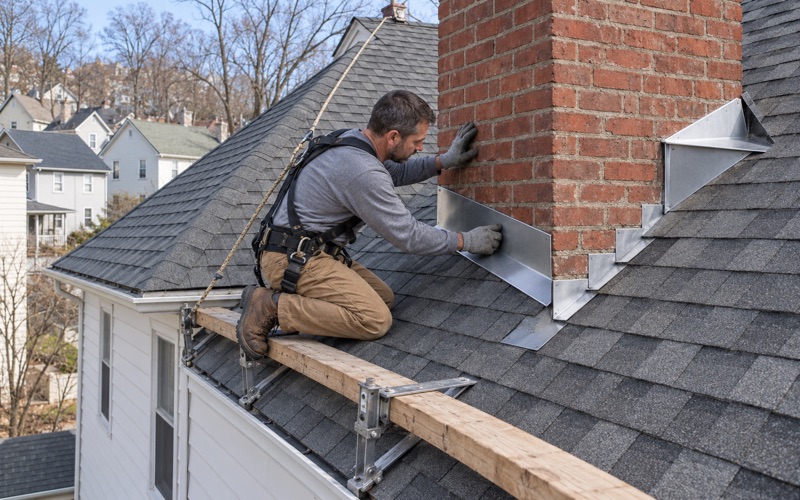
Older chimneys need the same care. Step, counter and chimney flashing comes off with the old roof and goes back new, never reused under fresh shingles, and a wide chimney on the uphill side gets a cricket so water does not pool behind it. Painted trim and fascia on pre-1978 homes are handled under the EPA RRP lead-safe rule.
Attached homes and shared walls
The same census tables count 2,486 attached homes in the city, and more than half of them, 1,260, are renter-occupied. On an attached house, the roof stops at a party wall and meets a neighbor’s roof that may be a different age and a different material. Flashing that seam correctly is the difference between a dry attic and a leak that travels along the shared wall into both units.
Because about 48.8 percent of the city’s occupied homes are rented, we often work for owners who do not live in the building. That brings the permit rule back into play: the homeowner route is for a primary residence, so a landlord’s rental needs a contractor approved by the city to file.
Slate, gutters and storm work
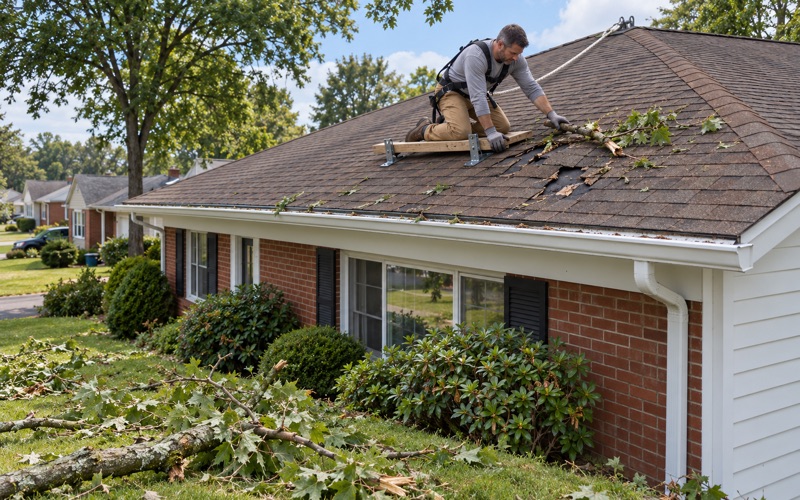
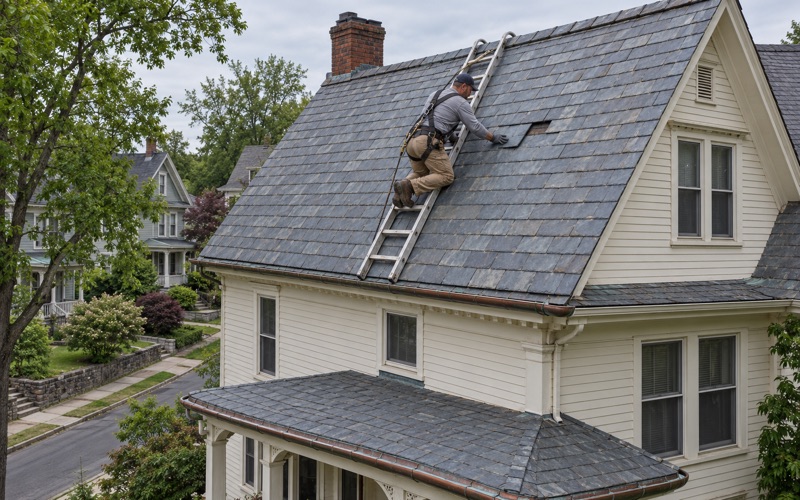
Slate still turns up on older city houses, and a sound slate roof is repaired slate by slate with copper nails and slate hooks before tear-off is ever suggested. Gutters and downspouts are sized and pitched with the roof itself. After a storm, we photograph and write up the damage for your own claim and will meet the adjuster on site when asked, without negotiating the claim for you.
The city also participates in the NFIP Community Rating System at class 6, which gives eligible flood policies a 20 percent discount. That is a flood insurance matter rather than a roofing one, but it is part of the same picture: Wilkes-Barre writes its building rules down, and we work to the rule your own address is under.
- 20+ Years Roofing
- Free Written Estimates
- Repair Before Replace