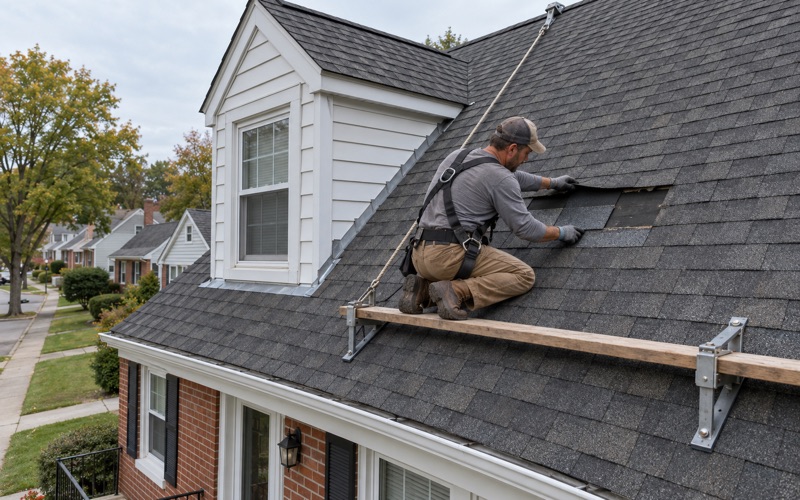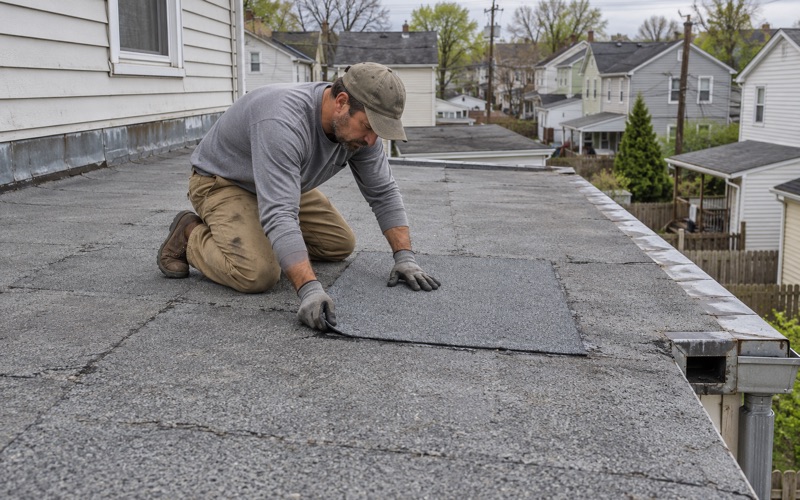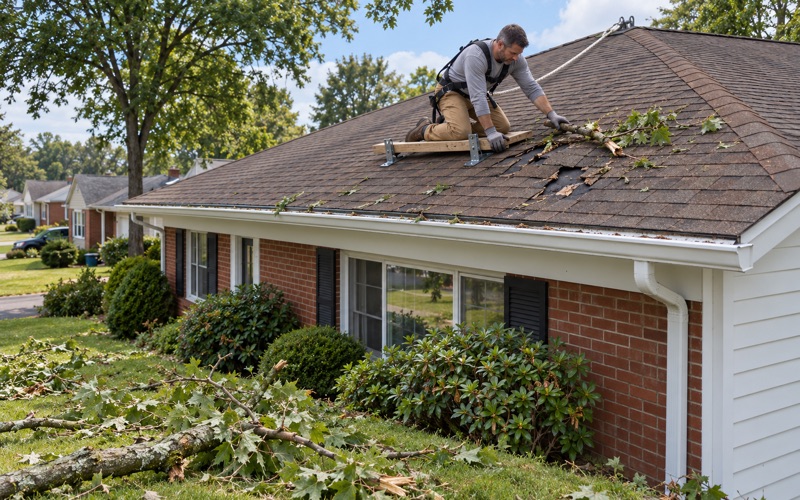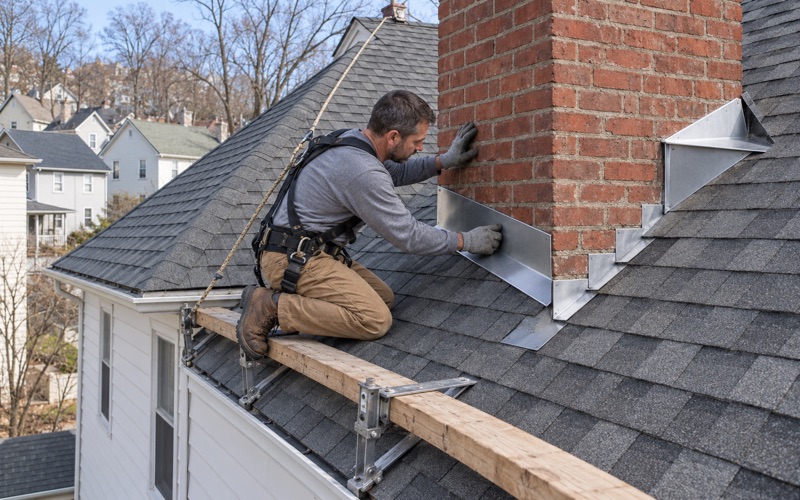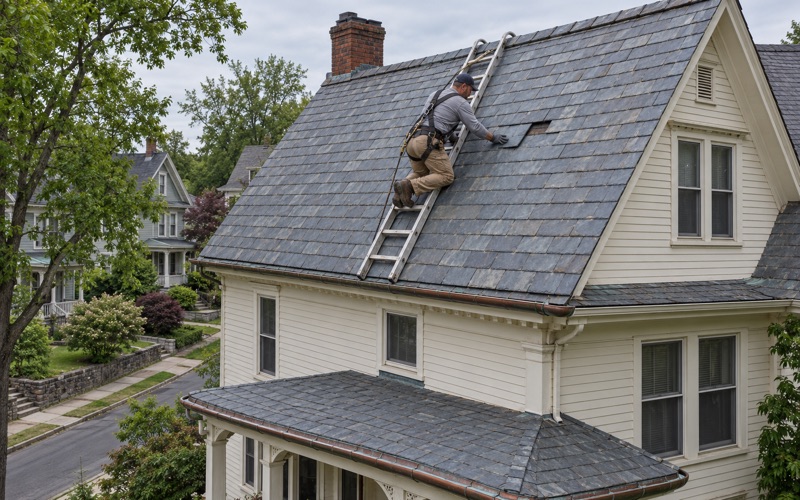
Scranton Quality Roofing approaches roofing in Swoyersville knowing that the borough’s housing was largely finished decades ago, with no homes recorded by the Census as built after 2009. Most roofs here sit on houses from before 1960, many of them attached, and those roofs carry generations of flashing, patching and layered material. Our 20+ years on older valley houses taught us to read that history before quoting a single line.
Every leak call starts with two looks, one at the shingles and one up in the attic, so we find where water actually enters before anything gets priced. If the roof can be repaired, we say so plainly and stop there. Replacement only comes up when a repair would be money spent on a roof that has run out of life.
There is also a local condition few boroughs share. A large coal refuse pile sits inside Swoyersville’s residential streets, and a state reclamation project has set rules for how its material is moved. We cover what the public record says about it below, and what it does not say, because a homeowner living near it deserves facts rather than guesses.
The Swoyersville Culm Bank and the Harry E Colliery
A Refuse Pile Mapped Into the Street Grid
The Pennsylvania Department of Environmental Protection describes the Swoyersville Culm Bank as the abandoned refuse pile and silt basins of the Harry E Colliery and Coal Breaker. The site sits just off Main Street, and the DEP project map places it between Main Street, Slocum Street, Tripp Street and Church Street. The regional reclamation group EPCAMR notes that locals know that stretch of Main Street as the backroad.
That location matters for roofing because the pile is not out past the edge of town. Houses face it across ordinary residential blocks, and their roofs, gutters and attics are the ones we are called to inspect. When we schedule work on those streets, we plan staging, ladder placement and material drops around the same narrow lots found throughout the rest of the borough.
What DEP Says the Pile Holds
According to a DEP project presentation from December 2018, the entire refuse site covers about 55 acres and contains roughly 4 million tons of coal refuse and waste rock. The Harry E Colliery and Coal Breaker ceased operations in the 1970s, leaving the material where it had been dumped. DEP mapped three separate features within the site, the largest covering 31.7 acres.
DEP also estimated that about 2.8 million tons of the material could be used as fuel at a cogeneration plant. The land is owned by Pagnotti Enterprises, and a power producer was set to cover much of the cost. None of that changes what a roofer does on a given house, but it explains why the reclamation was planned in phases.
Who Oversees the Reclamation
The Swoyersville Culm Bank Removal and Restoration Project runs under a government financed construction contract issued by the DEP Pottsville District Mining Office, with EPCAMR as a funding partner. That makes the PA DEP Bureau of Abandoned Mine Reclamation the authority on the pile itself, not the borough and not any contractor working on nearby houses. Questions about the site belong with the department.
Looking for roofing closer to Kingston Township? See Roofing Services in Kingston Township.
Removal, Tarped Trucks and Dustfall Monitoring
The First Removal Phase
The contract called for removing 500,000 tons of coal and rock waste from 24.75 acres of the former breaker site. DEP put the estimated cost at $12 million, with $4 million from abandoned mine land funding and $8 million from Olympus Power. EPCAMR described a later phase that would address an additional 3.5 million tons of material.
DEP planned to transfer about 7 acres to Swoyersville Borough for community recreational facilities. The published sources we rely on date from 2018 through 2021, and we have not found a current statement of where removal stands today. Homeowners who want that answer should ask DEP directly rather than trust a contractor’s guess.
Dust Conditions on the Hauling
The project’s GP-12 air quality conditions are specific. All trucks must be tarped, vehicles inside the plant are held to 15 mph, and the permittee must conduct upwind and downwind dustfall monitoring when the department requests it. EPCAMR has also noted that wind carried material from the pile around town over the decades.
Those conditions exist because moving culm creates dust, and the state chose to control it at the source. For houses along the haul routes, that is useful context. It tells an owner the department considered dust a factor worth watching, and that monitoring can be ordered if conditions call for it.
What We Will and Won’t Tell You About Roofs
No source we have found measures any effect of the culm bank on roofs, shingles or gutters, and we will not claim one. DEP requires tarping and permits dustfall monitoring, and that is where the record ends. What we can do is inspect a roof near the site the same way we inspect any other, and report exactly what we see.
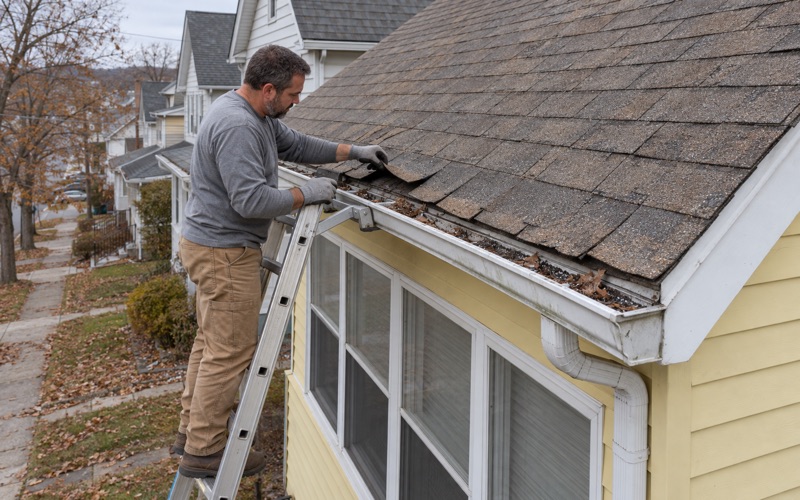
If an inspection turns up worn granules, clogged downspouts or failed flashing, we describe the condition and its likely causes in plain terms. Age, ventilation and installation are the usual suspects on houses this old. We photograph what we find so you can decide what to do with a clear picture rather than a sales pitch.
Roofs and Gutters on Slocum, Tripp and Church Streets
Tracing Leaks From the Attic Down
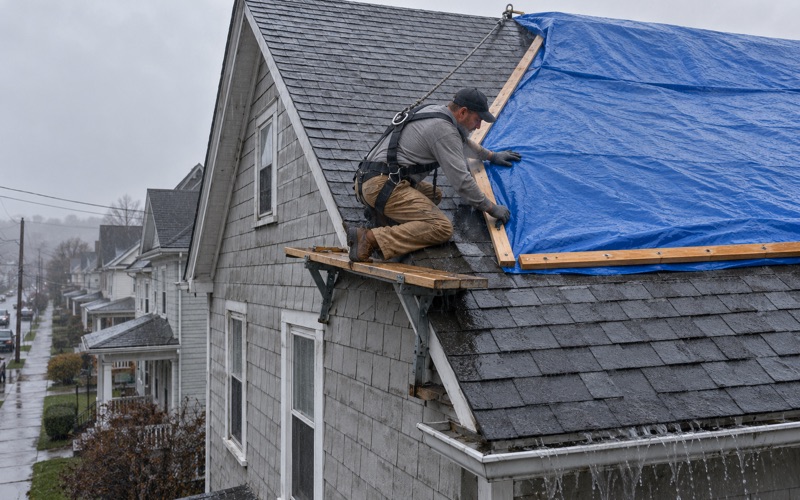
On the blocks around the bank, as anywhere in Swoyersville, a leak rarely shows up on the ceiling directly below where water gets in. We go into the attic on every leak call, follow the staining along rafters and decking, and match it to what we see on the roof surface. Pricing waits until we know the entry point.
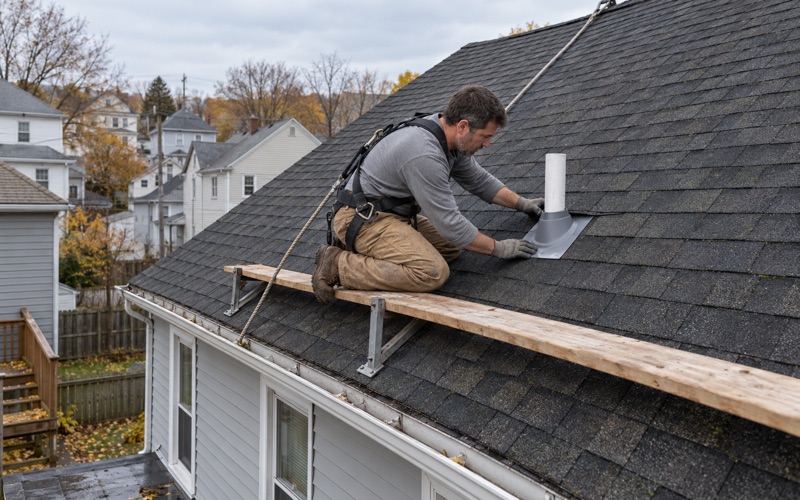
That process often finds small problems that explain big stains. A cracked pipe boot, a lifted shingle above a valley or a gap behind step flashing can soak insulation for months before anything drips. Fixing the right spot first costs far less than reroofing over a leak nobody located.
Gutters Sized With the Roof
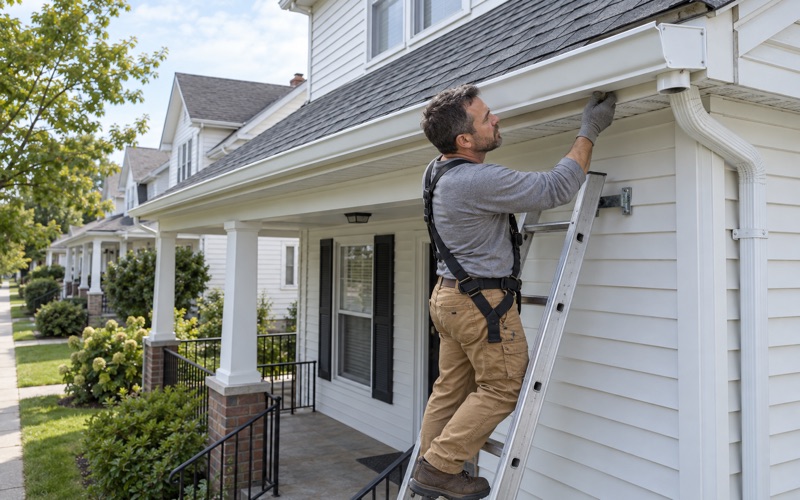
We size and pitch seamless aluminum gutters and downspouts as part of the roof plan, not as an add-on after the shingles are down. Drip edge at the eaves, kick-out flashing where a roof meets a sidewall, and downspouts placed to carry water away from foundations all get decided together. On tight lots, discharge location matters as much as gutter size.
Many older houses here still carry undersized gutters or downspouts that empty against a neighbor’s wall. When we replace a roof, the written scope lists gutters on their own line, so you can see what that part of the job costs and compare it with another estimate item by item.
Clean Sites on Close Streets
Swoyersville’s residential grid puts houses close to sidewalks and to each other. At the end of each work day we clean the driveway, yard and gutters and run a magnet sweep for roofing nails. Neighbors walking past should not find our debris on their side of the property line.
Swoyersville Homes From Before 1950 and the 1950s
Housing Age in the Borough
American Community Survey estimates show 729 homes built before 1940, another 149 from the 1940s and 489 from the 1950s. Median owner value sits at $148,300, which is why a straight repair answer matters here. On a house in that value range, replacing a roof that only needed flashing work is a cost many owners cannot absorb.
Houses of that age often hide history under the current shingles. We may find two layers already on the deck, old board sheathing, or slate under asphalt. The reroofing section of the residential code limits how many layers a roof can carry, so a full tear-off is often required rather than optional.
Attached Homes and Shared Roof Lines
The borough has 336 single-family attached homes, and 257 of them are owner-occupied. On an attached house, the roof often runs continuously across a party wall, so flashing and transitions at the neighbor’s side need careful detailing. We plan where our work ends and how it ties into the adjoining roof before anything is torn off.
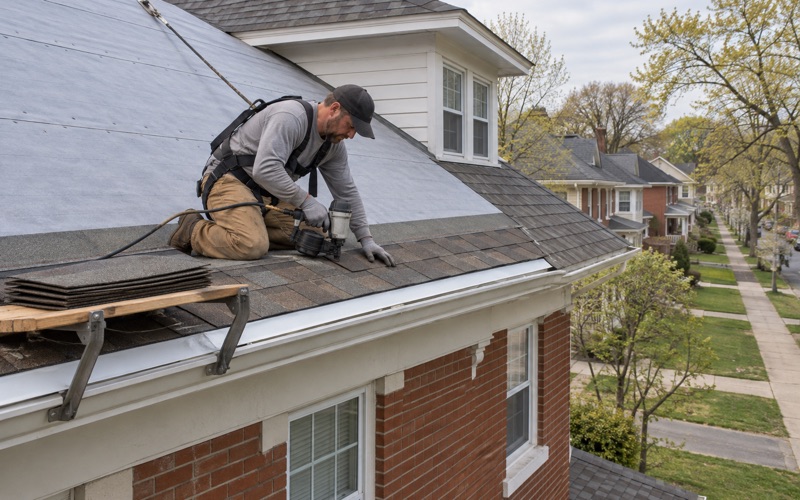
When the decking under an old roof turns out to be damaged, we photograph it and show you before replacing a sheet, at the per-sheet price written into the contract. Step, counter and chimney flashing are replaced with the roof, never reused under new material. Eaves get a self-adhering ice barrier sized to the overhang, because ice dams form on older valley homes every winter.
Slate and the Borough’s Code Office
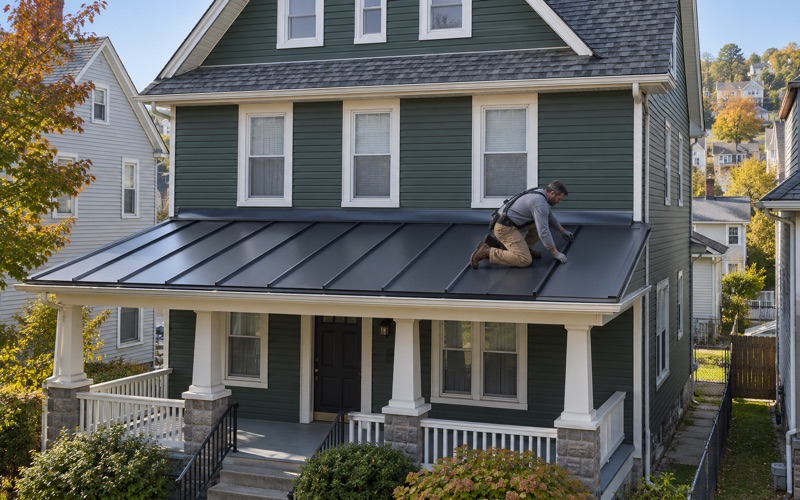
Some prewar houses still carry slate, and a sound slate roof deserves repair before anyone talks about removal. We replace broken pieces one at a time with copper nails and slate hooks. Where an asphalt roof is truly finished, we quote architectural shingles with the tear-off, decking, underlayment, flashing, ventilation and gutters each listed separately.
Swoyersville opted into the state’s Uniform Construction Code in 2008, and its building code official is Kenneth Shefler Jr. The borough site publishes no re-roof permit rule, so we confirm the requirement with the Swoyersville Borough Zoning Office, open Monday through Thursday from 3:00 p.m. to 6:00 p.m., before pricing the job. Our contracts follow Pennsylvania’s home improvement law, including the three-business-day cancellation notice and a deposit within the legal limit.
- 20+ Years Roofing
- Free Written Estimates
- Repair Before Replace