
Scranton Quality Roofing repairs storm damage roofs in Scranton, PA, serving surrounding cities including Dunmore, Moosic, Old Forge, Throop and Dickson City. After high winds, hail or a falling limb, we inspect the roof from above and from the attic, photograph every damaged area and write it up so you have clear documentation for your own insurance claim.
In more than 20 years of roofing around the Lackawanna Valley, we have seen what storms do to older houses here: shingles lifted along exposed ridges and rakes, flashing torn from chimneys, limbs through decking and gutters pulled loose. Some of that damage leaks right away. Some of it, like creased shingles and loosened seal strips, waits for the next storm.
When you ask, we meet the insurance adjuster on site to point out what we found. We do not negotiate the claim, because Pennsylvania reserves that for licensed public adjusters, and we will not tell you a roof may be free because of insurance. We document, explain and repair.
Recognizing Storm Damage on a Roof
Wind Damage: Lifted, Creased and Missing Shingles
Strong gusts get under shingle edges, break the seal strip and fold the shingle back. Even when it falls back into place, the crease across the shingle is a weak line that tears in the next wind. Missing shingles, exposed nail heads and granules piled in gutters are all signs of wind damage. We check the ridges, rakes and corners of the roof first, since wind damage concentrates there, then work across each slope looking for broken seals and creases.
Hail Damage: Bruises and Granule Loss
Hail leaves dark spots where granules have been knocked off and bruises where the mat under the asphalt has been crushed. Soft metal such as vents, flashing and gutters often shows dents that confirm hail hit the roof. Not every hailstorm damages shingles, and we say so when we do not find any. We photograph hits in test areas on each slope and on soft metal, which is the kind of evidence an adjuster can verify on site.
Fallen Trees and Limbs
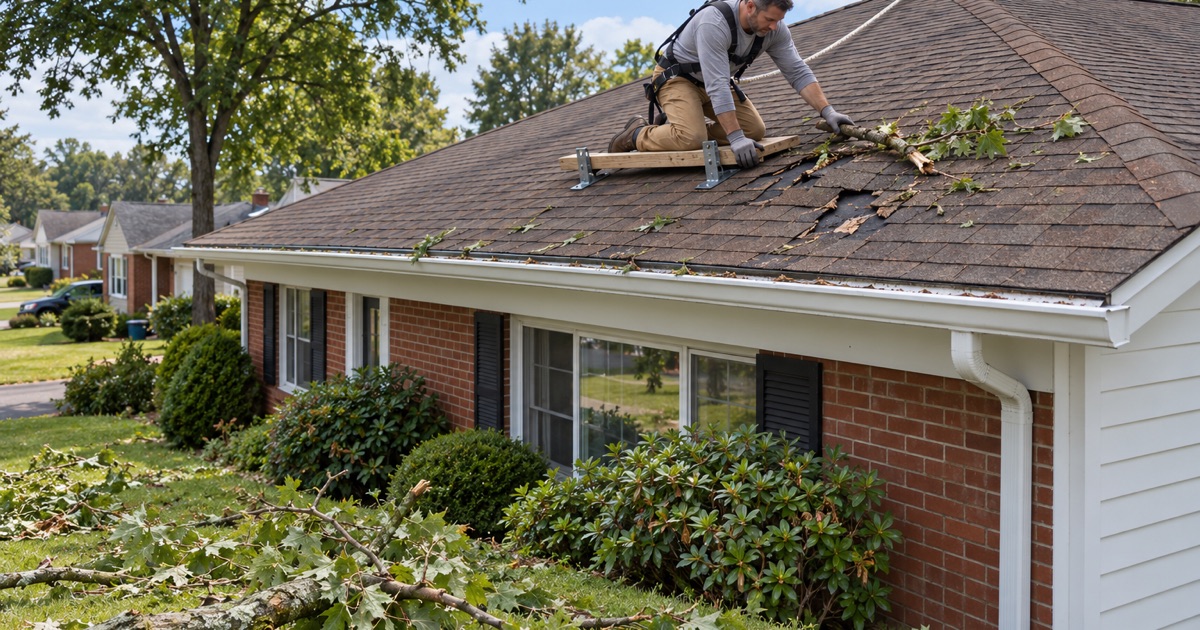
Large limbs can puncture shingles and decking or crack rafters without leaving an obvious hole. After any limb strike we inspect the decking from the attic for cracks and daylight and look at the framing for damage that needs structural repair.
Documenting Storm Damage for Your Claim
Photos, Measurements and a Written Report
Our storm damage report includes close-up and wide photos of each damaged area, the location of the damage on each slope, and notes on flashing, gutters, vents and the attic. It also records the roof’s materials and approximate age, which insurers ask about.
You submit the report with your own claim. Keeping a copy also helps if the adjuster’s findings differ from what you saw.
Meeting the Adjuster on Site
When you ask, we meet the adjuster at the house and walk the roof together, pointing out each damaged area we documented. That keeps the inspection focused on facts, such as where hail hit and which shingles are creased.
We do not argue the claim or negotiate on your behalf. If you want someone to represent you, Pennsylvania licenses public adjusters for that role under the Public Adjuster Licensing Law.
Pennsylvania Claim Timelines
Pennsylvania’s unfair claims settlement rules in 31 Pa. Code 146 require insurers to acknowledge a claim within 10 working days and to complete their investigation within 30 days. Once proof of loss is received, the insurer has 15 working days to accept or deny the claim. Knowing those timelines helps you follow up if a claim stalls.
Repairing Storm Damage the Right Way
Temporary Protection First
If the storm has opened the roof, we cover the damaged area right away with a tarp or temporary underlayment, secured so wind cannot lift it. Keep receipts for that work; most policies expect you to prevent further damage after a loss.
Repair or Replace After a Storm
A few damaged shingles or a section of flashing can be repaired. Widespread wind or hail damage across several slopes, or storm damage on an older roof near the end of its life, may make replacement the better option. We give you a straight answer with photos either way.
When a repair is the right call, we replace damaged shingles, reseal lifted tabs and rebuild damaged flashing. When replacement is needed, the written scope lists tear-off, decking, underlayment, flashing, ventilation and gutters as separate lines.
Matching Shingles on a Partial Repair
Shingle colors and product lines change, and older shingles fade, so a perfect match is not always possible. We find the closest available match and show it to you before installing it on a visible slope. If a mismatch is significant, discuss it with your insurer, since policies handle matching differently.
Upgrading Wind and Impact Ratings
When storm damage leads to a new roof, it is worth considering shingles with higher wind ratings, such as ASTM D3161 Class F or ASTM D7158 Class H, or impact-rated shingles carrying a UL 2218 Class 4 rating. Some insurers offer premium discounts for impact-rated roofs; ask your agent whether yours does.
Protecting Yourself After a Storm
Storm Chasers and Door-Knockers
After a major storm, out-of-area contractors often knock on doors. Before signing anything, ask for the contractor’s Pennsylvania home improvement registration number, proof of insurance and a local address. In Scranton, residential contractors also need a city Home Improvement Contractor License.
Your Rights Under Pennsylvania Law
The Home Improvement Consumer Protection Act gives you three business days to cancel a home improvement contract after signing, and the contract must explain that right. On contracts over $5,000, the deposit is limited to one-third of the price plus special-order materials. A contractor who asks for full payment up front is a warning sign.
Watch for Insurance Pressure
The Pennsylvania Insurance Department has warned against contractors who offer to handle claims or suggest a roof may be free because of insurance. Your deductible is your responsibility under your policy. We explain the damage and the repair, and leave the claim decisions to you.
- 20+ Years Roofing
- Free Written Estimates
- Repair Before Replace