Scranton Quality Roofing handles slate roof repair in Scranton, PA, serving surrounding cities including Dunmore, Moosic, Old Forge, Throop and Dickson City. More than half of Scranton’s homes were built before 1940, and many still wear the slate they were built with. For more than 20 years we have kept those roofs working by repairing slate one piece at a time instead of tearing off a roof that still has life.
A slate roof rarely wears out all at once. The stone usually outlasts the iron nails, the flashing and the valley metal that hold it together. When those parts fail, individual slates crack, slip or fall out, and water gets in. Replacing the broken pieces with copper nails and slate hooks, and rebuilding worn flashing, can keep a sound slate roof watertight for many more years.
We only talk about replacing a slate roof when the slate itself is failing across the roof, softening, flaking or delaminating. When that is the case, we show you the evidence. Until then, the right answer for a slate roof is repair.
How We Repair Slate
Replacing Broken Slates With Slate Hooks
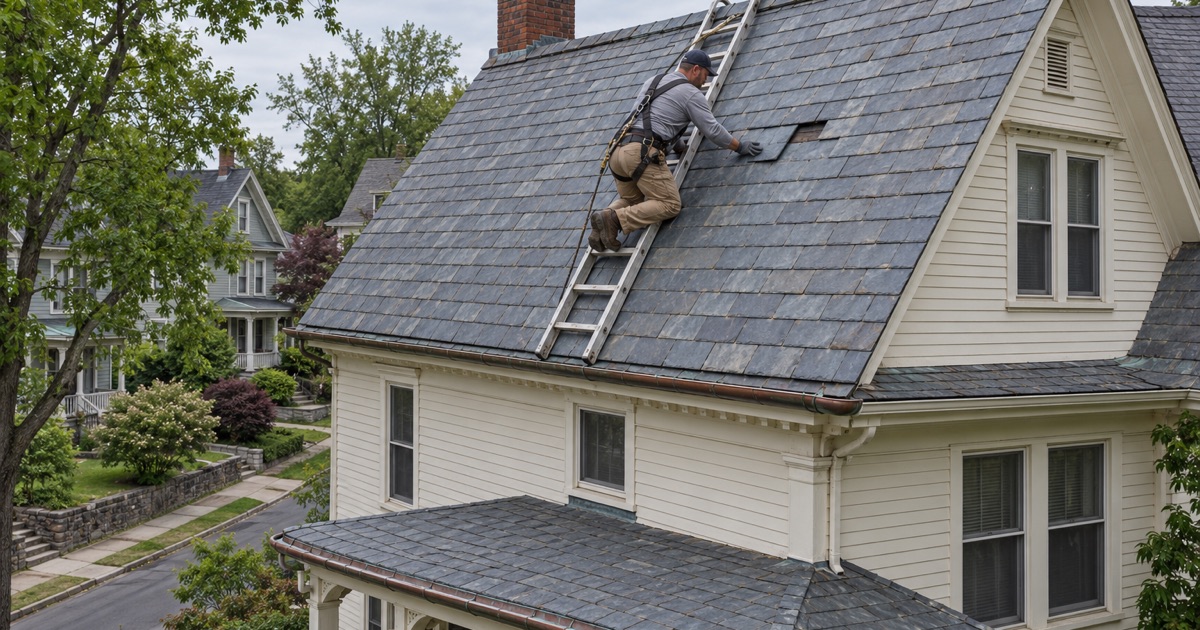
To replace a broken slate without disturbing the ones above it, we remove the old pieces and cut the hidden nails with a slate ripper. A copper or stainless slate hook is then nailed into the decking in the gap between the slates below, and the new slate slides up into place and rests on the hook.
Hooks hold the slate securely without nails through the face, so the repair stays watertight and leaves no exposed fastener. They are a standard method for single-slate repairs on older roofs.
Copper Nails for Lasting Repairs
Where slates must be face-nailed, as near the ridge or on the last course, we use copper nails and cover the nail head with a small piece of copper or the slate above. Copper does not rust, so the fastener will not fail before the slate does.
Using steel nails or roofing cement in slate repairs is one of the most common mistakes we fix. Steel rusts, and cement dries out, letting the slate slide again within a few years.
Reattaching Slipped Slates
Slates that have slipped down the roof usually have rusted-through nails. We slide them back into position and secure them with a hook or a copper nail. Leaving slipped slates in place exposes the joints beneath and lets water reach the decking.
Matching Slate Size, Color and Thickness
Slate comes in many colors and thicknesses, and older roofs often used slate from local quarries. We match the size, thickness and color of each replacement piece as closely as possible with new or salvaged slate, so the repair sits flat and blends into the roof.
Flashing, Valleys and Ridges on Slate Roofs
Valley Repairs
Valleys on slate roofs are often lined with copper, galvanized steel or terne metal. Steel valleys rust through long before the slate wears out, and the leak shows up along a ceiling or wall below. We remove the slates along the valley, install new metal over an ice barrier and reset the slates. This is one of the most valuable repairs on an older slate roof, because a failed valley can rot the decking along its length if it is left alone.
Chimney and Wall Flashing
Chimney flashing on slate roofs is usually step flashing woven under each slate with counter flashing in the brick. When it fails, we carefully remove the slates around the chimney, install new step and counter flashing and reset the slate. We use copper flashing on slate roofs where possible, because it matches the long life of the stone.
Ridge Caps and Hips
Slate ridges and hips are capped with slate, metal or other materials, and they take the most wind. We repair loose ridge slates, replace damaged metal ridge caps and reseal the joints so the top of the roof stays watertight.
Assessing an Older Slate Roof
Sound Slate or Failing Slate?
Good slate rings when tapped and holds a clean edge. Failing slate sounds dull, flakes in layers, turns soft at the edges or shows white bloom on the surface. We check slates across each slope, not just near the leak, to judge how much life the roof has left.
Inspecting Without Breaking More Slate
Walking on slate cracks it, so we inspect from ladders hooked over the ridge, roof jacks and the attic. Inside, we look for light through the roof, stained decking and rusted nail tips that show where slates are loose. Photos let you see what we found without climbing up yourself.
When Partial Replacement Makes Sense
Sometimes one slope of a slate roof has failed while the others are sound, often a south-facing slope that gets the most sun and freeze-thaw cycles. Replacing that slope while repairing the rest can be more affordable than a full replacement. We flash the transition between materials carefully.
Slate Roofs in Scranton Winters
Ice Dams on Slate
Scranton averages about 45 inches of snow a year, and ice dams can form at the eaves of slate roofs just as they do on shingle roofs. Ice backing up under the slates can break them and push water into the decking. When we repair eaves on a slate roof, we install a self-adhering ice barrier before resetting the slate.
Snow Guards for Slate
Snow slides off slate quickly and can break gutters, shrubs and anything below. Slate roofs often had snow guards when they were built. We replace missing or broken guards and add new ones above entrances and walkways.
Gutters on Slate Roofs
Slate roofs shed water fast and drop heavy snow and ice into the gutters. We hang gutters with close hanger spacing and size them to the roof area, so they can carry the load without pulling away from the fascia.
- 20+ Years Roofing
- Free Written Estimates
- Repair Before Replace