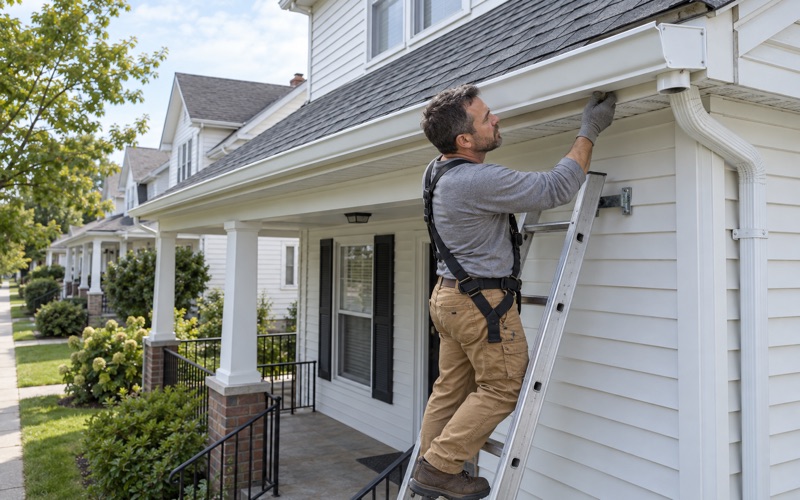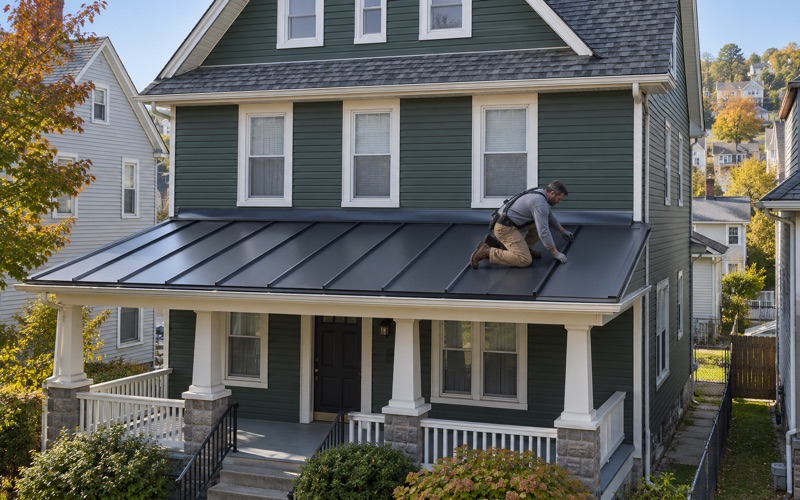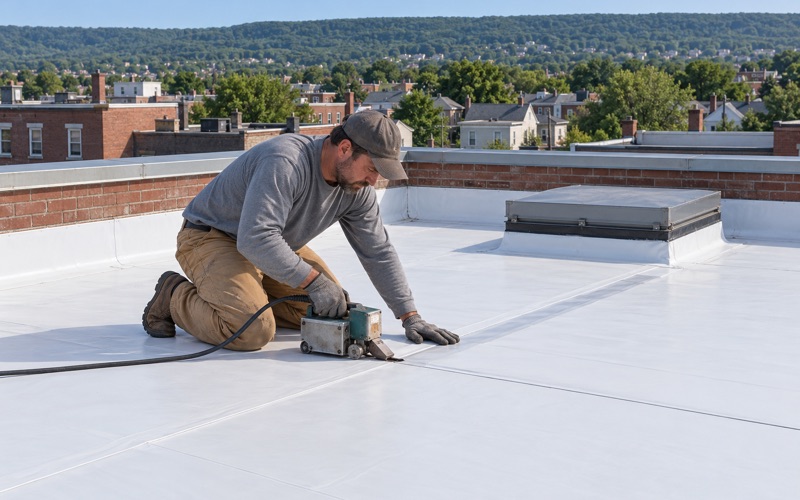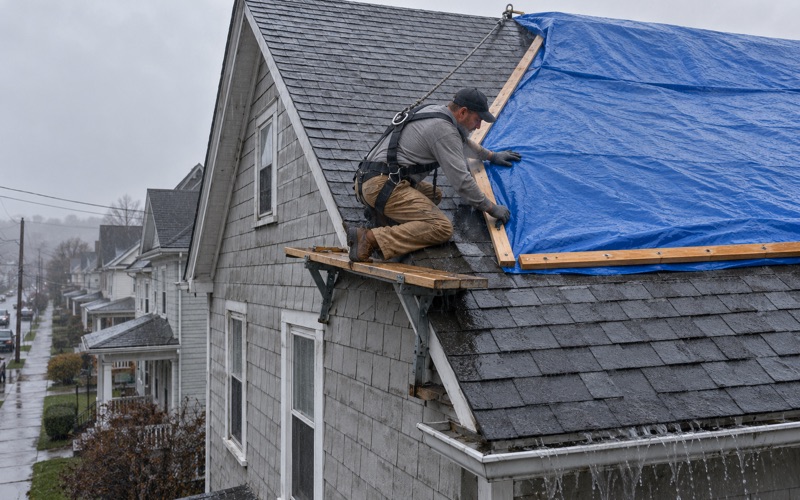
Scranton Quality Roofing handles roofing in Scott Township with more than 20 years of work on Lackawanna County houses behind us, and on a home headed for solar we start with the roof itself. Before panels go up, we look at the shingles, the decking, the flashing and the attic, and we tell the owner plainly whether the roof should be repaired, replaced or left alone.
When Scott Township wrote its solar rules this year, it drew a clear line around the house roof and left it outside the zoning ordinance. Panels meant for a single home are treated as a building-code matter, which means the roof under an array becomes the part of the project that deserves the most attention. A sound roof carries panels for decades, while a tired one turns into an expensive removal and reinstall a few years later.
This page walks through what the township’s 2026 ordinance covers, what it leaves to the Uniform Construction Code, how we inspect a roof before solar, what the local housing looks like, and how permits move through the township office. Every point below comes from the township’s own documents and public records.
Scott Township’s 2026 Solar Ordinance and What It Leaves Out
What Ordinance 04-2026-002 Actually Regulates
The Scott Township Board of Supervisors enacted Ordinance 04-2026-002 on April 21, 2026, amending the zoning ordinance the township adopted on July 25, 2003. It took effect five days after enactment. The amendment defines a solar farm, also called a solar electric energy facility, as a large installation that produces power primarily for use somewhere else.
That definition is the part a homeowner should read closely. The ordinance says these facilities do not include on-site solar systems meant solely for residential or singular commercial use, and it states that such uses are regulated by the Uniform Construction Code. A rooftop array feeding one house is therefore not a solar farm under Scott Township zoning.
Where Solar Farms Can Go: the Industrial District Only
The same ordinance adds solar farms to the Industrial District as a conditional use and excludes them from every other district. A developer has to submit a master plan prepared by a professional engineer, stating whether the panels are ground mounted, wall mounted or roof mounted. Panels on a solar farm may not stand more than ten feet above the ground.
The developer also needs a comprehensive glare study, a $20,000 escrow deposit replenished in $10,000 increments, and decommissioning security set at 110 percent of the estimated cost. A facility that produces nothing for a year is treated as discontinued. None of those requirements reaches a homeowner putting panels on a house, and we never tell an owner otherwise.
House-Roof Panels Belong to the Uniform Construction Code
Because the ordinance hands residential systems to the Uniform Construction Code, the questions that matter on a house are structural and weatherproofing questions. The roof has to carry the racking, keep water out around every mount, and outlast the panels it holds. Those are roofing questions first and electrical questions second.
That is where we fit into a solar project. We do not sell or install panels, and we make no claim about the electrical side of the work. Our job is to make sure the roof surface, the deck beneath it and the flashing around it are ready before an installer bolts anything down, so nobody has to pull an array off later to fix the shingles.
Looking for roofing closer to Plains? See Plains Roofing.
Checking the Roof Before an Array Goes On
Remaining Life of the Shingles
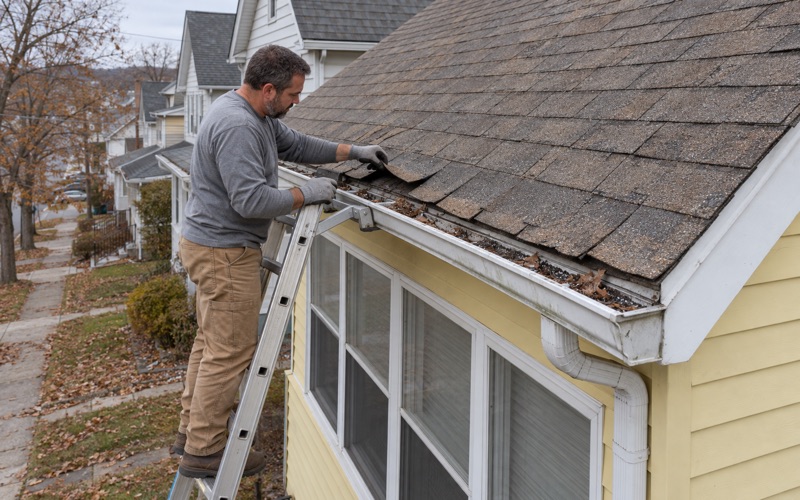
An array usually stays in place for a long time, so the first question is how many good years the existing shingles have left. We look for granule loss, curling tabs, cracked or brittle shingles, and exposed nail heads along the ridge. On architectural shingles, we check whether the laminated layers are still bonded together or starting to separate.
If the shingles are near the end of their service life, we say so before the panel contract is signed. Replacing the roof first costs less than removing and resetting panels a few years down the road. If the shingles still have plenty of life, we tell the owner that too, and we point out any small repairs worth making before the installer arrives.
Decking, Flashing and Penetrations Under the Racking
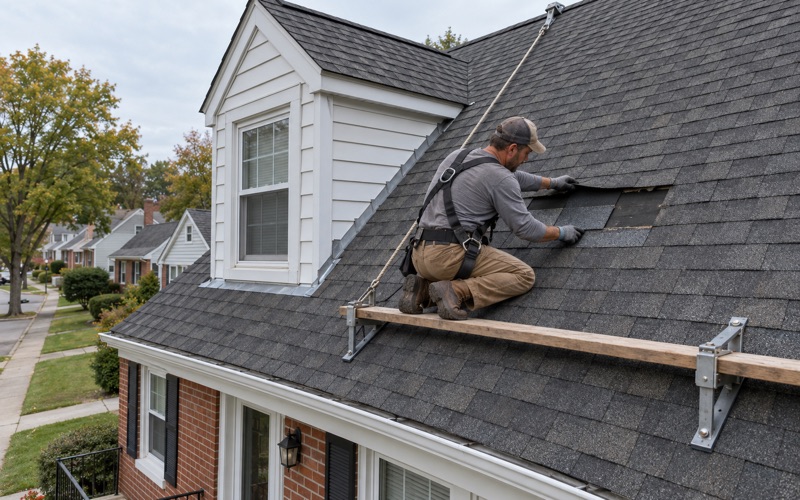
Panel mounts are fastened through the roof deck, so soft or delaminated plywood is a real problem under an array. We walk the roof for spongy spots and check the deck from the attic, looking for stains, darkened sheathing or daylight around old penetrations. Any damaged decking we find during a tear-off is photographed and shown to the owner before it is replaced.
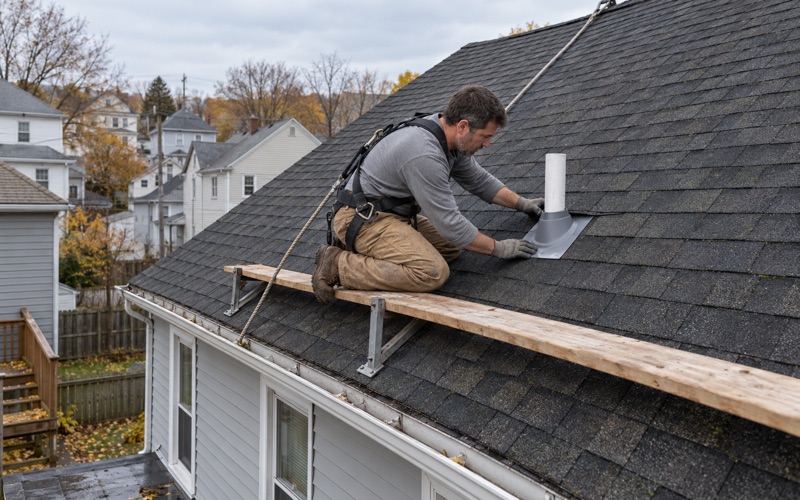
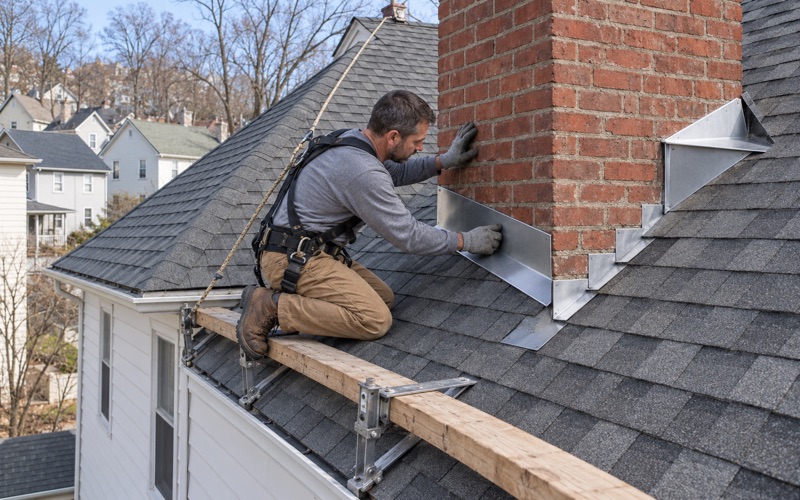
We also look at everything that already passes through the roof. Pipe boots, chimney flashing and any step flashing along a wall are common leak points, and they are much harder to reach once panels surround them. When we replace a roof, step, counter and chimney flashing is replaced along with it rather than reused under the new shingles.
A Straight Answer on Repair or Replacement
Not every roof needs to come off before solar. Many need a few repairs, a new pipe boot or a section of flashing, and then they are ready for decades of service. We give the owner that answer first and only talk about replacement when the roof actually calls for it.
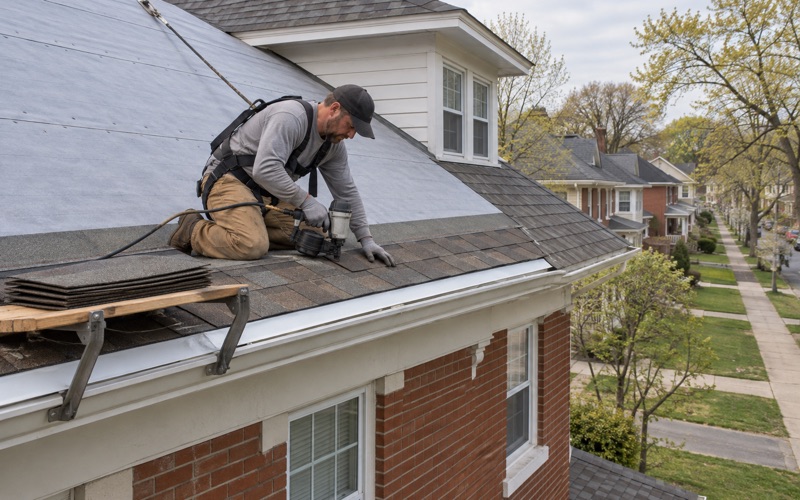
When a replacement does make sense, our written scope lists tear-off, decking, underlayment, flashing, ventilation and gutters as separate lines. That lets an owner compare our price against another roofer’s item by item. It also gives the solar installer a clear record of what is under the panels and when it was installed.
1970s Homes on the Endless Mountains Plateau Edge
What the Housing Records Show
Scott Township is a township of the second class in north central Lackawanna County, partitioned from Greenfield Township back in 1846. Census Bureau estimates count 2,133 housing units, and 1,995 of them are detached single-family houses. Of the 1,895 occupied homes, 1,783 are lived in by their owners, which makes this a township of owner decisions rather than landlord decisions.
The 1970s were the busiest decade for building here, with 569 homes dating from those years, more than any other single decade on record. Another 310 homes were built before 1940. Those two groups make up a large share of the roofs we see, and many of them have already been reroofed at least once, which affects what we find underneath.
What a 1970s Roof Usually Needs
Houses from that era often carry their second or third roof, and an earlier owner may have laid new shingles over old ones. We check for layered roofs before quoting, because a full tear-off down to the deck is usually the right starting point for a roof that will carry panels. It also exposes the original sheathing for inspection.
Ventilation on 1970s houses is frequently thin, with few soffit vents and little or no ridge exhaust. A hot, poorly vented attic shortens shingle life, so we look at intake and exhaust together. When we replace the roof, a ridge vent balanced with soffit intake is usually part of the scope.
Montdale, Justus and the Plateau’s Drainage
The township sits at the extreme eastern edge of the Endless Mountains dissected plateau, and its homes are spread across communities such as Montdale and Justus. The southern quarter of the township drains toward the Lackawanna River, while the rest drains west toward the Susquehanna through streams such as Rush Brook and Kennedy Creek.
That terrain matters to a roof because water has to leave the house and keep moving. We size and pitch gutters and downspouts as part of the roofing job, not as an afterthought, and we look at where downspouts discharge on sloped lots. The township’s flood maps, kept by FEMA under community number 421757, are worth checking for any lot near Chapman Lake, Griffin Reservoir or a stream bank.
Permits in Scott Township: the 120-Square-Foot Rule and Third-Party Inspectors
What the Township Publishes
Scott Township opted into the Uniform Construction Code on July 7, 2004, with no local amendments. The township’s zoning and code enforcement page says any building over 120 square feet needs a permit, as does any deck, fence wall or swimming pool. The page does not include a roofing item.
Because the township publishes no roof-specific rule, we do not assume one in either direction. Every city, borough and township we work in sets its own approach to reroofing, so we confirm the current answer with the Scott Township Zoning Department before we price the job. That way the owner knows the permit picture before any work is scheduled.
Northeast Inspection Consultants or Building Inspection Underwriters
The township lets applicants choose between two third-party inspection agencies: Northeast Inspection Consultants, known as NEIC, and Building Inspection Underwriters. Either agency handles the code review, but all permits from both companies are obtained through the Township Zoning Department at the township office on Montdale Road.
When a permit applies to a roofing or solar-related job, we help the owner understand which agency is handling the review and what the inspector will want to see. The National Weather Service forecast for zone PAZ044, issued from its Binghamton office, is also a useful reference when we schedule tear-offs, since an open roof should never sit exposed to an incoming storm.
Why We Check Before Work Starts
The township may charge up to triple the permit fee when a permit should have been obtained but was not. That penalty lands on the property owner, which is why we treat the permit question as part of pricing rather than something to sort out after the crew leaves.
We also keep the job site clean while the work is underway. The driveway, yard and gutters are cleaned at the end of every work day, including a magnet sweep for loose roofing nails. That matters on rural Scott Township lots, where a stray nail in a long gravel driveway can find a tire weeks after the job is done.
- 20+ Years Roofing
- Free Written Estimates
- Repair Before Replace