Scranton Quality Roofing has handled roof repair in Scranton, PA for more than 20 years, serving surrounding cities including Dunmore, Moosic, Old Forge, Throop and Dickson City. We fix leaks, wind-damaged shingles, failed flashing, broken slate and worn flat roofs on houses and commercial buildings alike, and we repair the failed part rather than smearing sealant over it.
A repair is only as good as the diagnosis behind it. Before pricing any work, we go into the attic as well as up on the roof, because water often travels along a rafter or the underside of the decking before it shows on the ceiling. Repairing the spot where water actually enters is what stops the leak.
We also tell you straight away whether a repair will solve the problem. Many roofs that look tired from the street have years of service left once a pipe boot or a run of flashing is replaced. When a roof truly is near the end, we explain why with photos so you can plan the next step on your own schedule.
Shingle Roof Repair
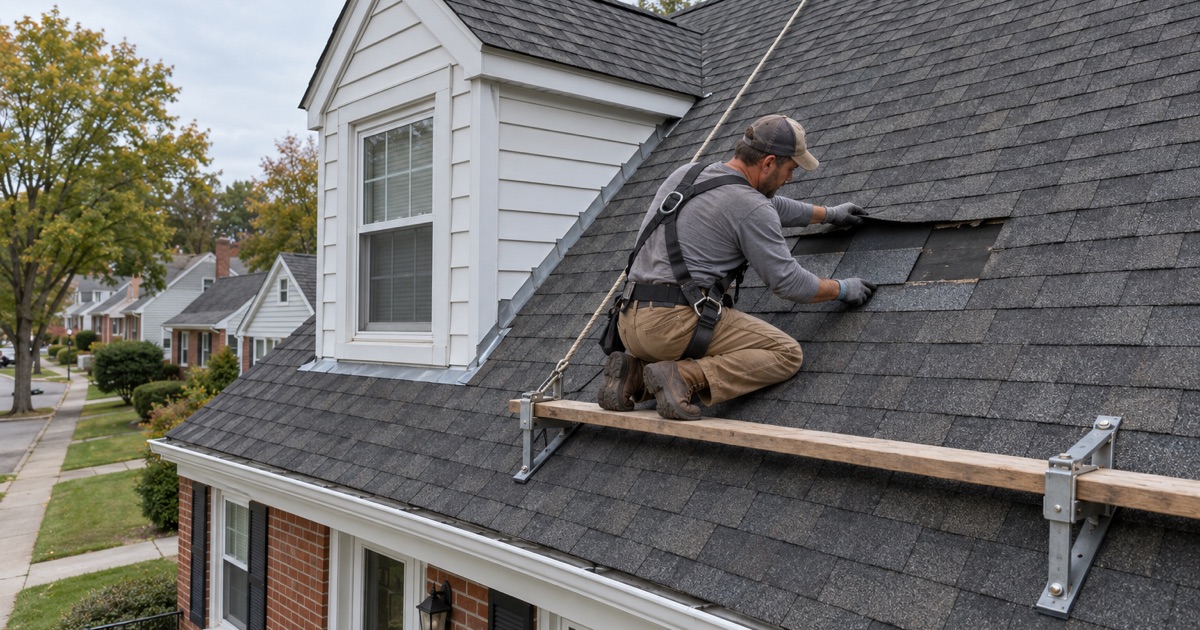
Replacing Missing and Wind-Lifted Shingles
When a windstorm tears shingles loose, the nail line underneath is left exposed and water gets in quickly. We remove the damaged pieces, slide in new shingles, nail them on the correct line and seal the tabs so they bond to the course below. Neighboring shingles get checked too, because creased tabs that survived the storm are often the next ones to fail.
On architectural shingles we match the profile and color as closely as current product lines allow. If a whole slope has lost its seal, we tell you so rather than patching the same area storm after storm.
Repairing Granule Loss and Cracked Shingles
Granules protect the asphalt from sunlight, and once they wash away a shingle dries out, cracks and curls. Localized damage from a falling branch or foot traffic can be repaired by replacing the affected shingles. Widespread granule loss across a slope is a sign of age, and we will say so plainly instead of selling a repair that cannot last.
Sealing Nail Pops and Exposed Fasteners
Nails that back out of the decking push up through the shingle above them and open a path for water. We drive or replace the fastener, seal the hole and replace the shingle if it has torn. Exposed nails at the ridge cap and along flashing get the same attention, since they are easy to miss from the ground.
Nail pops usually trace back to decking that swells and shrinks with attic moisture. When we find many of them on one slope, we check the attic ventilation as well, because fixing the airflow is what keeps new fasteners from working loose the same way.
Flashing and Penetration Repair
Chimney Flashing Repair With Step and Counter Flashing
Most chimney leaks come from flashing, not from the chimney itself. We remove rusted or loose metal, install new step flashing woven into each course of shingles, and cut counter flashing into a reglet in the mortar joint so it laps over the step flashing. Wide chimneys get a cricket, or saddle, on the uphill side to split the water around them.
Roof cement smeared over old flashing might stop a drip for a season, but it shrinks and cracks. Rebuilding the flashing the right way is what keeps the attic dry through the next winter.
Pipe Boots, Vents and Skylight Curbs
The rubber collar around a plumbing vent splits after years of sun, and the crack lets water run straight down the pipe. We replace failed boots with new rubber or lead flashing boots, reseat roof vents, and re-flash skylight curbs with step flashing on the sides and a proper apron at the bottom.
Old bathroom and kitchen fans sometimes vent into the attic rather than through the roof, and the moist air drips back down like a leak. If that is what we find, we tell you so, because no amount of roof repair will dry out an attic that is being filled with shower steam.
Kick-Out, Apron and Wall Flashing
Where a roof edge ends against a sidewall, a kick-out flashing turns water into the gutter instead of down the siding. Missing kick-outs cause hidden rot in walls and trim. We add kick-out and apron flashing where they are absent and repair step flashing along dormers and second-story walls.
Slate and Flat Roof Repair
Slate Repair With Copper Nails and Slate Hooks
More than half of Scranton’s homes were built before 1940, and many still wear slate. A slate roof rarely fails all at once; it leaks where a few slates have cracked or slipped or where the flashing has worn out. We replace broken slates one at a time, securing them with copper nails or slate hooks so the surrounding slates are not disturbed.
We only talk about replacing a slate roof when the slate itself is soft, flaking or failing across the whole surface. A sound slate roof with a few broken pieces deserves a repair.
Flat Roof Repair on Additions, Porches and Garages
Low-slope roofs on rear additions and porches tend to leak where they meet the house wall or where water sits in a low spot. We repair blisters and open seams in modified bitumen, patch and reseal EPDM rubber, and heat-weld new material into TPO membranes. Where the original roof was shingled at too low a pitch, we explain why a membrane is the better long-term fix.
Gutter and Fascia Repairs That Cause Roof Leaks
Water that gets behind a gutter rots the fascia and the edge of the roof decking. We repair or replace rotted fascia, add drip edge where it is missing and rehang gutters with the right pitch so runoff ends up in the gutter and leaves through the downspouts.
On houses built before 1978, fascia and trim are often coated in lead-based paint. Cutting or scraping that paint falls under the EPA’s lead-safe renovation rule, so we contain the work area and clean up the debris before replacing the rotted boards.
Commercial Roof Repair
Low-Slope Membrane Repairs for Businesses
Commercial buildings around Scranton often have flat or low-slope roofs covered with modified bitumen, EPDM or TPO. We locate leaks by tracing ponding water, open seams and damaged flashing around rooftop units, then repair the membrane with compatible material. Matching the repair to the existing system is what keeps a patch watertight.
Rooftop Equipment and Drain Repairs
HVAC curbs, exhaust fans and roof drains are where commercial roofs most often fail. We re-flash curbs, repair pitch pockets and clear or reset drains that have pulled away from the membrane. A blocked drain on a flat roof can let water pond deep enough to find any weak seam.
After each commercial repair we walk the rest of the roof and note any other open seams, cracked flashing or debris near the drains. The building owner gets that list in writing, so small problems can be scheduled before they turn into the next ceiling stain.
Scheduling Around Tenants and Business Hours
We plan commercial repairs to keep disruption low, working around business hours where possible and keeping the work area safe for staff and customers. When a leak is affecting inventory or equipment, we start with a temporary repair to stop the water and then schedule the permanent fix.
Our Step-by-Step Roof Repair Process
Step 1: Inspection From the Attic and the Roof
We look at the stain inside, follow the water path in the attic, then inspect the roof surface above it. Photos from both sides show you what we found.
Step 2: A Straight Answer and a Written Price
You get a clear explanation of the problem, whether a repair will hold, and a written price for the work before anything is scheduled. If replacement is the better value, we explain why, but the choice stays yours.
Step 3: The Repair and the Cleanup
The crew replaces the failed materials, checks the surrounding area and cleans up the yard and gutters, including a magnet sweep for stray nails, before leaving. You get photos of the finished repair for your records.
- 20+ Years Roofing
- Free Written Estimates
- Repair Before Replace