Scranton Quality Roofing provides roof inspection in Scranton, PA, serving surrounding cities including Dunmore, Moosic, Old Forge, Throop and Dickson City. With more than 20 years on local roofs, we look at the shingles, flashing, slate, gutters and the attic underneath, then tell you plainly what is sound, what needs attention now and what can wait.
A roof inspection is only useful if it looks at both sides of the decking. Many problems never show on the shingles: a soft spot in the sheathing, frost from a poorly vented attic, or a slow drip running down a rafter. That is why every inspection we do includes time in the attic with a flashlight and a moisture check, not just a walk across the roof.
You get a written report with photos from the roof and the attic. If the roof only needs a small repair, the report says so. If it is close to the end of its life, we explain why with evidence you can see for yourself, so you can plan rather than react.
Residential Roof Inspection
Shingle Condition and Remaining Life
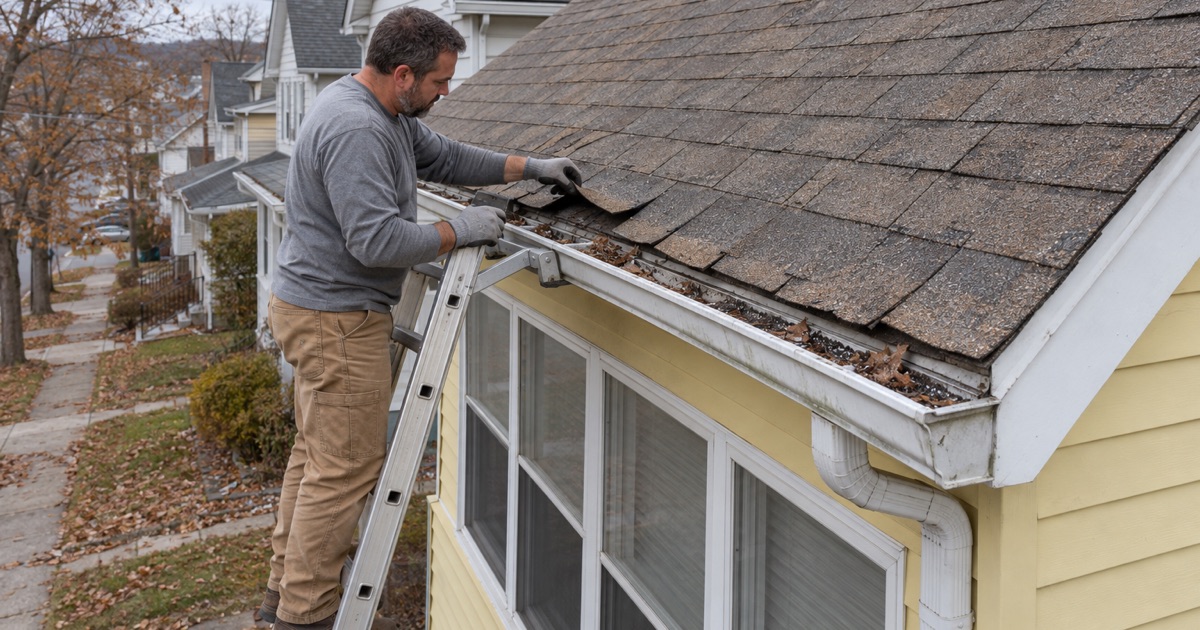
We check asphalt shingles for granule loss, curling, cracking, blistering and lifted tabs. On architectural shingles we look at whether the laminated layers are still bonded. Granules collecting in the gutters and downspout outlets also tell us how fast the surface is wearing.
Those signs together show where the roof sits in its service life. A few damaged shingles point to a repair, while widespread wear across several slopes points to planning a replacement.
Flashing, Chimneys and Penetrations
Flashing fails long before most shingles do, so we inspect it closely. That means the step and counter flashing on each chimney, the cricket on wide chimneys, pipe boots, roof vents, skylight curbs and the kick-out flashing where roof edges meet a sidewall. Rust, gaps, loose counter flashing and dried roof cement all go in the report.
We also note where earlier repairs relied on sealant instead of new metal. Thick layers of tar around a chimney usually mean the flashing underneath failed long ago, and the report flags those spots as likely leak points even when the ceiling below is still dry.
Attic Ventilation, Insulation and Decking
Inside the attic we look for water stains, darkened or delaminated sheathing, daylight around penetrations and nails that are rusting or frosted. We check whether the soffit intake and ridge exhaust are balanced and whether bathroom or kitchen fans are venting into the attic instead of outdoors.
Poor ventilation shortens shingle life and causes winter condensation that looks like a leak. Finding it during an inspection is far cheaper than discovering it after the decking has rotted.
Inspections for Older and Slate Roofs
Slate Roof Inspection on Prewar Houses
More than half of Scranton’s homes were built before 1940, and many still have slate roofs. We inspect slate for cracked, slipped and missing pieces, rusted nails, and the condition of valleys and flashing. We also tap and look at the slate itself to judge whether it is still sound or beginning to flake and soften.
A few broken slates can be replaced individually with copper nails or slate hooks. The report tells you whether the roof needs that kind of repair or is genuinely near the end.
Layered Roofs and the Two-Layer Limit
Many older houses carry a second roof installed over the first. We check how many layers are present at the eaves and rakes, because the International Residential Code does not allow a new roof over two existing layers. Knowing the layer count early tells you whether a future replacement will need a full tear-off.
Layered roofs also hide what is happening to the original decking. Where we can see the sheathing from the attic, we check it for rot and sagging between rafters, since a tear-off on a layered roof often turns up more decking work than a single-layer roof would.
Structural Signs on Older Framing
Sagging ridges, wavy roof planes and cracked rafters are worth catching early. Older Scranton houses were framed to different standards, and heavy snow adds load. We note any structural concern in the report and recommend having it checked by the right professional when it is beyond roofing repair.
Parts of Scranton sit over old anthracite mine workings, and ground movement can show up as cracked walls or a roofline that has shifted. We do not diagnose subsidence, but when a roof plane has moved in a way that suggests something below the house, we say so and suggest the right expert.
Inspections for Sales, Storms and Insurance
Pre-Listing and Buyer Roof Inspections
Pennsylvania’s seller property disclosure statement asks sellers about the roof, including leaks and repairs they know about. A roof inspection before listing lets a seller fix problems on their own terms rather than during negotiations. Buyers can also request an inspection to get a closer look than a general home inspection usually gives.
For either side of a sale, the report lists each finding with a photo and a plain description of what it means. That gives buyers, sellers and their agents the same facts to work from, rather than a vague note that the roof is near the end of its life.
Storm Damage Inspections
After high winds, hail or a falling limb, we inspect for missing, creased and bruised shingles, damaged flashing, dented gutters and punctures. Every finding is photographed and written up for your own insurance claim. If you ask, we meet the adjuster on site to point out what we found, without negotiating the claim for you.
If water is already getting in, we can put a temporary cover over the damaged area during the same visit. Keep the receipts and photos of that emergency work, because your insurer will want to see what was done to protect the house before the permanent repair.
Insurance Questions About Roof Condition
Insurers sometimes raise roof condition at renewal, occasionally based on aerial photos. The Pennsylvania Insurance Department said in May 2024 that cosmetic roof issues in aerial images are not enough on their own to cancel or nonrenew a policy. An independent inspection report gives you documentation of the roof’s actual condition if your insurer asks.
Commercial Roof Inspection
Low-Slope Membranes and Seams
On commercial buildings we inspect modified bitumen, EPDM, TPO and PVC membranes for open seams, blisters, punctures, shrinkage and ponding water. We also check the perimeter edge metal and parapet wall flashing, where wind and water stress the roof most.
We probe suspect areas for wet insulation under the membrane, since a commercial roof can hold water for a long time before it shows inside. Finding a saturated section early can limit a repair to that area instead of a much larger replacement later.
Drains, Scuppers and Rooftop Units
Roof drains and scuppers have to stay clear for a flat roof to work. We look for clogged strainers, drains pulled away from the membrane and water staining around HVAC curbs, exhaust fans and pitch pockets. Each issue is mapped on the report so maintenance crews can find it.
Maintenance Plans for Building Owners
Regular inspections help a building owner budget for repairs instead of reacting to leaks over inventory or tenants. We can inspect on a regular schedule and keep each report, so changes in the roof’s condition are easy to track from one visit to the next.
Our Step-by-Step Roof Inspection Process
Step 1: Ground and Gutter Check
We start by looking at the roof lines, gutters and downspouts from the ground, noting sagging, granule buildup and any visible damage. This tells us where to look most closely once we are up top.
Step 2: Roof Surface and Flashing
The roof itself is inspected up close, where it is safe to access, with photos of every flashing detail and damaged area. Slate roofs are checked from ladders and hooks rather than walked.
Step 3: The Attic
We check the decking, ventilation and insulation from inside and look for stains, frost and daylight. What we find inside often explains what we saw on the roof.
Step 4: Report and Recommendations
You receive a written report with photos, separating urgent repairs from items to monitor, with no pressure to replace a roof that still has life. We walk you through it in person before we go.
- 20+ Years Roofing
- Free Written Estimates
- Repair Before Replace