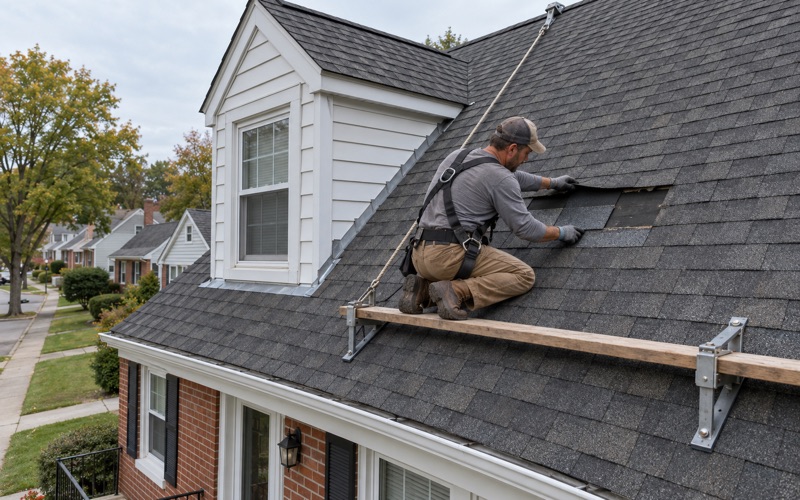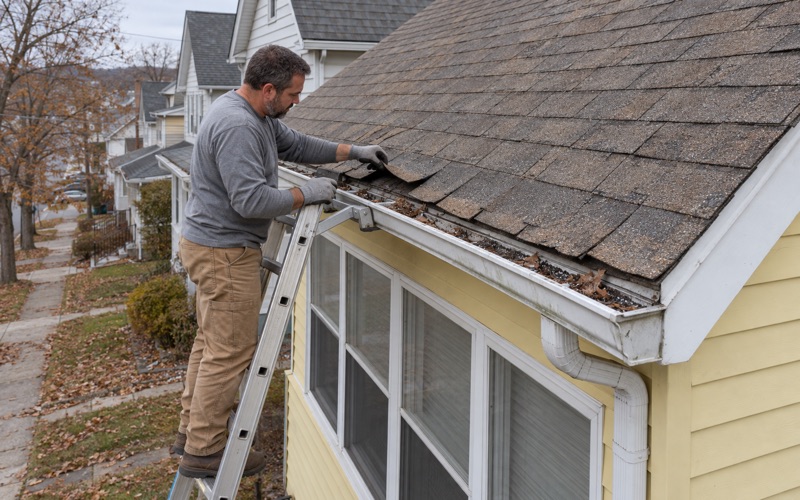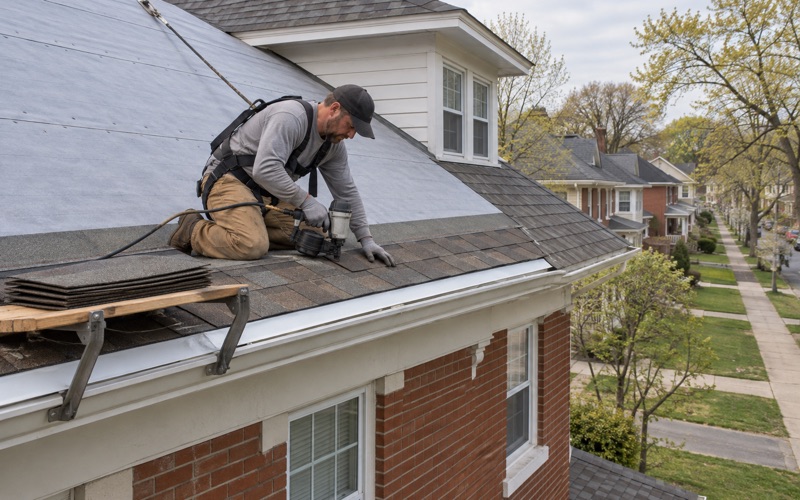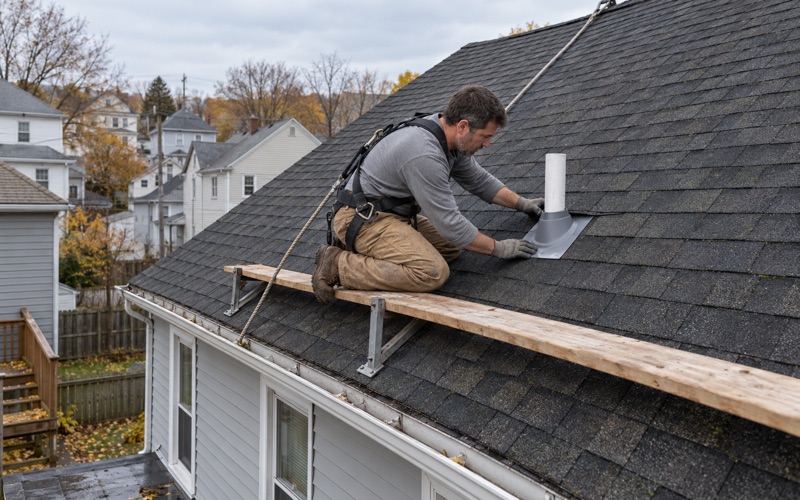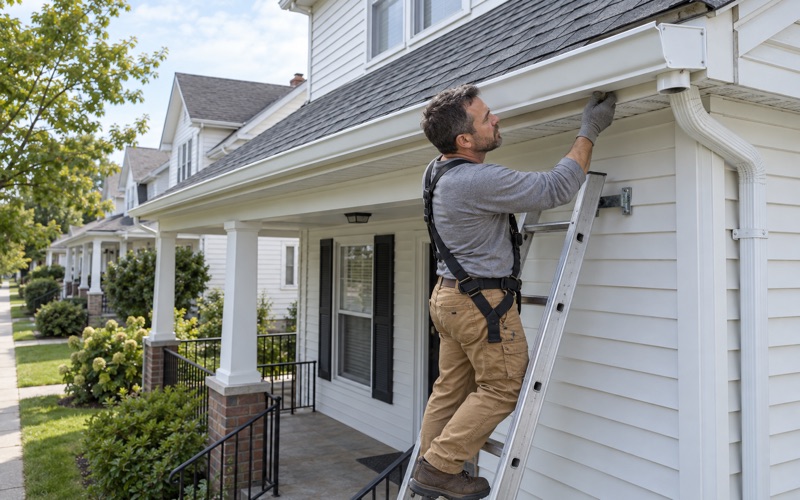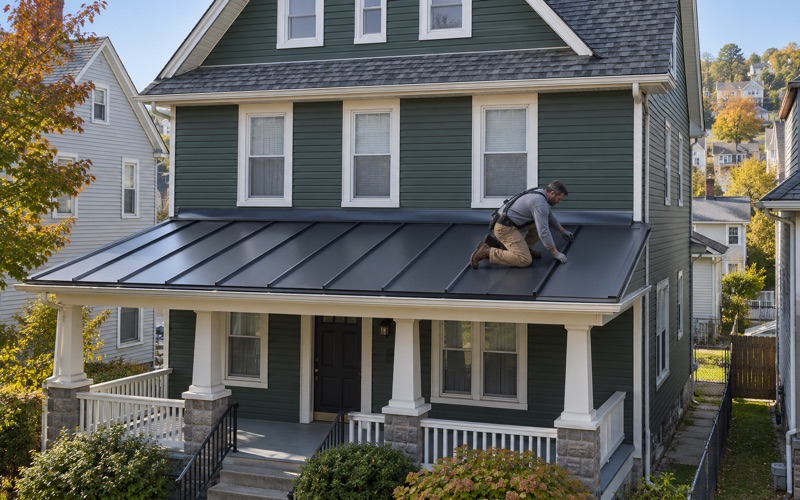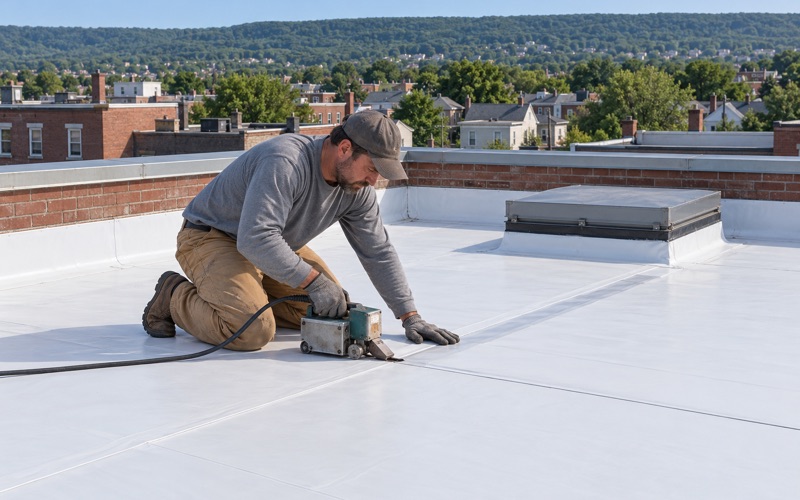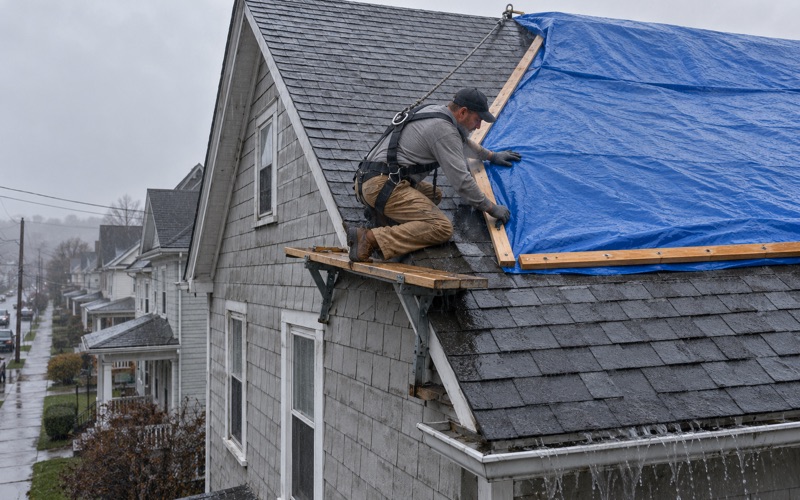
Scranton Quality Roofing brings more than 20 years of work to roofing in Pocono Springs, and the first thing we explain to an owner here is that a roof in this community answers to two sets of rules. One comes from the township the lot sits in. The other comes from the Pocono Springs Civic Association, which treats a roof as an exterior project that needs its own PSCA permit before the work begins.
That second layer shapes almost every decision on the job, from the shingle color to the hours our crew keeps. We fold the association’s paperwork, its approved colors and its contractor rules into the plan at the first visit, so the schedule you hear from us is one the association will actually let us keep.
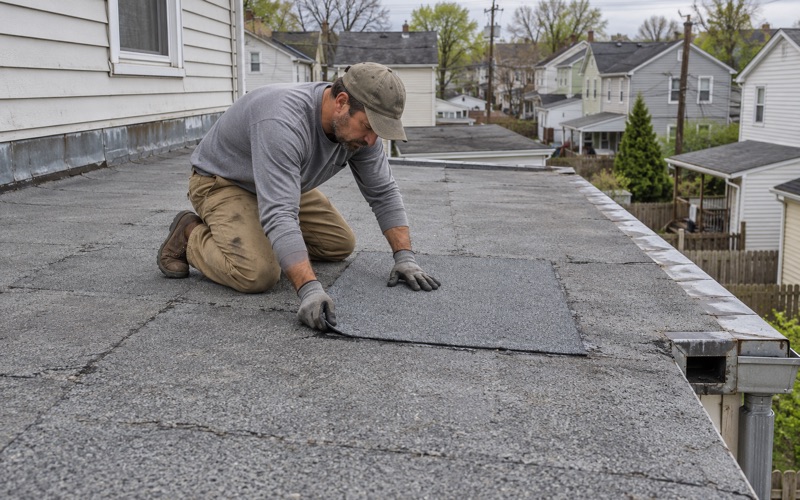
The roof itself gets the same care it would anywhere else. A leak call starts in the attic as well as up top, so we trace the water to the spot where it really gets in, and you get a straight answer on whether a repair will hold before anyone mentions a new roof.
The PSCA permit and the township permit ahead of it
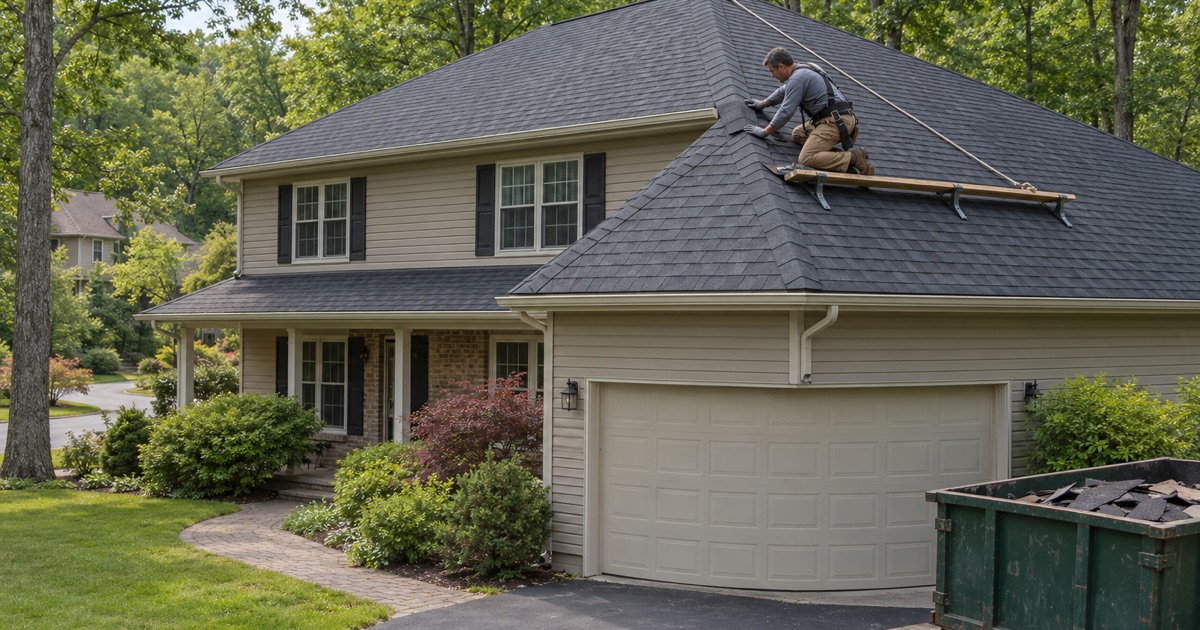
Pocono Springs is a private community, so the civic association runs its own permit process for exterior work alongside whatever the township requires. The association’s own FAQ puts it simply: many outside projects need a PSCA permit, and often a township permit as well. We treat both as part of the job rather than something the owner has to chase alone.
What the Architectural Guidelines say about roofing
The PSCA Architectural Guidelines, approved by the board on November 17, 2023 and updated 10/18/2024, carry a permit table for common exterior projects. Roofing is listed as needing a PSCA permit, in the same table that covers siding and gutters. The association’s January 2025 fee schedule lists roofing repairs under 200 square feet and replacement of more than 50% at no charge, so the permit for a typical roof job carries no association fee.
The same fee schedule notes that exterior repair work of 10% or less of existing conditions does not need a permit. Where a small repair sits near that line, we measure it and talk it through with you before deciding how to proceed. A solar panel on the roof is a separate line at $50, which matters only if panels are part of the plan.
Apply to the township first, then allow seven days
The association asks owners to apply for any township permit first and the PSCA permit second. Pocono Springs is split between Lehigh Township and Sterling Township in Wayne County, and the two townships handle the Uniform Construction Code differently: Lehigh opted in on 12/7/2010 with no amendments, and Sterling opted in on 07/08/2004 with amendments. Because each municipality sets its own re-roof rule, we confirm which township your lot is in and check that township’s requirement before the job is priced.
The PSCA office asks for seven days to turn a permit application around, and it needs the contractor’s name and phone number before it will approve one. We supply ours with the application so nothing sits waiting on a missing line. The association also asks contractors to document that they are bonded and insured as the state requires, and we provide that paperwork up front.
Six months to finish, and who receives the citation
An improvement permit from the association is valid for six months, with one six-month extension available. That is ample time for a roof, but it means a job should not be permitted in spring and left until the following year.
The guidelines are also clear that the property owner receives any citation for a violation the contractor commits. Failure to stop work after notice runs $50.00 per week under the fee schedule. That is the reason we follow the association’s rules to the letter: a shortcut on our side would land on your account, not ours.
Looking for roofing closer to Larksville? See Roofing Services in Larksville.
Approved colors and the shingle you choose
Section 8.3 of the Architectural Guidelines covers approved colors for all siding types, roofing and exterior paint. Where an existing structure is being refinished, the owner must choose one of the association’s recommended colors. The guidelines add that there are no restrictions other than color, so the material decision stays with you.
A color decision made on paper first
The guidelines print only a sample chart, and the full list of approved colors is held at the PSCA office. We ask you to confirm the color with the association before we order anything. A shingle delivered in the wrong shade is a problem that a permit review can catch on paper far more cheaply than a crew can fix on the roof.
Matching the product line to the list
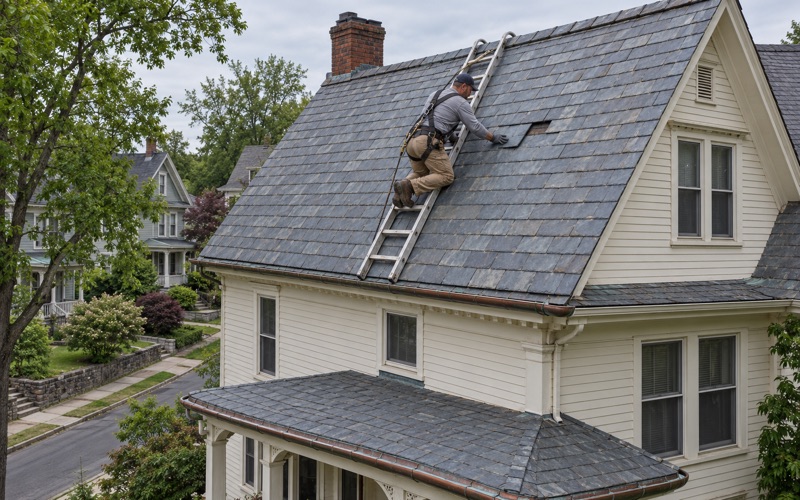
Most reroofs we handle are architectural laminated shingles, and lines such as GAF Timberline HDZ, Owens Corning Duration and CertainTeed Landmark each come in a range of colors. Once you know which colors the association accepts, we show you the shingles that fall inside that list and price the one you pick. Standing seam metal is another option some owners weigh, and it goes through the same color check.
Repairs that have to blend
A repair is held to the same expectation as a full roof, because a patch of off-color shingle on a refinished roof is exactly what the color rule is meant to prevent. Where an older shingle has been discontinued, we tell you how close the nearest match will look before you decide between a repair and a larger section. Sometimes the honest answer is that a repair is sound but will show, and you should hear that before the work starts.
Contractor hours, dumpsters and the gate compactors
Section 10.0 of the Architectural Guidelines sets rules for contractors working inside the community. They are association rules, not suggestions, and because citations go to the owner, we plan the job around them from the start.
8:00 a.m. to 5:00 p.m., Monday through Saturday
No contractor construction work is permitted before 8:00 a.m. or after 5:00 p.m., Monday through Saturday. A tear-off and reroof has to fit inside that window, so we size the crew and stage the job so each day’s section is dried in and closed before 5:00 p.m. If weather pushes a day back, the schedule moves to the next permitted day rather than into the evening.
Debris stays in a job-site dumpster
The trash compactors at the front and rear gates must not be used for construction debris. Old shingles, underlayment and torn-out flashing go into a dumpster at the job site and leave the community with it. We arrange the dumpster as part of the scope, so nothing from the tear-off ever ends up at the gates.
Cleanup at the end of every day
At the close of each work day we clean the driveway, the yard and the gutters, and we run a magnet sweep for roofing nails. In a community where neighbors share the roads and the amenities, a clean site at 5:00 p.m. matters as much as the roof itself.
Roofs on 1980s houses in a 1970s leisure community
Pocono Springs began in the early 1970s as a leisure community built by Pocono Springs Estates, Inc. The association’s office sits at 331 South Turnpike Road, and the community sits at an elevation of about 2,070 feet. Most of the houses came later than the community’s founding, and that shapes the roofs we find here.
What the housing count tells us
The 2024 American Community Survey counts 838 housing units in the Pocono Springs census-designated place. The largest group, 302 units, was built in the 1980s, with 184 more from the 1990s and 127 from the 1970s. Most of those 838 units are detached houses.
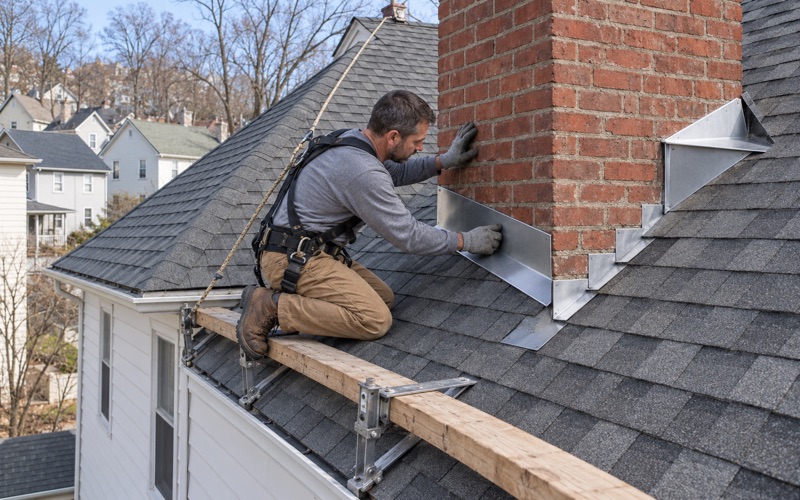
A house from those decades may be on its second or third roof by now, and a reroof often turns up more than one layer, tired decking or flashing that was reused when it should have been replaced. When the old roof comes off, any damaged decking is photographed and shown to you before it is replaced, at the per-sheet price written into the contract. Step, counter and chimney flashing is replaced along with the roof rather than reused under the new material.
Seasonal homes and roofs nobody is watching
The same survey counts 424 units as seasonal, recreational or occasional-use homes. An owner who is not on site may not see a stain on the ceiling until it has spread, so we photograph what we find in the attic and on the roof and send it to you. When you are away, those photos are how you see the problem we found.
A scope you can compare line by line
Our written scopes list tear-off, decking, underlayment, flashing, ventilation and gutters as separate lines. That lets you lay our estimate beside another contractor’s and compare them item by item. Gutters and downspouts are sized and pitched as part of the roof job, which matters because the guidelines list gutters as needing their own PSCA permit, and the township may need to be consulted as well.
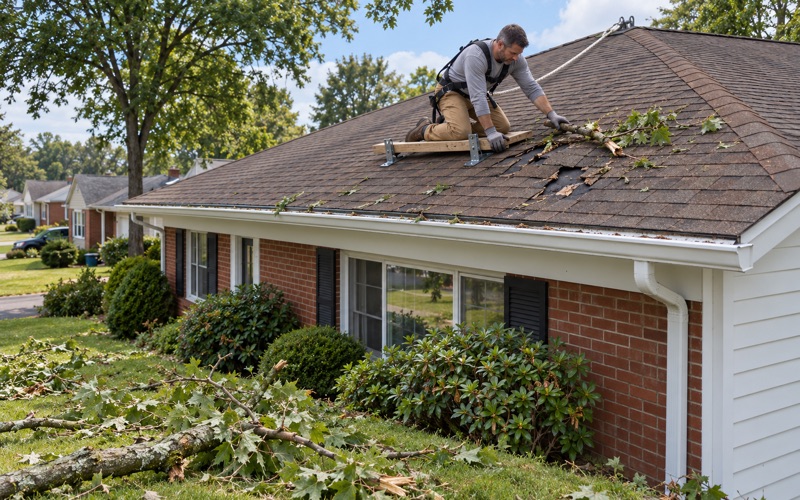
If a storm damages the roof, we photograph the damage and write it up for your own insurance claim, and we will meet the adjuster on site when you ask. We do not negotiate the claim for you. The repair then goes through the same association steps as any other roof work.
- 20+ Years Roofing
- Free Written Estimates
- Repair Before Replace