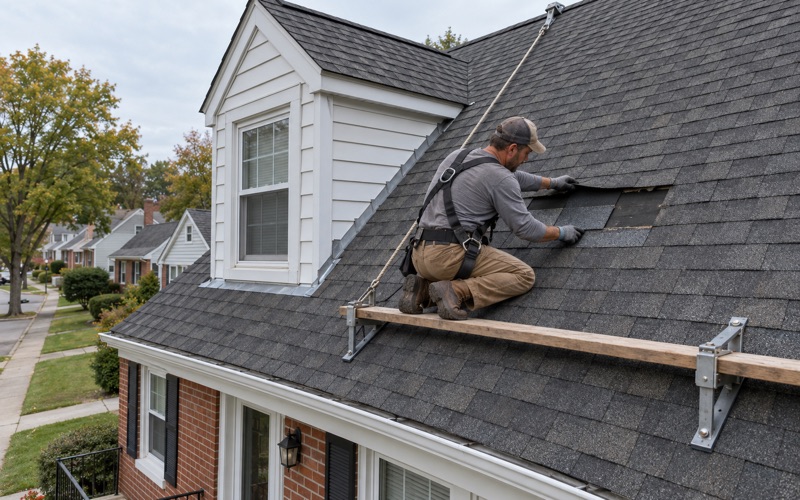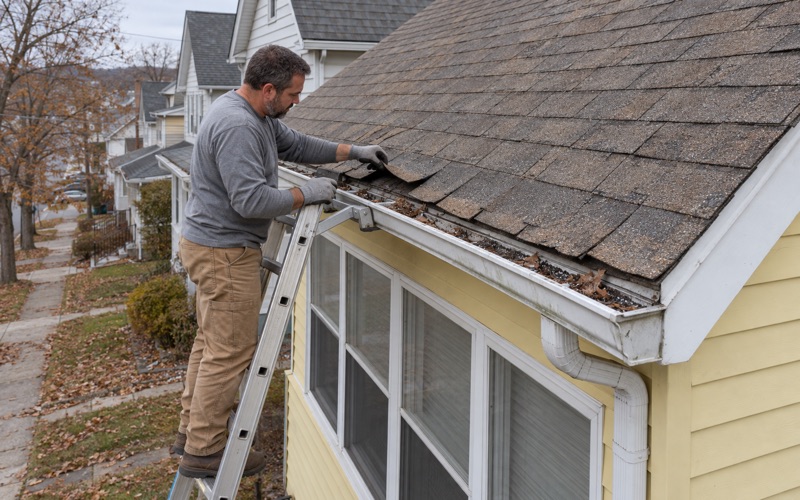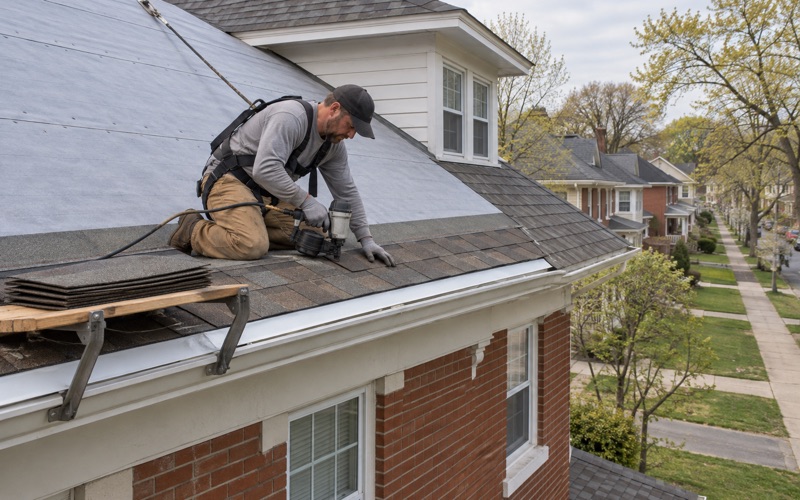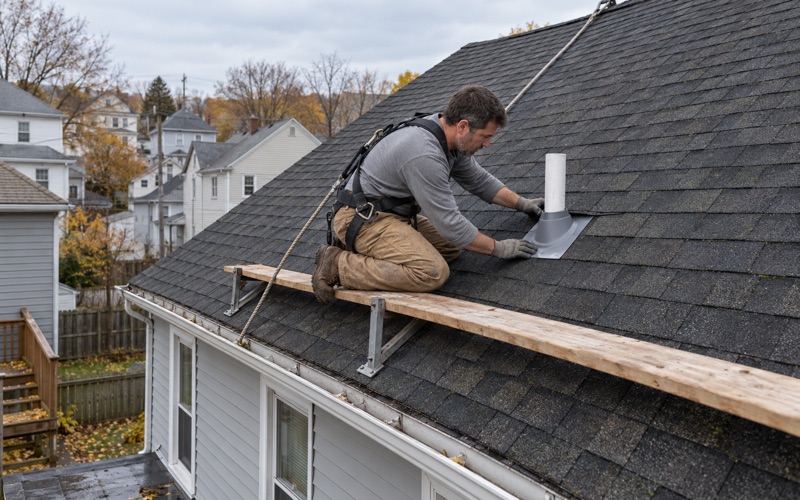
A house that ends up before the Pittston Blighted Property Board rarely gets there because of peeling paint. Long vacancy usually means water has been working through the roof for several seasons, and by the time a property is referred, the rafters, ceilings and plaster beneath it have paid the price. That is why so many rehab plans for a city house start overhead, before a wall is opened or a floor is leveled.
For more than 20 years, Scranton Quality Roofing has worked on houses across the Lackawanna Valley, and our roofing in Pittston more and more often runs on a schedule someone else has set. A buyer who wins a property from the Redevelopment Authority has 12 months to finish the rehab, and getting the house dry is the first part of that year we can protect.
This page explains how the city’s blight process moves, what the Authority’s timeline means for whoever holds the roofing contract, and how we scope a roof-first job on a house that has sat empty. It is written for buyers, for owners answering a blight notice, and for anyone carrying a vacant property in the city.
How Pittston’s Blighted Property Board Works
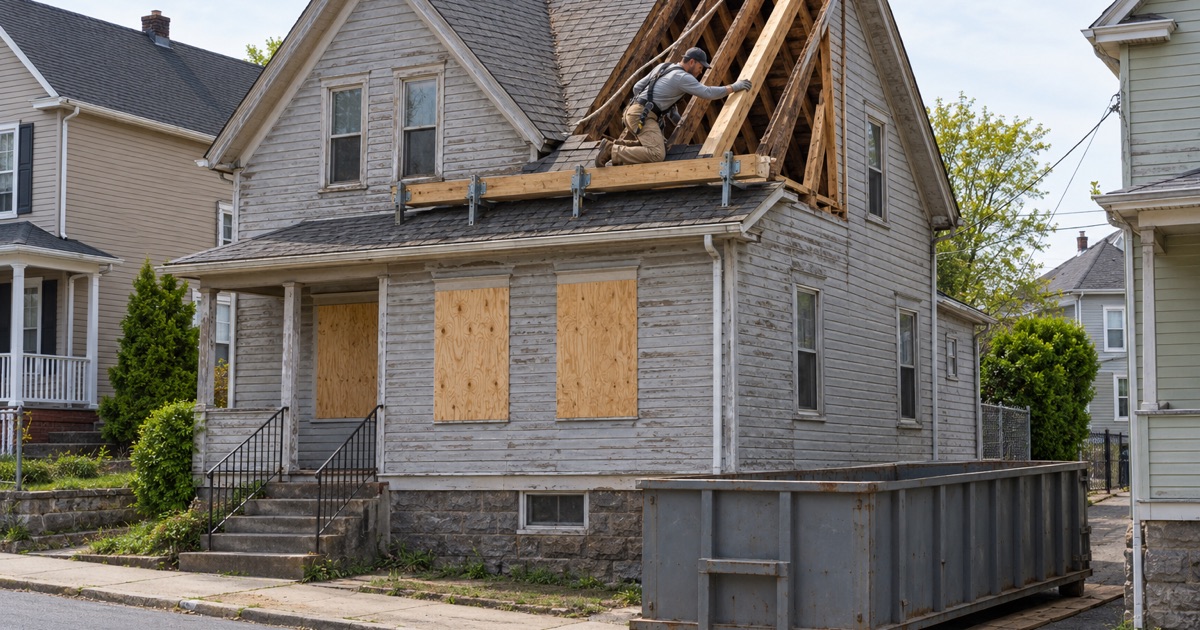
The City of Pittston handles neglected buildings through its own process rather than leaving them to sit. Chapter 20 of the City Code creates a vacant property review committee known as the Pittston Blighted Property Board. The Board meets on the second Wednesday of each month at City Hall, 35 Broad Street, and its job is to identify properties and refer them onward.
What a referral means for an owner
A referral is the start of a pipeline, not the end of one. Properties the Board refers can go to the Redevelopment Authority of the City of Pittston, which has the power to acquire them and resell them for rehabilitation. For an owner who still wants to keep the house, the useful moment to act is early, while the city is still asking for a plan rather than a sale.
The city’s blight guide is direct about how that early window works. An owner who receives notice is not simply waiting on a decision; there is a defined way to stop the process. That way runs through a written plan, and a believable plan needs real numbers behind it, which is often where a roofing scope enters the picture.
The 30-day rehabilitation plan
According to the city’s guide, the owner may stop the blight process by producing a rehabilitation plan within 30 days of the property being declared blighted. Thirty days is not long when the house has been closed up and nobody has been on the roof in years. We can inspect the roof and the attic beneath it and hand the owner a written scope quickly enough to fold into that plan.
Our scope is honest about what the roof needs. If a section can be repaired, we say so before any replacement is discussed, because a plan built on an inflated number helps nobody. If the roof is finished, the scope says that plainly and prices the work line by line so the owner can show exactly what the money covers.
Appeals and timing
Chapter 20 also gives the owner or an agent the right to appeal to the Joint Code Appeals Board within 30 days of the initial notice of blight. Whether an owner appeals or submits a plan is a decision for the owner and their own advisers, not for a roofer. What we can add is a clear picture of the roof’s condition, with photographs, so whichever path they choose rests on facts rather than guesses.
Looking for roofing closer to West Pittston? See Roofing in West Pittston.
Redevelopment Authority Sales and the 12-Month Clock
When a referred property reaches the Redevelopment Authority, it can change hands. At its October 7, 2025 meeting, the Authority moved to acquire 182 Mill Street, 180 Mill Street, 210 Rear Mill Street and 9 Prospect Place, and each acquisition was listed as a referral from the Blighted Property Board. Those resolutions show the pipeline is active, and that the next owners of houses like these will be racing a calendar.
How the Authority sells
The Authority states that it sells by competitive public negotiations, not a sealed bid to the highest bidder. It weighs whether a buyer has the ability and the funding to complete major rehabilitation, so a prospective buyer who arrives with a realistic budget is in a stronger position. A priced roof scope, with tear-off and decking listed separately, is one of the clearest ways to show that budget is grounded.
Settlement is expected within 60 days of the meeting where the sale is approved. That means a buyer can know the general shape of the roof work before closing and line up a crew to start soon after. We are glad to look at a property during that window, so the first weeks of ownership go to work rather than to waiting for estimates.
Twelve months from purchase
The Authority requires the rehab to be finished on or before 12 months from the date of purchase. Every trade has to fit inside that year, and most of them cannot do much useful work inside a house that still takes on water. Plaster, insulation, wiring and new flooring all sit downstream of a sound roof, which is why we treat the roof as the first milestone on the buyer’s schedule.
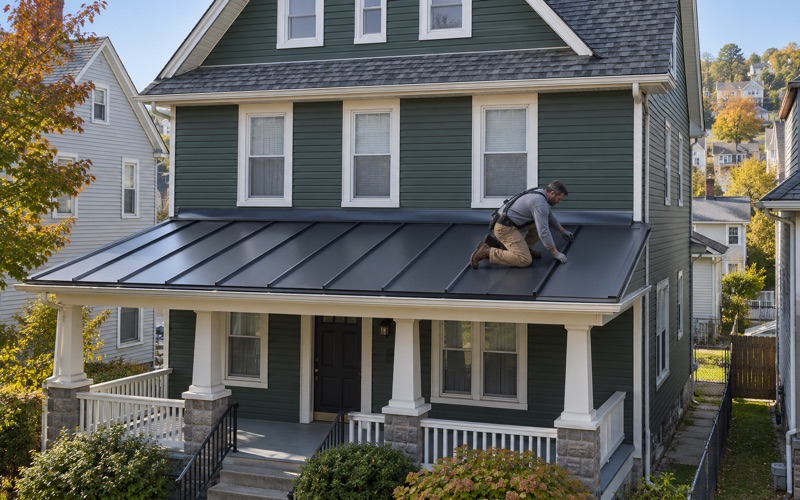
In practice that means we plan the job so the house is weathertight as early as possible. Tear-off, decking, underlayment and flashing are sequenced to close the roof quickly, and gutters follow so water is carried away from the foundation the interior crews will depend on. A dry house in month two leaves room for everything else.
Certification of Completion and the deed
Once the rehab is done, Authority staff inspect the property and approve a Certification of Completion, and only then is the Quitclaim Deed returned to the owner. The Authority’s published material does not set a roofing standard, so we do not claim one. What we can do is leave a finished roof, flashing and drainage that read as complete work to anyone who walks the property.
On resale to a homeowner, the Authority places a deed restriction requiring owner-occupancy in perpetuity. The person who buys one of these houses is usually planning to live under that roof for a long time. The city has even marked a finished house with a Blight to Bright Certification, and a roof built to last is part of what makes that kind of turnaround real.
Why a Blighted Pittston House Is Usually a Roof-First Job
Pittston’s housing is old. The 2024 American Community Survey counts 1,608 of the city’s 3,850 housing units as built in 1939 or earlier, and many of the rest went up during the 1940s and 1950s. Older frame houses that sit vacant tend to fail from the top down, which is why we start any rehab conversation with the roof and the attic directly under it.
What a vacant roof tends to hide
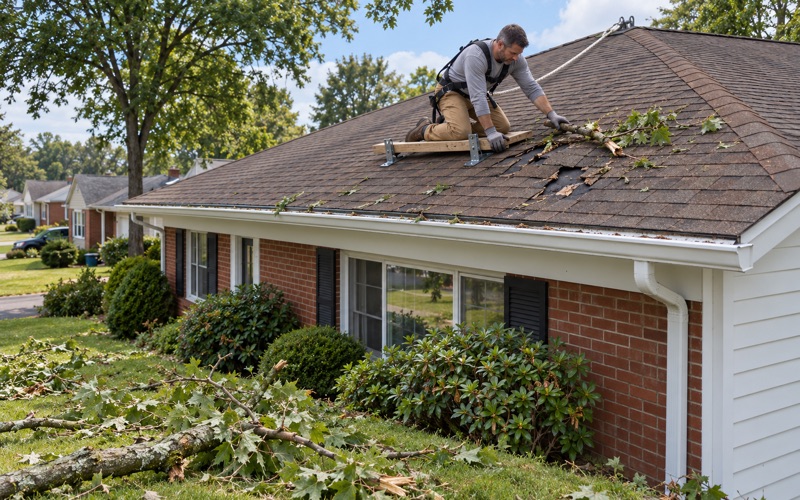
A roof that has leaked for years usually looks better from the street than it is. We look in the attic as well as on the roof on every call, so water is traced to the place it actually gets in before anything is priced. On a long-vacant house that often means stained sheathing, soft spots around chimneys and rot along the eaves where gutters overflowed.
Nobody knows the full condition of the decking until the old roof is off. When we find damaged boards, we photograph them and show the owner before anything is replaced, and the per-sheet price is already set in the contract. A buyer working to a fixed rehab budget can see exactly why the number moved and by how much.
Repair or replace, answered first
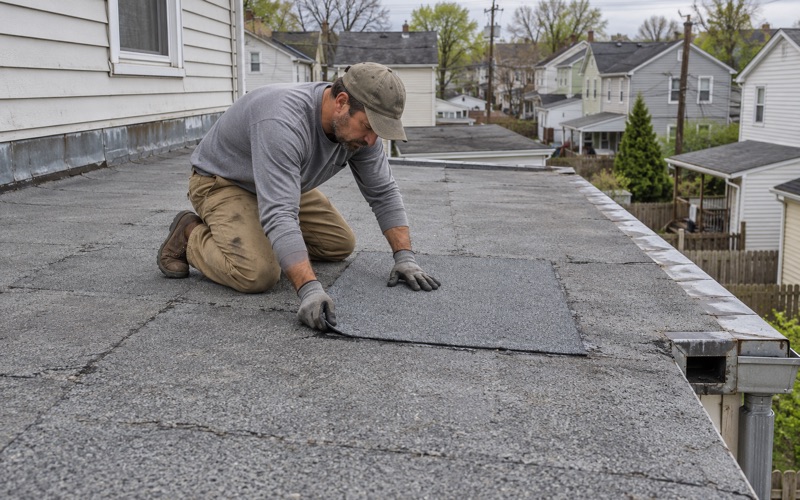
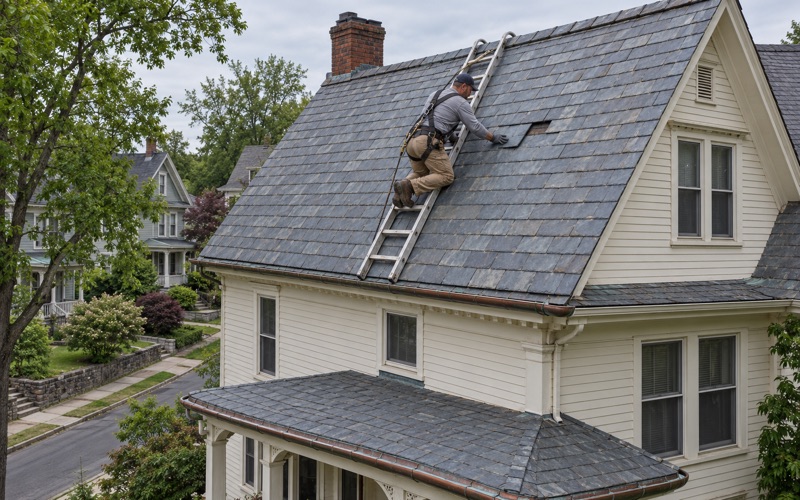
Not every blighted house needs a full tear-off. Some carry slate that is still sound apart from broken or missing pieces, and we repair slate one piece at a time with copper nails and slate hooks before anyone suggests removing it. Where an architectural shingle roof has only localized damage, we say whether it can be patched and how long that repair is likely to hold.
When a replacement is the honest answer, we explain why in plain terms. Layers are checked, and a roof already carrying old layers is stripped rather than covered again. The goal is a single, sound system the buyer will not have to revisit while they are still finishing the kitchen and the bathrooms.
Flashing, gutters and the cleanup
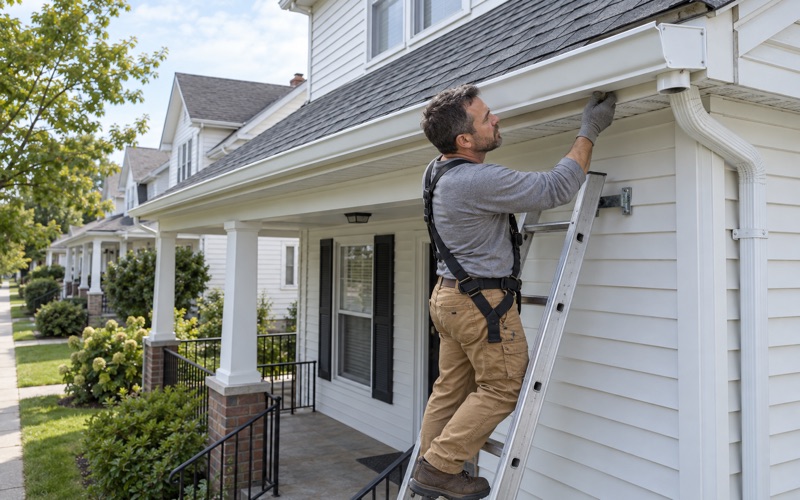
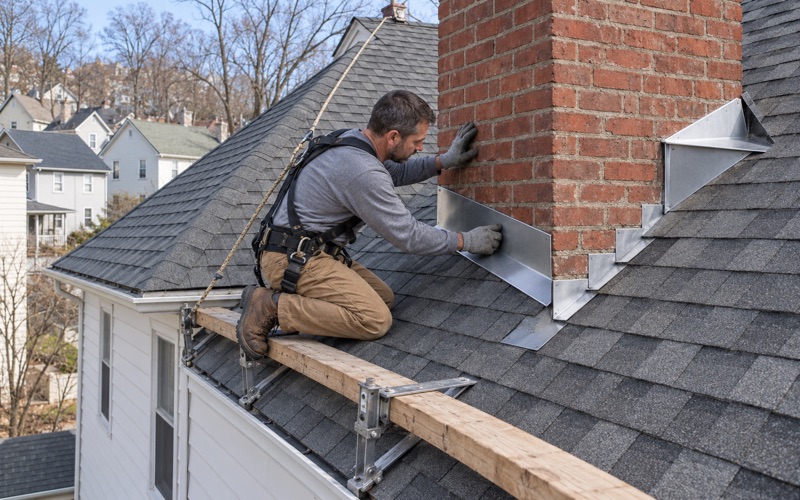
Flashing is where vacant houses leak first, especially at chimneys and along walls where a roof meets brick or siding. We replace step, counter and chimney flashing with the new roof instead of reusing old metal underneath it. Where a chimney needs a cricket to shed water around it, that goes into the scope too.
Gutters and downspouts are sized and pitched alongside the roof, not added as an afterthought, so runoff leaves the property instead of pooling at a foundation that may already be tired. At the end of each work day the driveway, yard and gutters are cleaned, and the ground gets a magnet sweep for roofing nails before other trades walk the site.
Vacant-Property Registration and the City Code Office
Owners of empty buildings face obligations whether or not the Board has acted. The city adopted a registry and property maintenance rules for certain abandoned properties back in 2016, and City Administrator Joe Moskovitz said at the time that the goal was getting houses cleaned up rather than fining owners. A tight roof is one of the plainest signs that a vacant house is being looked after.
Sixty days empty means registration
Under Ordinance Number 5 of 2021, effective April 21, 2021, all properties vacant for sixty consecutive days must be registered by the owner. The city’s registration form asks for a fee of $250 returned to Pittston City Hall at 35 Broad Street.
For an owner holding a house between tenants or between buyers, the roof is the part most likely to turn a manageable vacancy into a blight referral. A small leak left over a winter becomes ceiling damage, mold and rot by spring. We can make targeted repairs that keep a registered vacant house dry while the owner decides what comes next.
Permits before work begins
The City of Pittston has adopted the Pennsylvania Uniform Construction Code by ordinance under City Code Section 191, and the city states that a permit is required for most new construction, repairs and renovations. It also says the permit must be obtained before work begins. Code enforcement runs through City Hall, and the city’s code official is Harry Smith.
Every municipality we serve sets its own re-roof permit rule, so we check the rule for the house’s own city before the job is priced. Pittston City has its own code office and is a separate municipality from Pittston Township, which keeps its own office and its own permit rules. Getting that distinction right keeps a rehab from stalling at the first inspection.
A scope that can be checked
Our written scopes list tear-off, decking, underlayment, flashing, ventilation and gutters as separate lines. A buyer comparing two estimates can line them up item by item, and a lender or the Authority can see what the roof budget actually covers. That clarity matters when a rehab plan or a 12-month schedule is riding on the numbers.
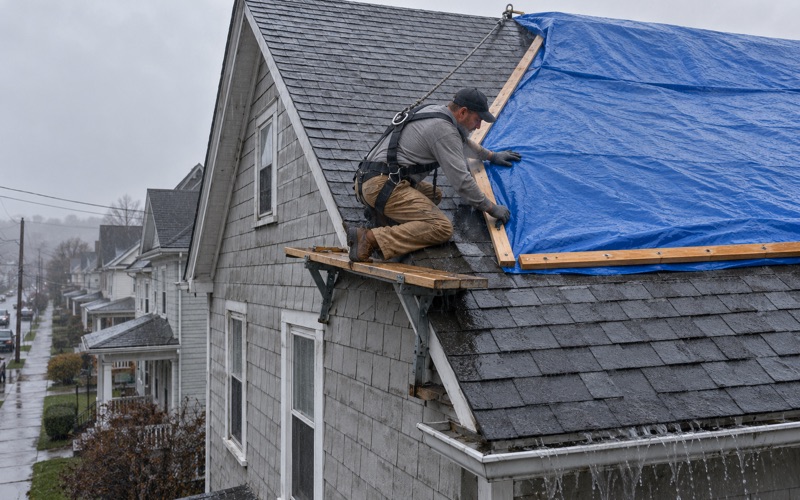
If a vacant house has storm damage on top of neglect, we photograph it and write it up for the owner’s own insurance claim. When asked, we meet the adjuster on site to show what we found, without negotiating the claim. Whatever path the property takes through the city’s process, the roof gets documented, scoped and finished as the first job on the list.
- 20+ Years Roofing
- Free Written Estimates
- Repair Before Replace