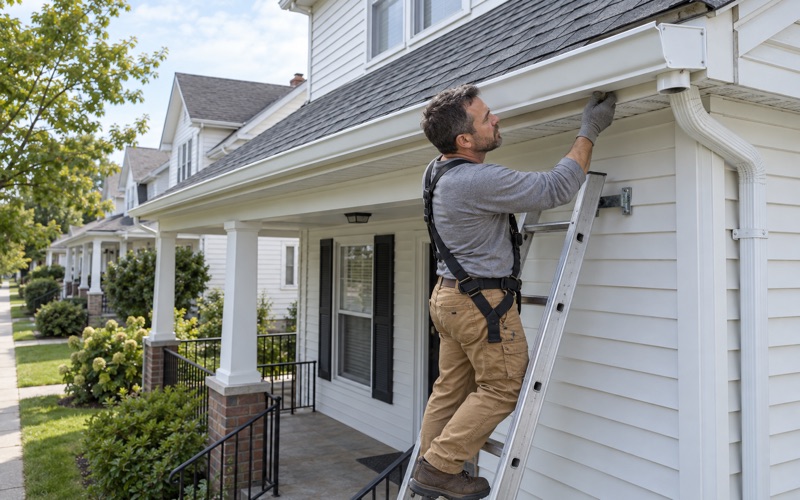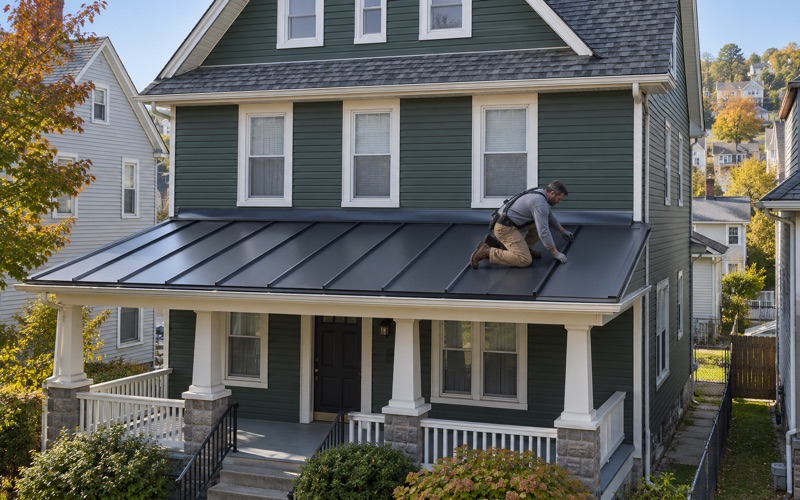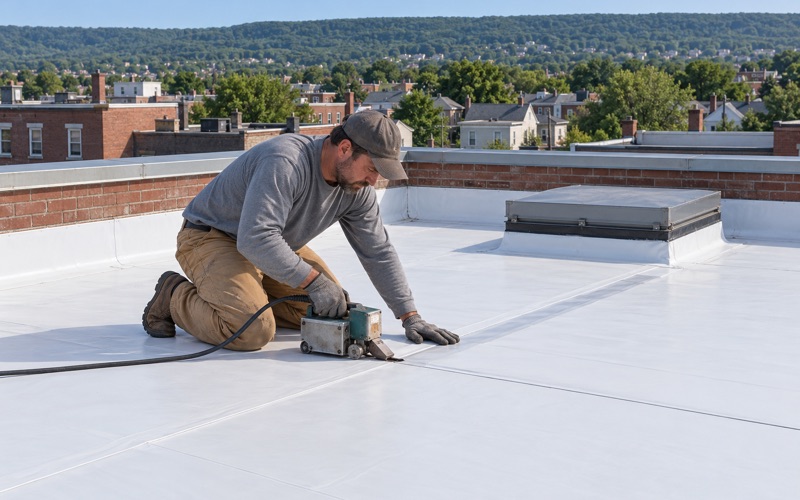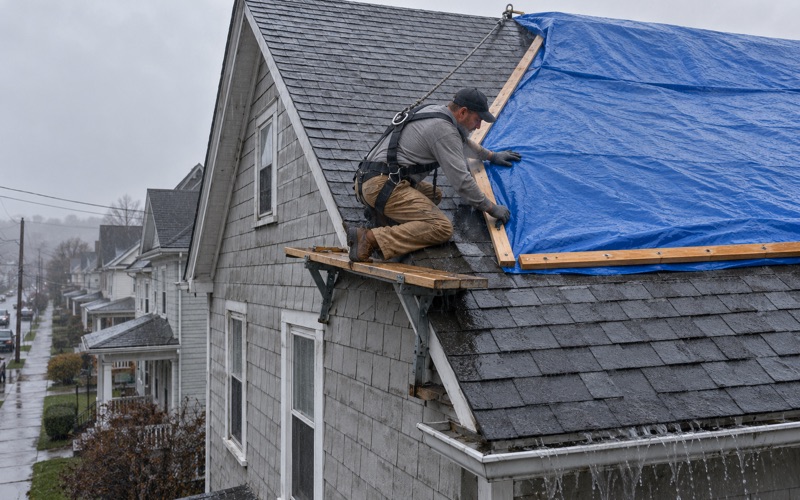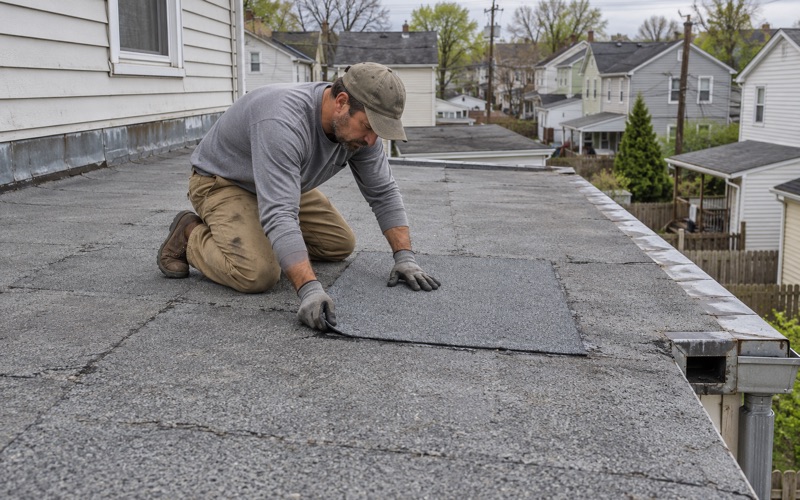
Scranton Quality Roofing has spent more than 20 years on roofing in Kingston and across the valley, and our work here begins the same way on every call: a look at the roof, a look in the attic, and a trace of where the water actually gets in before a single number goes on paper. A stain on a bedroom ceiling rarely sits under the opening that caused it, and pricing the wrong spot is how owners end up paying twice.
We also tell you plainly whether the roof can be repaired. Replacement comes up only when repair is the wrong answer, and when it does, our written scope breaks out tear-off, decking, underlayment, flashing, ventilation and gutters as separate lines, so a second estimate can sit beside ours and be compared item by item.
Kingston has its own permit office, its own paperwork and a flood picture that shapes how owners think about their houses. The sections below cover what that means for a roof on this side of the river, and what it does not.
Kingston Behind the Kingston to Exeter Levee System
One borough among eleven communities
The Borough of Kingston sits behind the Kingston to Exeter Levee System, part of the Wyoming Valley levees. FEMA’s June 9, 2020 fact sheet for property owners lists Kingston among 11 communities behind the system and counts 28,000 people, 10,590 structures and 39 critical facilities in the levee impact area.
The Wyoming Valley Levee Raising Project was carried out by the Army Corps of Engineers’ Baltimore District, with the Luzerne County Flood Protection Authority as its non-Federal partner. That authority oversees the levee system today, and it is the body Kingston’s own floodplain documents point back to.
What FEMA tells owners behind it
FEMA’s fact sheet says the system will keep its accreditation on the updated flood maps, and that FEMA will show it as reducing the hazard from the 1-percent-annual-chance flood. The same document is careful to add that levees can be overtopped or fail during floods larger than the ones they were designed for, and it encourages flood insurance for the people living behind them.
Across all the communities behind the system, the fact sheet counts 3,160 flood insurance policies with a $570 average annual premium. Those are FEMA’s figures for the whole impact area, not for Kingston alone, and we cite them only so an owner knows where the source sits.
Why a roofer pays attention to any of this
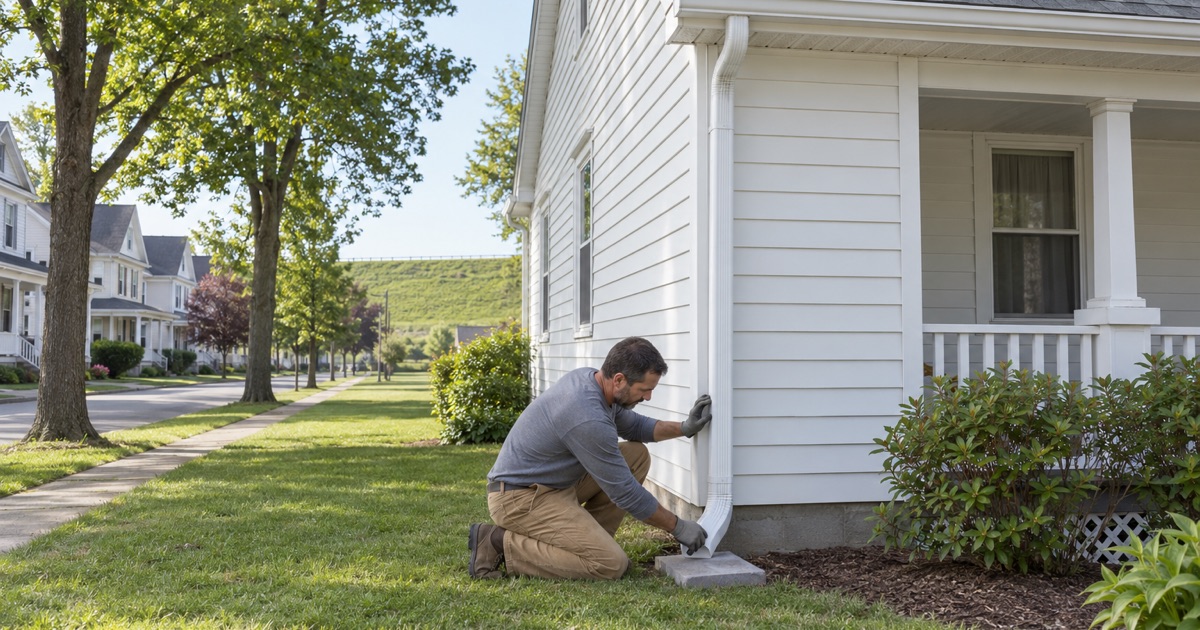
A levee does nothing about water falling from above. The roof and its gutters are the part of a Kingston house that handles rain directly, and a downspout that empties beside a foundation adds water right where an owner least wants it. We size and pitch gutters and downspouts together with the roof, and we check where every downspout lets out before a job is called finished.
Looking for roofing closer to Wilkes-Barre? See Wilkes-Barre Roofing.
The June 20, 2024 Flood Maps and Kingston’s Pump Stations
What changed in 2024
The updated Luzerne County flood maps took effect June 20, 2024, and FEMA’s Community Status Book lists that date as Kingston’s current effective map. The borough’s flood insurance community number is 420612, and its first flood insurance rate map dates to June 1, 1977.
The borough’s objection
The Times Leader reported in July 2024 that Kingston officials had argued the new flood insurance map ignored the borough’s own internal stormwater pump stations, which they said prevent flooding. The Luzerne County Flood Protection Authority and the Army Corps split the cost of an interior drainage study for the Kingston-to-Exeter levee risk assessment, about $95,000 each, and FEMA said it would revisit the area if the findings warranted it.
We have not found a published result from that study. This page therefore says nothing about whether the maps will change or what any change would mean for an individual property.
What an owner controls at the roofline
Interior drainage is the borough’s job, and the pump stations are the borough’s equipment. What a homeowner controls is how quickly roof water leaves the house and where it lands. Undersized gutters spill over at inside corners in a hard downpour, and a downspout that empties onto a walk or against a basement wall sends that water to exactly the wrong place.
When we replace a roof in Kingston, gutter size, downspout count and outlet locations go into the written scope as their own line. An owner comparing bids can see whether the other estimate treated drainage as part of the job or left it out entirely.
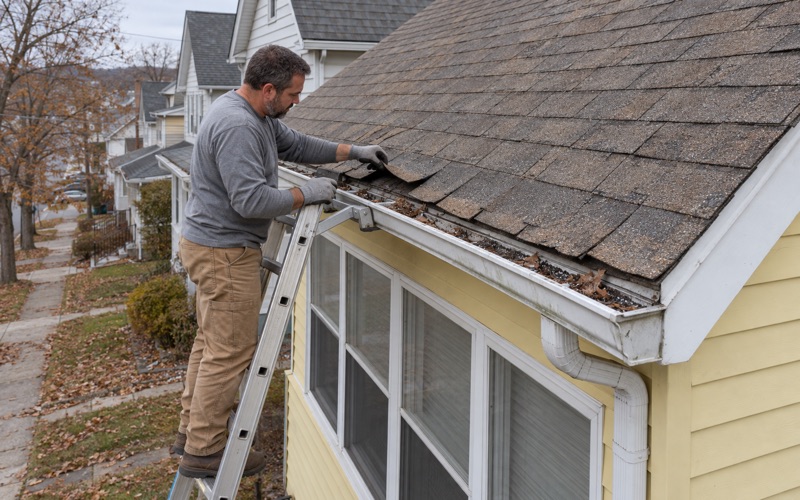
The same attic visit that traces a leak tells us something about drainage, too. Water stains near the eaves, damp insulation along an exterior wall or rot at the bottom of a valley usually point to gutters backing up or ice holding water at the edge, and we write up what we find before suggesting any fix.
Kingston’s Floodplain Toolkit and Permit Office
What the borough posts
Kingston keeps a Flood Plain Management page with its own toolkit: a Floodplain Development Permit Application in long and short forms, Ordinance 2024-04 on floodplain management, FEMA’s levee certification acceptance letter to the LCFPA, the Army Corps’ March 2018 levee portfolio report, and a guide titled “So You Live Behind Levee.” The borough also participates in the Community Rating System at class 7, which carries a 15% flood insurance discount.
We have not read the text of the ordinance, so we do not tell owners what it says. When a project raises a floodplain question, the borough’s floodplain page and its permit office are where that answer lives, and we point owners there rather than guess.
Who handles building permits
Building permits run through the Municipality of Kingston’s code and permit office in the Municipal Building at 500 Wyoming Avenue, 570-288-4576. Kingston opted in to enforce the Uniform Construction Code itself in 2004, with amendments, and the borough asks that applications be sent to permits@kingstonpa.org; permits and code matters also run through its iWorQ portals.
The borough’s fee schedule, dated January 6, 2020, prices residential building permits by the value of the work: $45 up to $500, $80 up to $2,500, $110 up to $5,000, $135 up to $7,500 and $165 up to $10,000, then $10 per $1,000 above that, plus a $4.50 state UCC fee. The schedule has no separate roofing line, and Kingston publishes no stance of its own on re-roofing.
Every borough, city and township we work in sets its own rule on this. That is why we check with Kingston’s office about the specific house before we price the job, so the permit question is settled in the estimate rather than discovered halfway through it.
Dumpsters on the street
Tear-off debris has to go somewhere. Kingston’s dumpster permit application says no permit is needed when the container sits on private property, while a street placement needs a permit that is valid for 10 days and must be renewed before it expires. On a narrow lot with no driveway room, we schedule the tear-off to fit inside that window.
Pre-1940 and Attached Homes on the West Side Flats
An older housing stock
Census figures from the 2024 American Community Survey five-year estimates count 6,432 housing units in Kingston, and 2,218 of them were built in 1939 or earlier. Another 1,263 date to the 1970s. Of all those units, 3,211 are detached houses and 992 are attached, and renters occupy 2,783 of the 5,857 occupied homes.
Those numbers describe a borough where a roof often sits on framing close to a century old, sometimes over two or three layers of earlier work. That changes what we expect to find once the old material comes off.
It also changes ventilation. Many older attics were never built with a clear path for air, and adding a ridge vent without enough soffit intake just moves the problem. We measure the attic’s intake and exhaust before choosing a vent, and we list ventilation as its own line in the scope so an owner can see what is being added and why.
Attached homes and shared rooflines
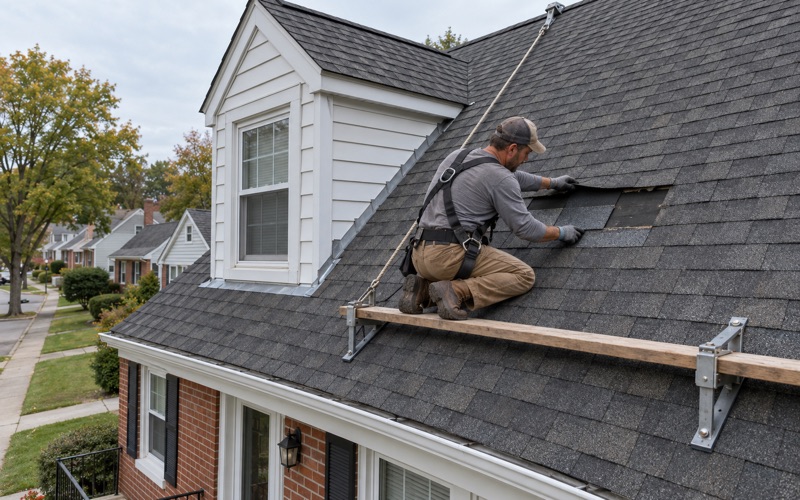
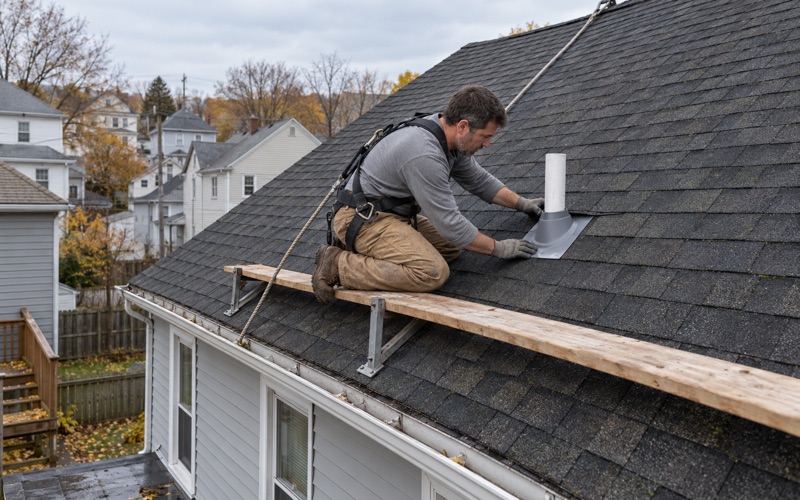
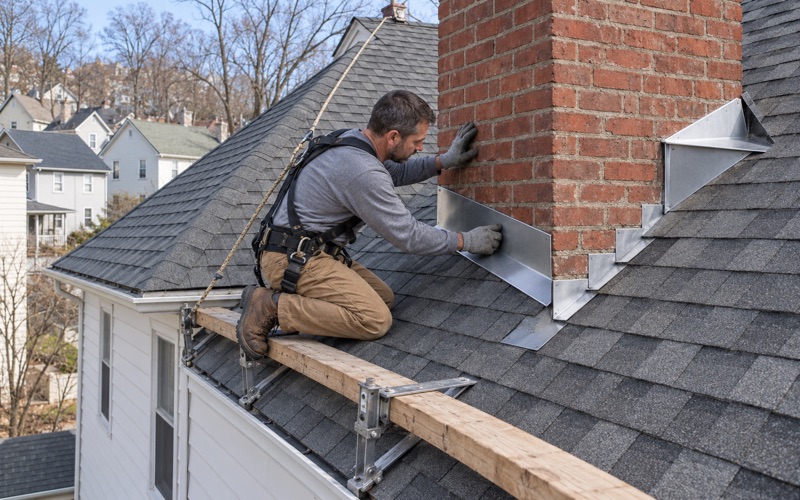
On an attached house, the roof ends at a line shared with the neighbor. Flashing along that party wall, and at every chimney and dormer, is a common source of leaks on older homes, so we replace step, counter and chimney flashing with the roof instead of reusing it under new shingles. Before anything comes off a shared roofline, we walk the owner through exactly where our work stops.
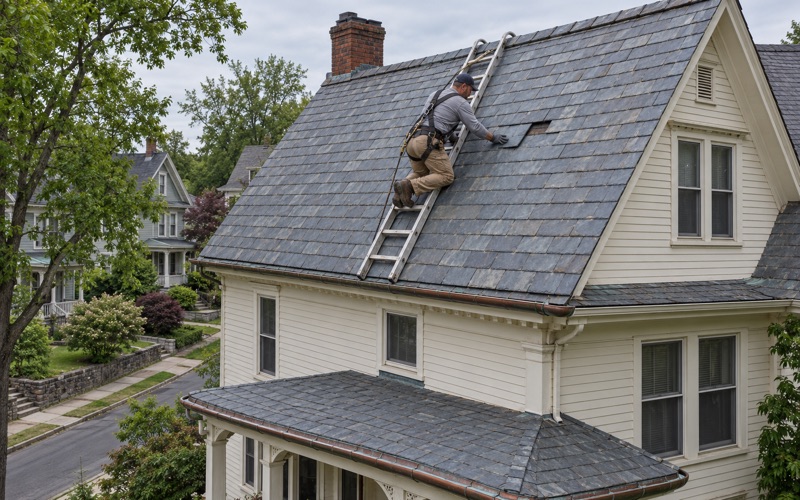
Where an older Kingston home still carries slate, we repair it slate by slate with copper nails and slate hooks before anyone suggests tearing off a sound roof. Many of those roofs have years left once the broken pieces and failed flashing are dealt with.
Decking and ice at the eaves
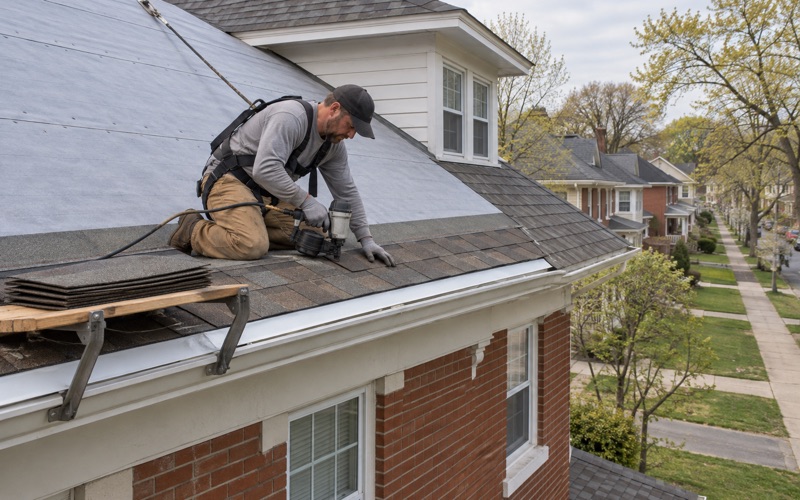
Houses this age often hide damaged boards under the current roof. Any decking we find rotted after tear-off is photographed and shown to the owner before it is replaced, at the per-sheet price already set in the contract. At the eaves, a self-adhering ice barrier is sized to the overhang of the house, because northeastern Pennsylvania winters build ice dams along the edges of older homes.
Storms and cleanup
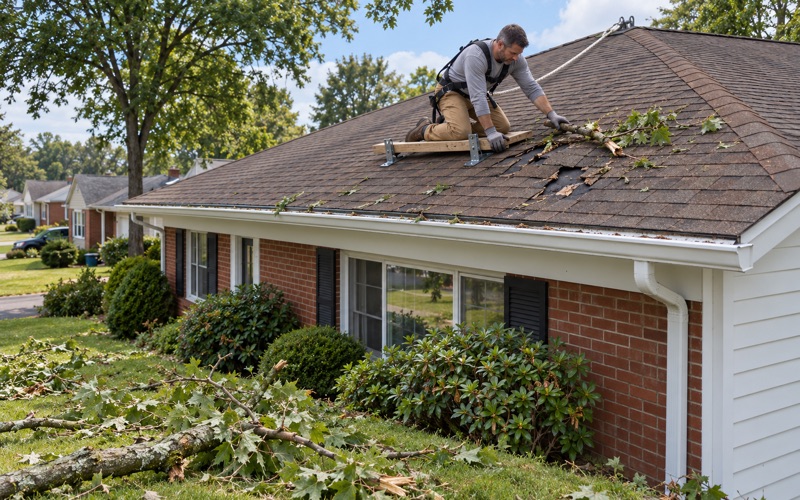
After wind or hail, we photograph and write up the damage for the owner’s own insurance claim and will meet the adjuster on site when asked; the claim itself stays between the owner and the insurer. At the end of every work day, the driveway, yard and gutters are cleaned, and a magnet sweep picks up stray roofing nails before we leave.
- 20+ Years Roofing
- Free Written Estimates
- Repair Before Replace