Scranton Quality Roofing approaches roofing in Jessup with a question most re-roof estimates never ask: does the house sit in a floodplain? That question is printed on the borough’s own permit application, and the answer can change what paperwork goes with a job before a single shingle comes off. We have spent more than 20 years on roofs across the Lackawanna Valley, and we would rather settle the paperwork early than discover it halfway through a tear-off.
Most of the borough’s housing is detached single-family homes, and a large share of it went up before 1950, with a newer cluster built during the 2010s. Those two groups need very different things from a roof. An older house may be hiding a second layer of shingles, worn board sheathing or flashing patched more times than anyone remembers, while a newer one usually needs a sharper look at ventilation and drainage details.
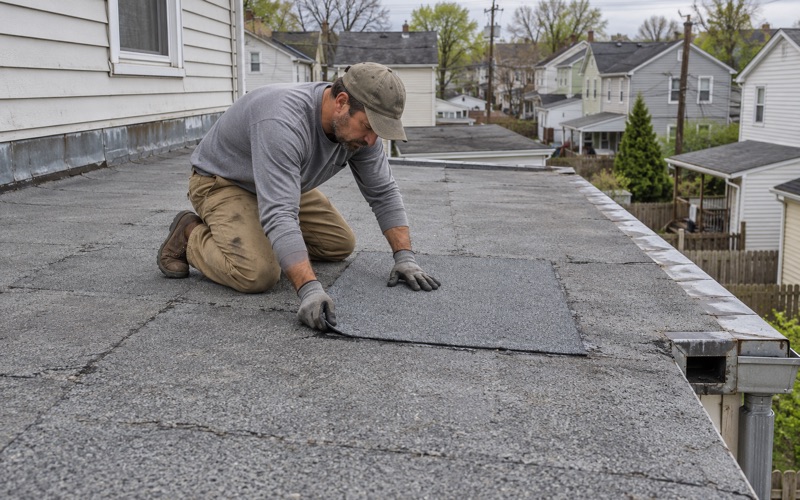
On every leak call we go into the attic as well as onto the roof, tracing the water back to where it actually enters before we price anything. You get a straight answer about whether a repair will hold before replacement comes up at all. The written scope then breaks out tear-off, decking, underlayment, flashing, ventilation and gutters as separate lines, so a second estimate can be laid beside ours and compared item by item.
Sterry Creek and What the Flood Study Says
A Creek That Starts Inside the Borough
Sterry Creek is Jessup’s own creek. It begins on a mountain within the borough and runs about 4.7 miles through Jessup and on into Olyphant, draining a watershed of 4.92 square miles. The water that collects on Jessup’s hillsides moves through Jessup’s own channel first, which is why the creek comes up in borough paperwork that has nothing obvious to do with water.
The creek passes through a culvert under Pennsylvania Route 247, and the 2001 Lackawanna River Watershed Conservation Plan described it as impacted by abandoned mines by the time it reaches that crossing. A one-mile channelization project has also been carried out on the creek. None of that touches a roof directly, but it helps explain why the stream behaves the way it does when water rises.
What FEMA’s Flood Insurance Study Found
FEMA’s Lackawanna County Flood Insurance Study, dated July 27, 2011, is cited on Wikipedia as calling Sterry Creek one major source of flooding in the borough of Jessup. The mechanism it describes is debris gathering at culverts, which backs the creek up until it floods nearby properties and basements. The original study is no longer at its old web address, so we repeat only what that citation reports.
A 2015 report in The Times-Tribune added that the creek overflows its banks about once every ten years and damages nearby properties, and that PennDOT was studying its flood problems. Those sources describe properties and basements, not roofs. We bring them up because they shape the questions the borough asks, not because the creek has anything to do with a shingle failing.
Where Roof Drainage Fits Near the Creek
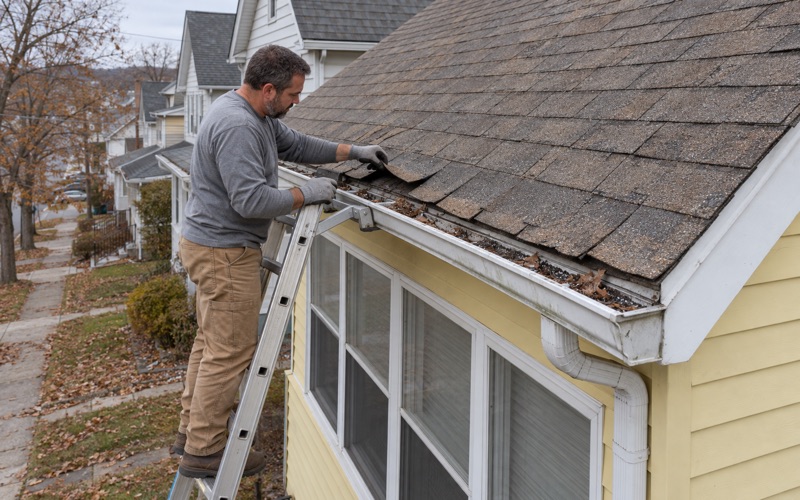
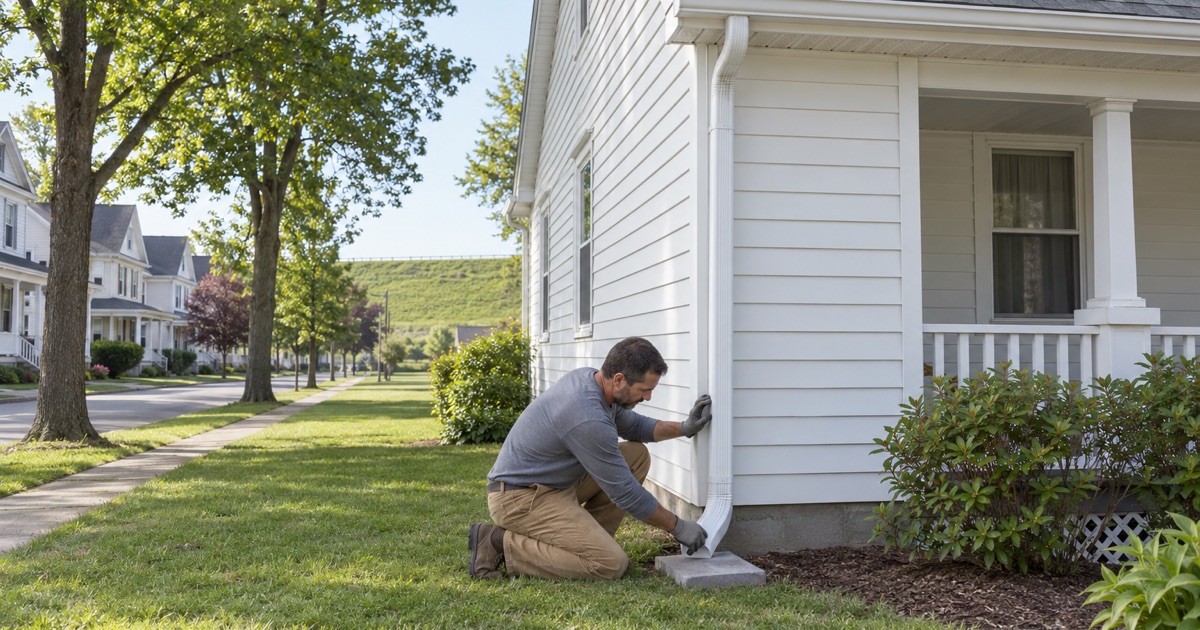
What a roof does control is where rainwater goes once it leaves the eaves. Gutters that overflow and downspouts that empty against a foundation put water right where a basement can take it on, and a house near a creek with a flooding record has less margin for that. We size and pitch gutters and downspouts together with the roof, so discharge points are chosen on purpose rather than left wherever the old ones happened to be.
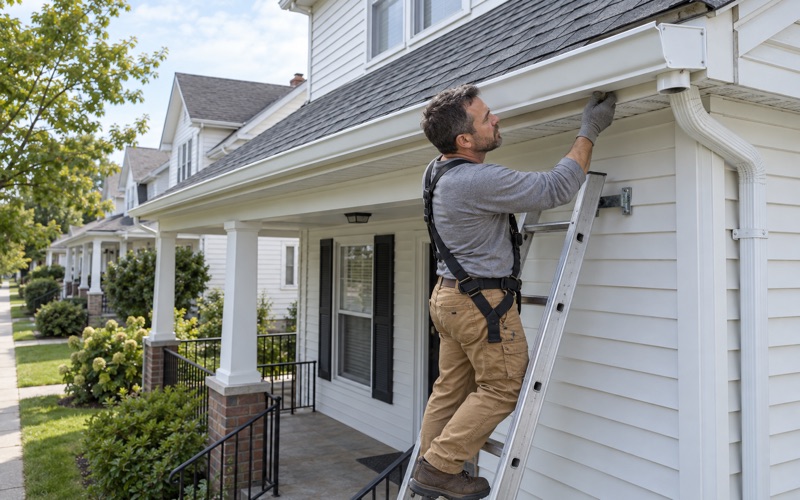
Kick-out flashing at the base of a roof-to-wall joint and a properly lapped drip edge keep water in the gutter instead of running down siding toward the foundation. Neither part is dramatic, and both are often missing on older houses. When we replace a roof, those details go on the written scope as their own lines, so you can see they were included and priced.
Looking for roofing closer to Pittston? See Pittston Roofing.
The Floodplain Question on Jessup’s Permit Application
What the Form Asks
The permit application used for the Borough of Jessup, revised 10/21/2021 by Barry Isett & Associates, asks plainly whether the property is within a floodplain. If the answer is yes, it asks for the market value of the property, and it separately asks whether the owner has an elevation certificate. It also asks whether the property sits in a historic district.
The form has no roofing checkbox. A re-roof is not called out by name anywhere on it, which is one reason the borough points homeowners toward a phone call rather than a checklist. We read the form as a set of questions the code office wants answered, not as a rule about any particular roofing job, and we treat it that way when we plan the work.
Why the Answer Belongs Before the Estimate
A homeowner who checks yes on the floodplain line is giving the code office information it will weigh when it reviews the work. We do not know how the office applies that answer to a roof, and we will not guess, so the right time to raise it is before a contract is signed. That is the same order we follow everywhere we work: the rule for the house’s own municipality is checked before the job is priced.
If you already have an elevation certificate, find it before we visit. If you do not, say so when you call the code office and ask whether it matters for the work you are planning. Either way, the answer goes into our notes for the job, and the estimate reflects whatever the borough tells you rather than an assumption on our part.
FEMA Community 420531
For flood insurance purposes, the borough is FEMA community 420531, listed as Jessup, Borough of, in Lackawanna County. Its first flood hazard boundary map dates to 04/12/74, its first flood insurance rate map to 04/15/80, and its current effective map to 08/05/20. No Community Rating System class is listed for it.
That number matters because another community shares the Jessup name, and a search for flood maps can land on the wrong one. When you look up a map or speak with an insurer, use the borough’s own community number. We have not read any individual map panel, so we cannot tell you whether a given street falls inside a mapped zone; the map and the code office can.
Barry Isett & Associates and the Call-First Answer
Who Handles Code Work for the Borough
The Borough of Jessup opted into the Pennsylvania Uniform Construction Code on 7/8/2004 with no local amendments. Its Building and Zoning page lists Barry Isett & Associates for UCC, IPMC and zoning, which puts building code review, property maintenance and land use questions with one firm. For a homeowner, that means one set of contacts covers most of what a roofing project could raise.
The borough office itself is at 395 Lane Street. For permit questions, though, the page sends residents straight to the Isett contacts rather than to a front counter, and that is the route we suggest too. Calling the right people first saves a wasted trip and the kind of secondhand answer that unravels once work has started.
The Borough’s Own Answer: Call and Ask
On the question of whether a project requires permits, the borough’s page answers with two names: call Andrew Connors at (570) 664-2530 or Amos Valenti at (570) 285-8180 to discuss your project and find out. There is no published statement either way about re-roofing, and we will not invent one. The call is the answer.
When you call, describe the job the way it will actually be done: a full tear-off or a repair, how many layers are coming off, and whether any decking or framing work is expected. Raise the floodplain question during the same conversation. Two questions on one call is faster than two calls, and it gives the code office the whole picture at once.
What the Form Asks of the Contractor and the Inspector
The Isett application asks for the contractor’s PA Registration, a registration line rather than a license line, so the entry belongs to whoever performs the work. It also notes that inspections are authorized between the hours of 8 AM and 8 PM. That window is worth knowing if an inspector needs to see part of the roof before it is closed up.
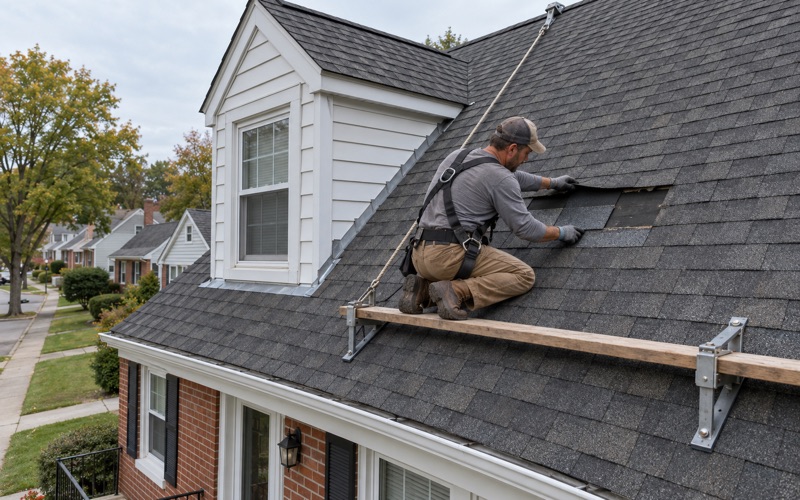
On our side, the job runs on a written schedule that leaves room for an inspection if one is called for. Fall protection goes up before anyone works near the eaves, following OSHA’s rule for residential roofing at 6 feet. At the end of each work day the driveway, yard and gutters are cleaned, and a magnet sweep picks up loose roofing nails.
Jessup Homes From Before 1950 and the 2010s
The American Community Survey’s 2024 five-year estimates count 2,219 housing units in the borough, and 1,545 of them are detached houses. Of those units, 691 were built in 1939 or earlier and another 186 during the 1940s, while 293 went up between 2010 and 2019. The decades between are well represented, but the two ends of that range set most of the roofing questions here.
Older Houses and What Sits Under the Shingles
A house built before 1950 has usually been re-roofed more than once, and some still carry two layers. IRC R908 limits how many layers a reroof can go over, so on those houses another layer on top is not an option and a tear-off is often the starting point. Under the old shingles there may be board sheathing rather than plywood, along with gaps, soft spots near the eaves or old repairs.
Any damaged decking found once the old roof is off is photographed and shown to you before it is replaced, at the per-sheet price written into the contract. Many pre-1978 homes also carry painted trim and fascia, and the EPA lead-safe RRP rule governs how that paint is disturbed when fascia or soffit work is part of the job.
Slate, Chimneys and Flashing
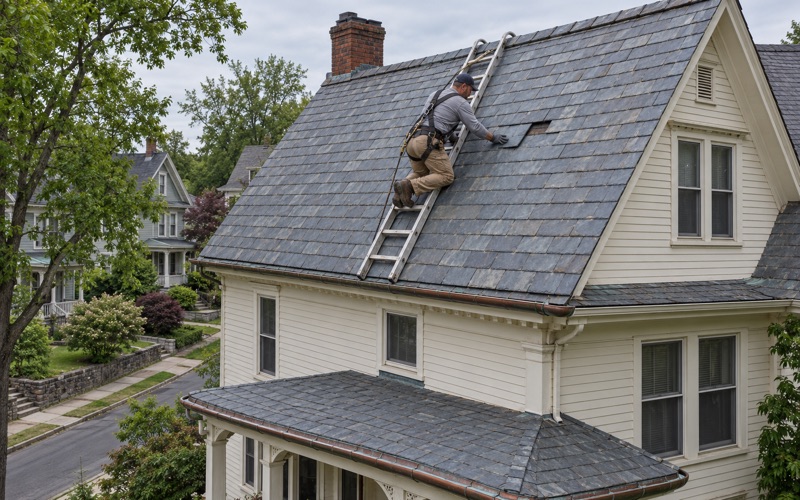
Some of the borough’s oldest houses may still wear slate, and a sound slate roof rarely needs to come off. We repair it slate by slate, using copper nails and slate hooks, before tearing it off is ever suggested. Where slate has failed broadly, we say so plainly and show you why.
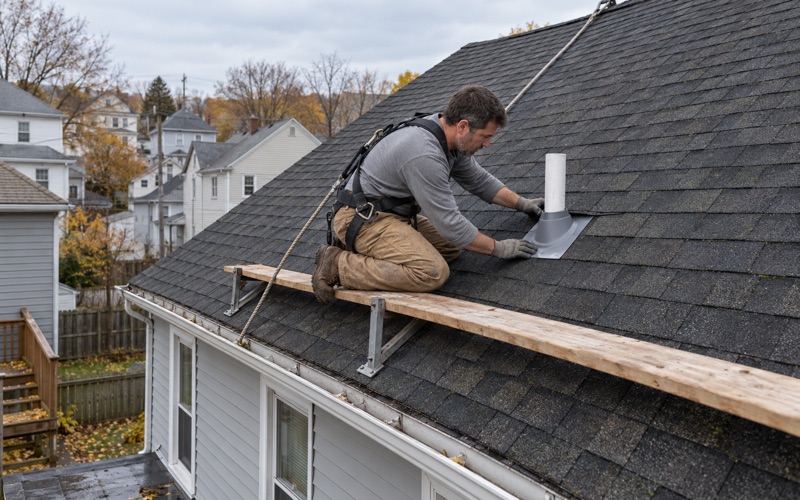
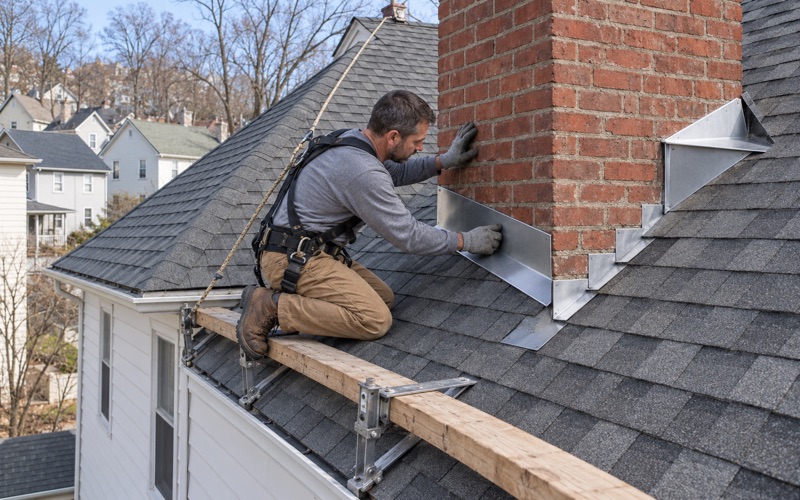
Older homes also tend to have chimneys, and that is where step flashing, counter flashing and a cricket on the uphill side do the most work. We replace that flashing with the roof rather than reusing it under new material, because old metal rarely outlasts a new shingle. A cracked pipe boot gets the same treatment.
Newer Houses From the 2010s
The 293 units built during the 2010s present a different set of checks. Architectural shingles such as GAF Timberline HDZ, Owens Corning Duration or CertainTeed Landmark are typical choices for a roof of that age, and their performance depends heavily on balanced ventilation. We look at ridge vent and soffit intake together, checking that net free area at the soffits matches what the ridge exhausts.
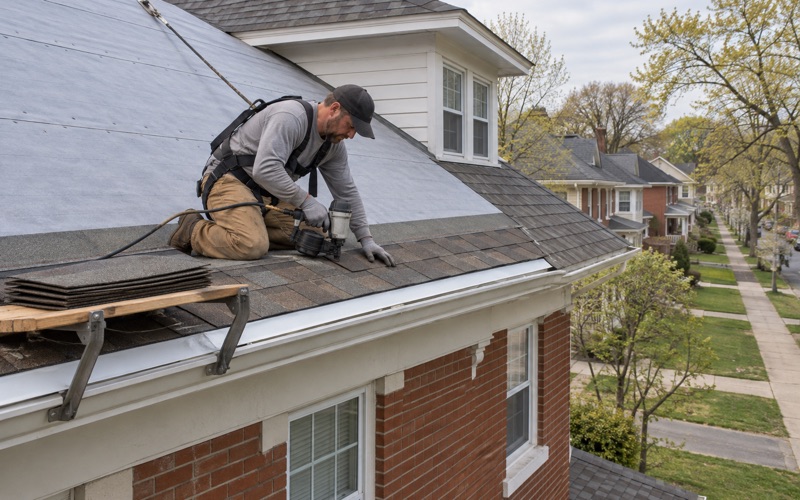
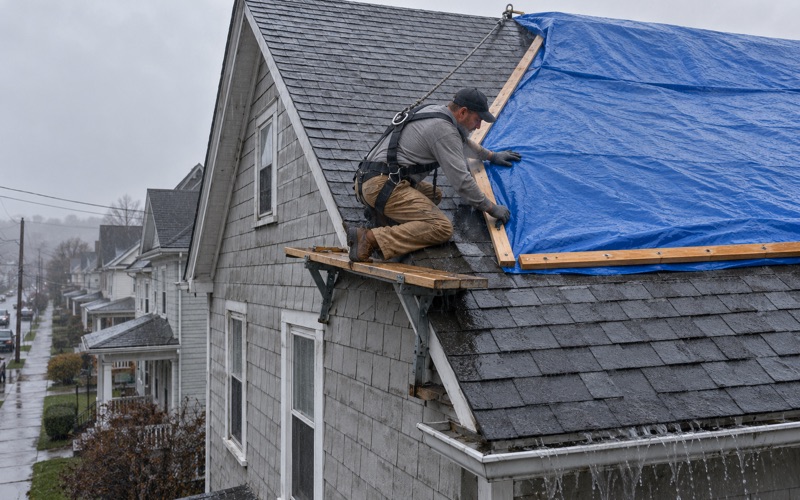
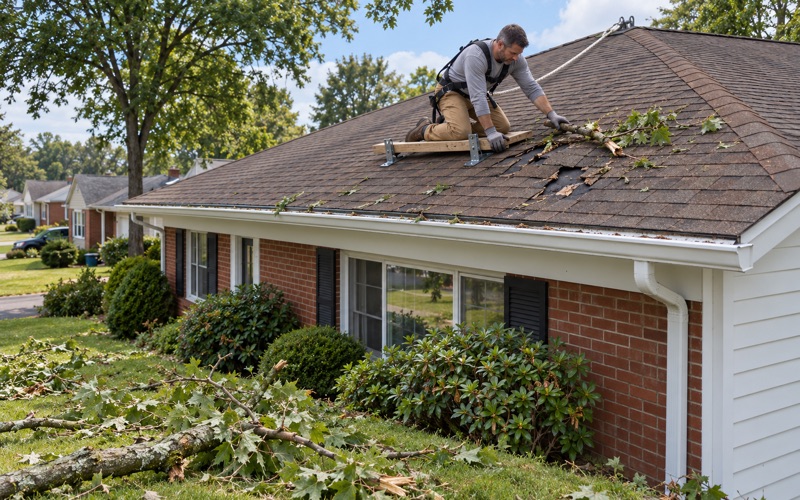
On any roof we install, the eaves get a self-adhering ice barrier meeting ASTM D1970, sized to the house’s overhang as IRC R905.1.2 calls for, because Lackawanna Valley winters build ice dams, on older homes especially. If a storm does damage a roof, we photograph and write up the damage for your own claim and will meet the adjuster on site when asked, without negotiating the claim for you.
- 20+ Years Roofing
- Free Written Estimates
- Repair Before Replace