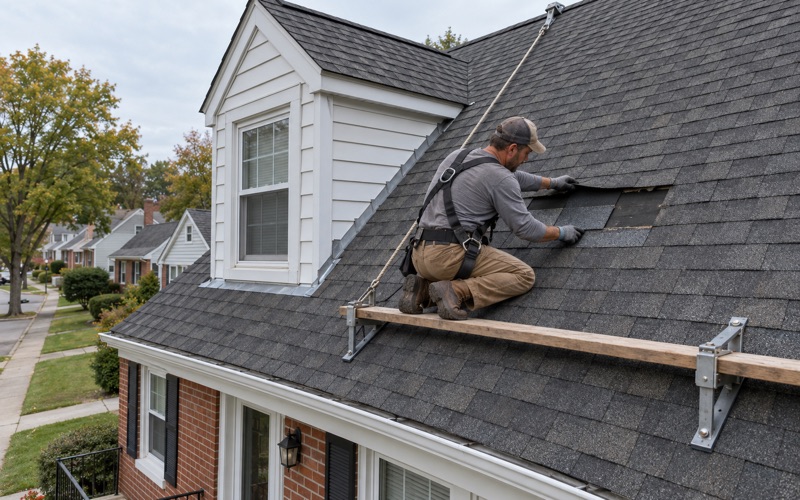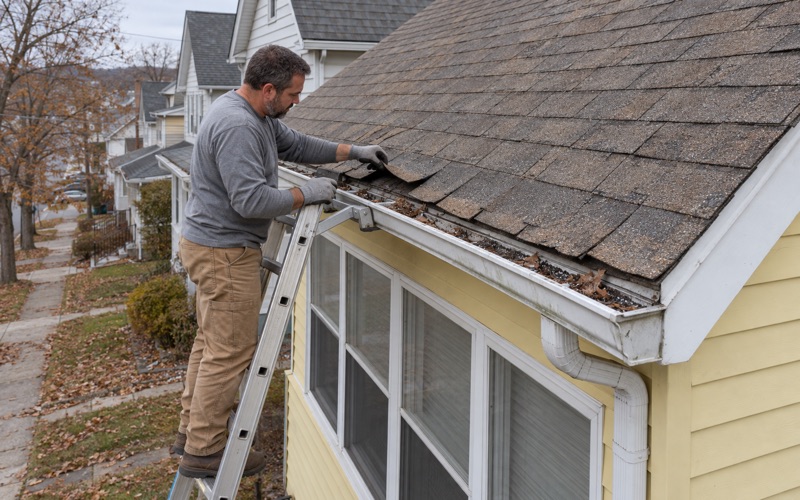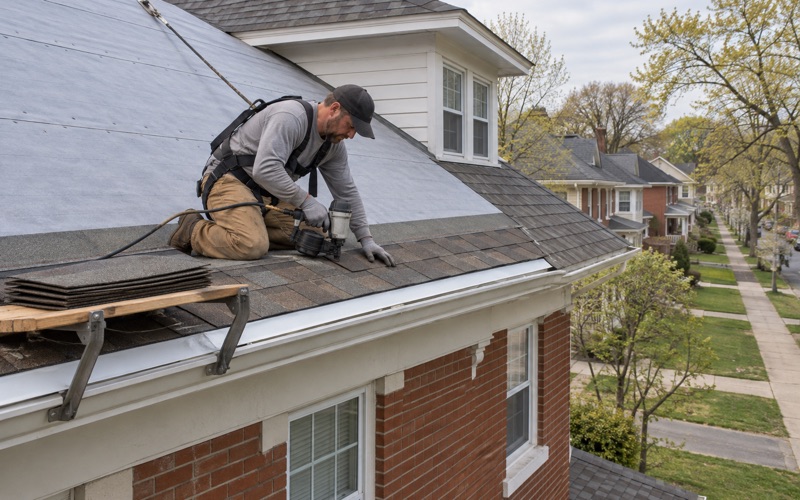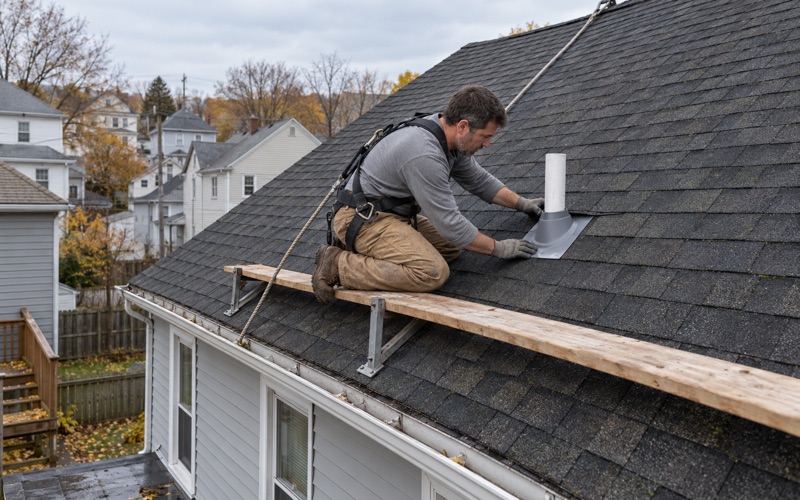
Roofing in Jenkins Township often starts below the shingles. On an older house, a ridge that has begun to dip, a chimney with a fresh crack or a gap opening where the flashing meets the brick can come from the frame shifting rather than from the roofing wearing out. Pricing a new roof over a frame that is still moving only buys a second repair, so the structure gets looked at first.
Scranton Quality Roofing has spent more than 20 years on the roofs of the Lackawanna and Wyoming Valleys, and that habit of checking the frame before the roof is built into how we quote. We go into the attic on every leak call, trace the water to where it actually enters, and tell you plainly whether the roof can be repaired before replacement ever comes up.
The reason that check matters more here than in most places is local history. The township’s river villages grew up over coal workings, and one of the worst mine disasters in the anthracite region happened right on its riverbank. The sections below cover that history, what it means for the houses standing today, and how permits work in Jenkins Township.
January 22, 1959: The River Breaks Into the River Slope Mine
The Knox Mine Disaster is the event most people outside the region connect with Jenkins Township. It happened on a winter morning at Port Griffith, when the ice-swollen Susquehanna River came through the roof of the River Slope Mine. Twelve men died, and their bodies were never recovered.
Mining Past the Stop Line
The Knox Coal Company had dug the River Slope Mine out beneath the Susquehanna itself. The historical marker near the site says the mine had been illegally excavated beneath the river, and historian Robert Wolensky has described the company mining under the Susquehanna past the state-certified stop line. That line existed to keep enough rock between the workings and the riverbed.
At the point of collapse, the rock and earth overhead were only about 6 to 8 feet thick. When the river broke through the ceiling, water poured into the workings with the men still underground. Some climbed to safety through the Eagle Air Shaft after miner Amedeo Pancotti scaled it first, while twelve men were lost below.
Plugging the River With Railroad Cars
Closing the breach took days. Crews dumped railroad cars, mine cars and coal waste into the breach over three days, then built a cofferdam around the hole. Loam and clay went in next, and finally concrete was pumped down through boreholes to seal the break.
By then the damage underground was done. Roughly 10 billion gallons of water filled the workings, and as WVIA reported on the 65th anniversary, the mines eventually flooded as far down the valley as Wilkes-Barre and Nanticoke. Those connected passages carried the river miles from where it entered.
The End of Deep Mining in the Northern Field
The disaster all but ended deep mining in the northern anthracite field. Mines that had run for generations were under water, and the industry that built the river villages never came back to them in the same way.
For a homeowner, the lasting point is simple. The ground under the older parts of the township was worked for coal, and those workings were then flooded. That does not mean any particular house has moved, but it is a fact we keep in mind when a roof shows signs that do not match its age.
Looking for roofing closer to Archbald? See Archbald Roofing.
Port Griffith, Inkerman and the River Villages
Jenkins Township was formed from part of Pittston Township on June 24, 1852, and it is still its own municipality, separate from both Pittston Township and the City of Pittston. Its villages include Ewen, Inkerman, Old Boston, Port Blanchard, Port Griffith, Sebastopol and Westminster, with the Susquehanna separating the township from Wyoming and Exeter.
Mine Villages Over the Workings
Port Griffith, Inkerman and the other river villages grew up as mine villages, with houses built close to the collieries that employed the men living in them. Many of those homes went up long before modern framing standards, on lots that sat above or near underground workings. Their roofs have been patched, layered and replaced several times since.
That history shapes what we see on a call. An old frame house can carry decades of small movement in its rafters and walls, and the roof is where it shows first. A ridge that waves, a valley that pulls apart or step flashing that has opened along a sidewall can all point to a structure that shifted rather than shingles that failed.
The Housing Stock Today
The Census count backs up how old much of the township is. Of the 2,209 housing units counted by the American Community Survey, 456 were built in 1939 or earlier, and another 220 date from the 1940s. Those older houses sit alongside newer construction from the 1980s onward, so a single street can mix a century-old frame with a recent build.
Detached single-family homes make up the largest share at 1,377 units, with 268 attached homes as well. About 1,211 households own their homes and 796 rent. On the older detached and attached houses, the roof often covers several eras of work, and peeling back one layer usually tells us a lot about the last few repairs.
The Memorials on Main Street and the Riverbank
The disaster is still marked in Port Griffith. A Pennsylvania historical marker for the Knox Mine Disaster stands at Saint Joseph’s Church on Main Street, dedicated on January 24, 1999. A small stone memorial also sits on the riverbank at the breach site.
On the 65th anniversary, people gathered outside the Baloga Funeral Home, a former church in the township, to remember the men who died. For anyone who grew up in the river villages, the event is family history rather than a footnote.
Checking the Frame Before the Roof on an Older Jenkins House
When we inspect an older house in Port Griffith, Inkerman or Sebastopol, the first question is whether the roof is the problem or only the place where a different problem shows. This is a general inspection point for old houses in a mined area, not a finding that any Jenkins house has settled.
Reading a Sag, a Cracked Chimney or an Open Flashing Line
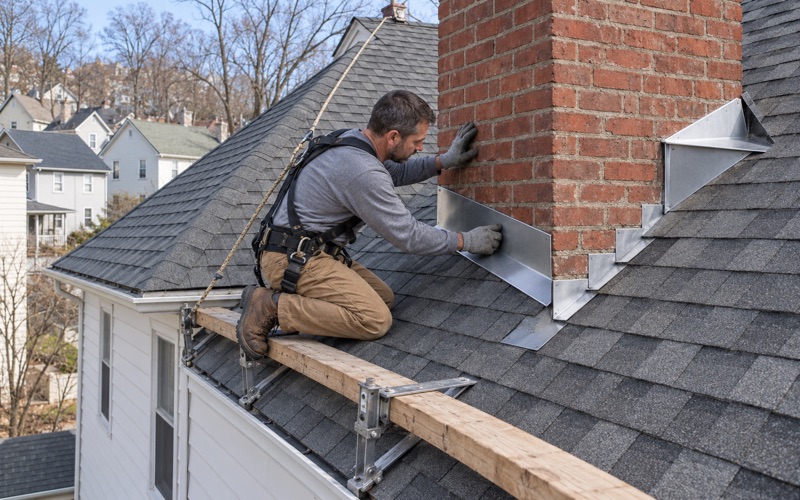
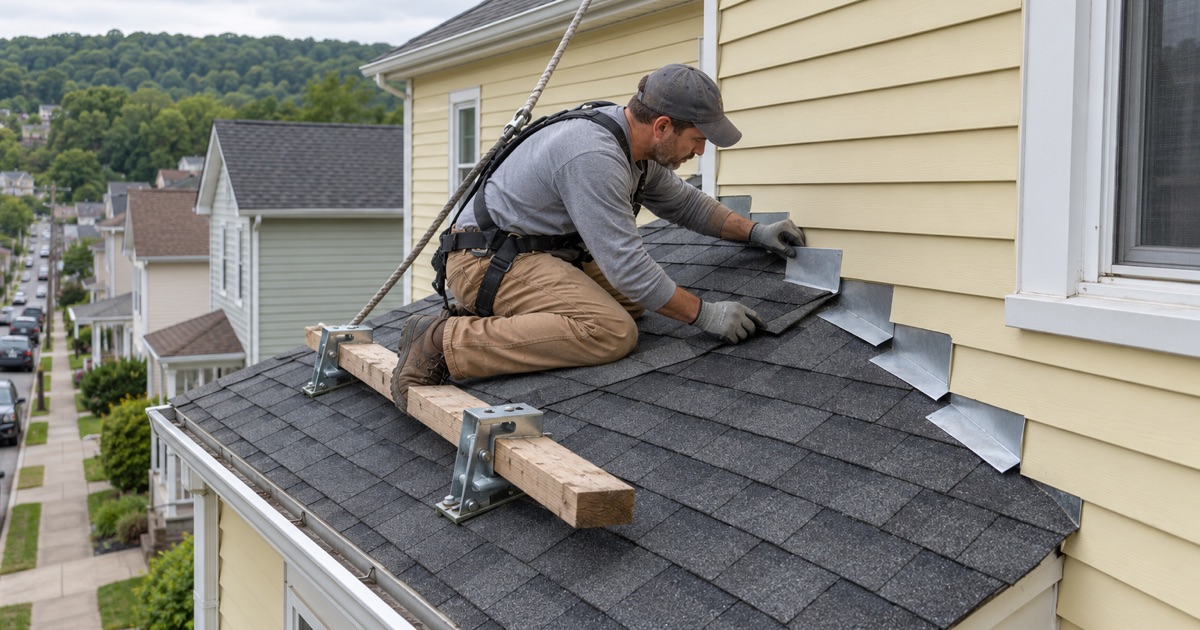
A sag that runs along the ridge or between rafters can mean tired decking, an undersized rafter or a wall that has moved. A chimney cracked through the mortar joints, or one that has pulled away from the roof plane, can open the counter flashing even when the shingles around it look fine. We note each of these and look for a pattern before deciding which it is.
If the signs point to framing, we say so and stop short of pricing a roof over it. The owner can bring in the right trade to look at the structure first. If the frame checks out and the problem is the roof itself, we move straight to repair or replacement options.
Inside the Attic First
Every leak call includes a look from inside. In the attic we check rafters for cracks and sistered repairs, follow water stains to their source and look at the underside of the decking for rot or delamination. Water often runs along a rafter and drips well away from where it got in, so the stain on the ceiling rarely marks the leak.
The attic also shows how the house has been ventilated and how many layers of roofing are up top. Both affect what a repair can achieve and what a replacement has to include. We would rather know all of that before we hand anyone a number.
A Scope You Can Compare Line by Line
Our written scopes break the job into tear-off, decking, underlayment, flashing, ventilation and gutters as separate lines, so a second estimate can be laid beside ours item by item. Step, counter and chimney flashing is replaced with the roof rather than reused under new material, which matters on old chimneys that have already moved.
If damaged decking turns up once the old roof is off, we photograph it and show it to you before any sheet is replaced, at the per-sheet price written into the contract. Gutters and downspouts are sized and pitched with the roof, and at the end of each day the driveway, yard and gutters are cleaned, with a magnet sweep for nails.
Permits and the Code Official in Jenkins Township
Each municipality in our service area sets its own re-roof permit rule, so we check the rule for the house’s own township before a job is priced. In Jenkins Township that means the township’s own code official and building permit application, not those of a neighboring borough.
The UCC Opt-In and the Code Official
Jenkins Township opted in to enforcing the Pennsylvania Uniform Construction Code on June 28, 2004, with no amendments recorded. The state’s municipal list names Jason Humenanski as the code official, reachable at (570) 704-9478, and the same official is listed for Pittston Township. The township’s zoning office takes calls at (570) 654-3315 and prefers appointments.
Because the township enforces the code itself, questions about whether a particular roofing job needs a permit go to that office. We make the call or check the posted forms before we write the estimate, so the answer is settled before work is scheduled.
The Building Permit Application
The township posts a Jenkins Township Building Permit Application on its forms page, and the township building sits on Main Street in Inkerman. The township has not published a separate re-roofing rule that we have found. When a job calls for a permit, we fill out the application and arrange any inspection the code official asks for.
If the inspection of an older house points to framing work, that work may bring its own permit questions. We raise that with the owner early so the structural and roofing pieces are not scheduled out of order.
Floodplain Mapping and Storm Records
Jenkins Township takes part in the National Flood Insurance Program as community 420611, with its current flood map effective June 20, 2024. Which streets fall in the Susquehanna floodplain is a question for that map, and we point owners to it rather than guessing. Forecasts for the township come from the National Weather Service office in Binghamton under zone PAZ047.
When a storm does damage a roof here, we photograph it and write it up for the owner’s own claim. If asked, our crew will meet the insurance adjuster on site to walk the damage, but we do not negotiate the claim. The paperwork stays in the owner’s hands from start to finish.
- 20+ Years Roofing
- Free Written Estimates
- Repair Before Replace