Scranton Quality Roofing brings more than 20 years in the trade to roofing in Hanover Township, where the work divides into two quite different jobs: long, low-slope roofs on commercial buildings, and the pitched roofs of the houses around them. We approach both the same way, by finding out what is actually wrong before anyone puts a price on fixing it.
When a roof leaks, we look from underneath as well as from up top, going into the attic or the space below the roof deck so the water is followed back to the point where it really gets in. You then get a plain answer on whether the roof can be repaired. Replacement only comes up if the honest answer to that question is no.
Our written scopes put tear-off, decking, underlayment, flashing, ventilation and gutters on separate lines. That helps a building manager weighing a dozen roof penetrations as much as a homeowner with one chimney, because it lets you lay our number beside another contractor’s and compare the same items one by one.
Hanover Industrial Estates and Its Long Low-Slope Roofs
Much of the township’s largest roof area sits in Hanover Industrial Estates, a Mericle business park off S.R. 29.
The owner’s flyer describes the park as home to dozens of manufacturing, distribution, office and life sciences companies, and places it 1.6 miles from S.R. 29 and 2.3 miles from I-81. That flyer dates from 2013, so its tenant list describes the park at that time rather than who occupies each building today.
Buildings that range from flex space to warehouse scale
Listings in the park run from multi-tenant flex buildings to a 252,000-square-foot building on 26.57 acres at 1070 Hanover St. Other listings describe a 224,000-square-foot building on 33.74 acres on Lasley Ave and a 70,000-square-foot building on 10.52 acres on New Commerce Blvd. A roof at that scale is not one job so much as a series of zones, each with its own drainage path and its own set of penetrations.
Why a small defect travels on a low-slope roof
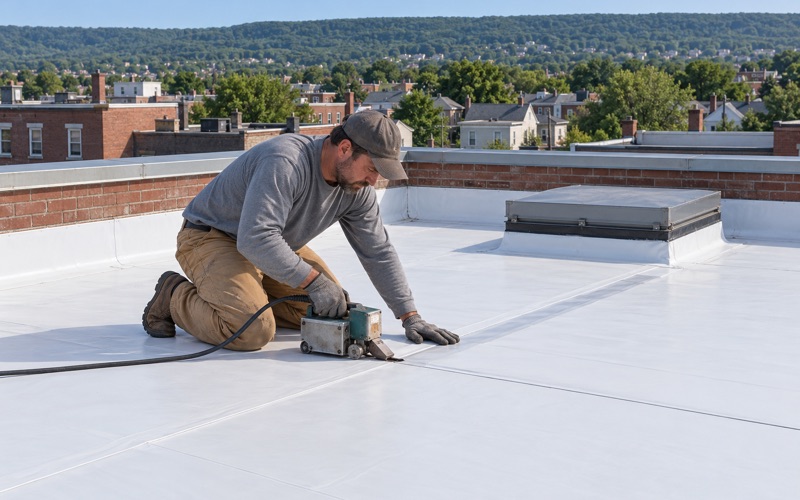
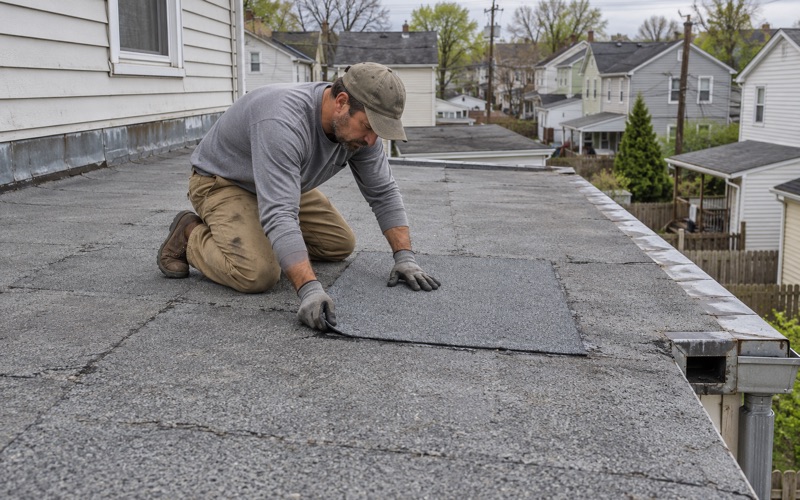
On a low-slope roof, water moves slowly across a broad plane toward its edges and drains instead of running quickly off steep faces. A loose seam, a lifted fastener or a failed seal at a curb can let water travel a long way across the roof before it shows up as a stain or a drip inside. That gap between where water enters and where it appears is the reason we trace a commercial leak from below as well as above before we recommend any repair.
What the listings do not tell us
The owner’s published listings do not describe the roof system on most of the larger buildings. So we do not quote from an assumption about what is up there. On the first visit we identify the roof system, its age and condition, how it drains, and where every unit and penetration sits, and the scope is written from what we actually found.
Looking for roofing closer to Nanticoke? See Roofing in Nanticoke.
Standing Seam Metal and Rooftop Units on Park Buildings
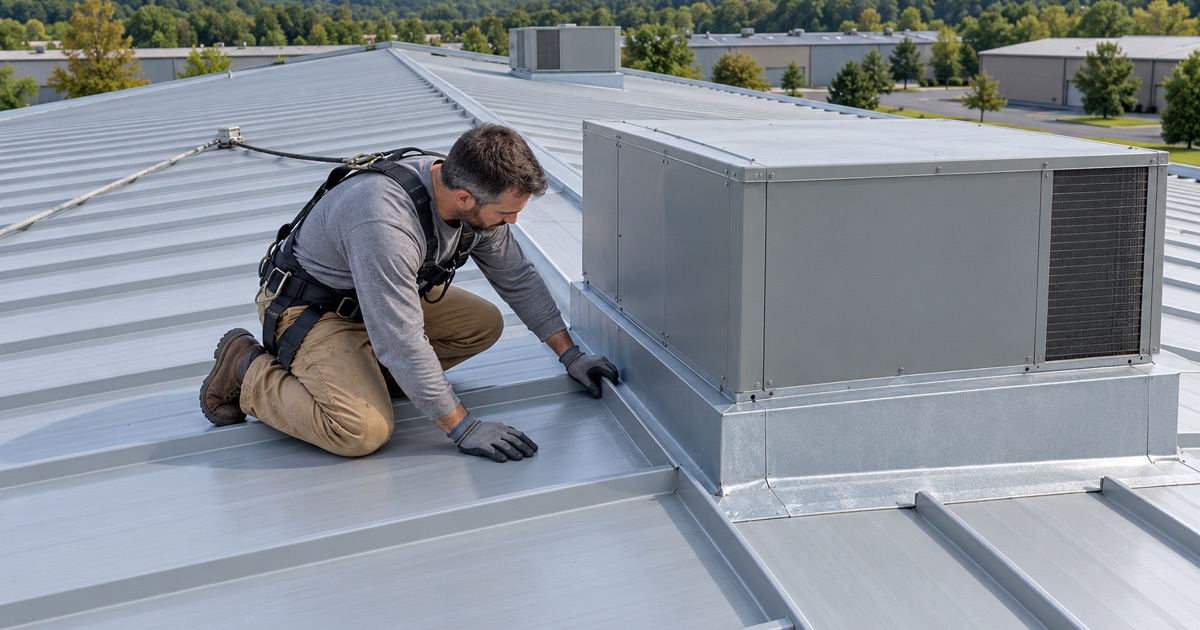
The one park building whose roof the owner does describe is the 40,000-square-foot flex building at 233-237 Stewart Road, on 6.7 acres. Its flyer calls it a pre-engineered steel building with masonry and insulated metal panel walls and an insulated standing seam metal roof. For heating and cooling it lists gas/electric packaged rooftop units, and the aerial photo shows those units sitting on the roof.
Working on a standing seam metal roof
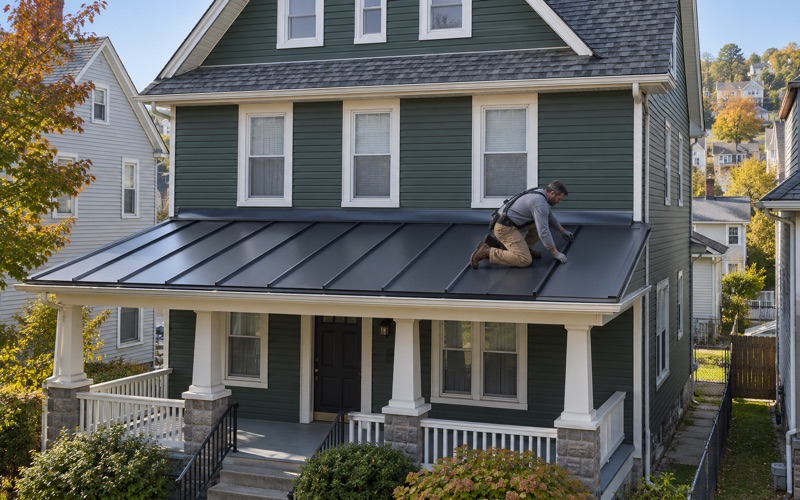
Standing seam panels join at raised seams that sit above the surface where water runs, which is a large part of why the system sheds water well on a low pitch. When a standing seam metal roof does leak, the cause is usually at a detail rather than in the open panel: an end lap, a seam that has opened, trim at a wall or eave, or a cut made for equipment. Repairs on this kind of roof focus on those details, and we write each one into the scope so you can see what is being resealed, refastened or replaced.
Rooftop units and the curbs under them
Packaged rooftop units sit on curbs that pass through the roof, and every curb, duct and pipe is an opening that has to shed water on its own terms. On a metal roof the flashing around those openings also has to tolerate panels that expand and contract with temperature. We check each curb and penetration individually, and flashing gets its own line in the estimate rather than being folded into a general repair figure.
Planning around tenants instead of one household
Roof work in the park means planning around curbs, units and tenants rather than a single family. A multi-tenant flex building may have several businesses under one roof, each with its own hours and its own equipment overhead. We set the schedule with whoever manages the building, and at the end of every work day the site is cleaned up, including a magnet sweep for roofing nails around entrances and parking areas.
Permits: Roofing Is on Hanover Township’s Application
Hanover Township enforces the Pennsylvania Uniform Construction Code itself. It opted in on June 19, 2004, with amendments, and its Bureau of Code Enforcement works out of the municipal building at 1267 Sans Souci Parkway, where Mark Bienias serves as building inspector and code enforcement officer. Every municipality we work in sets its own re-roof rule, so we check Hanover Township’s requirements for the specific property before a job is priced.
The Roofing checkbox
The township’s Application for Plan Examination and Building Permit lists Roofing as a type of improvement, alongside Repair, Replacement and Siding. The township has not published a written rule spelling out which roof jobs need a permit, so the form itself is the clearest statement of where it stands. The same application asks whether the property is in a flood zone and asks for the contractor’s Hanover Township license number, since the township issues its own General/Jobbing contractor license.
A copy of the contract with every application
The application states that all contractors must submit a copy of their contract and plan to take out a permit, and that permits will not be issued to contractors without one. The township’s fee schedule repeats the requirement and adds that the cost shown must include materials. Our residential contracts follow Pennsylvania’s Home Improvement Consumer Protection Act, with the three-business-day cancellation notice and a deposit kept within the one-third cap that applies to contracts over $5,000.
Fees, and what skipping the permit costs
Under Ordinance No. 007-2026, the permit fee steps up with the value of the work: $55.00 up to $2,499.99, $105.00 to $4,999.99, $150.00 to $7,499.99 and $200.00 to $9,999.99. Above $10,000 the fee adds $10.00 for each additional $1,000, plus the $4.50 Act 157 fee.
Ordinance No. 017-2016 doubles permit fees when work starts before a permit is secured, and on a large job, where the per-$1,000 charge keeps adding up, that doubling is real money. The permit comes first, then the crew.
Homes Beside the Park: Hanover Township’s Residential Roofs
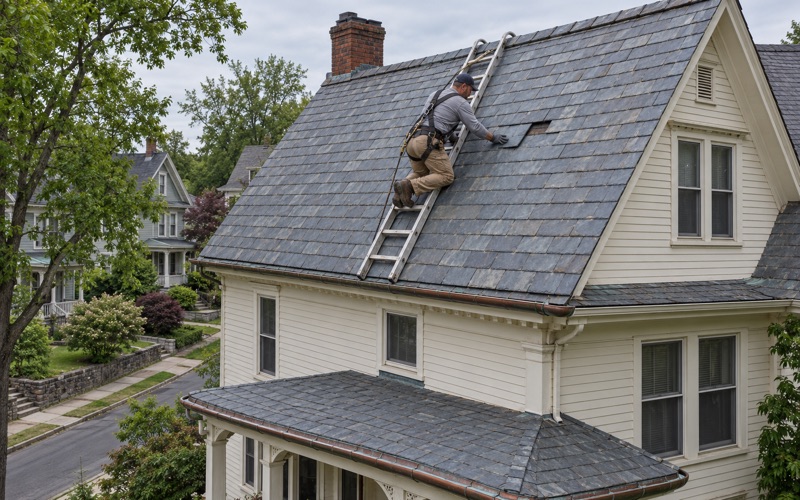
Most of the township’s roofs are still on houses. Hanover Township covers 19.2 square miles and 12 villages, and at 11,424 people in the 2020 census it was the most populous township in Luzerne County. Census estimates put one-family detached homes at 64.7% of its housing units, and the stock has two large age groups: 1,344 units built in 1939 or earlier and 1,047 from the 1970s, the largest single decade after the prewar homes.
Prewar houses and 1970s roofs
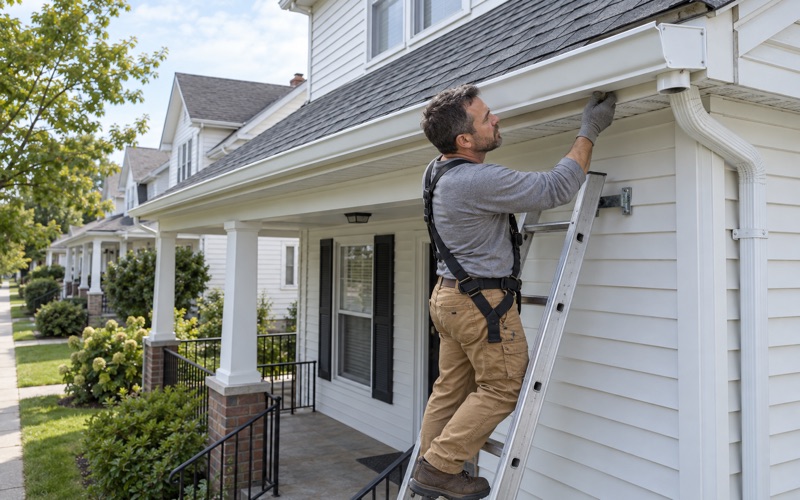
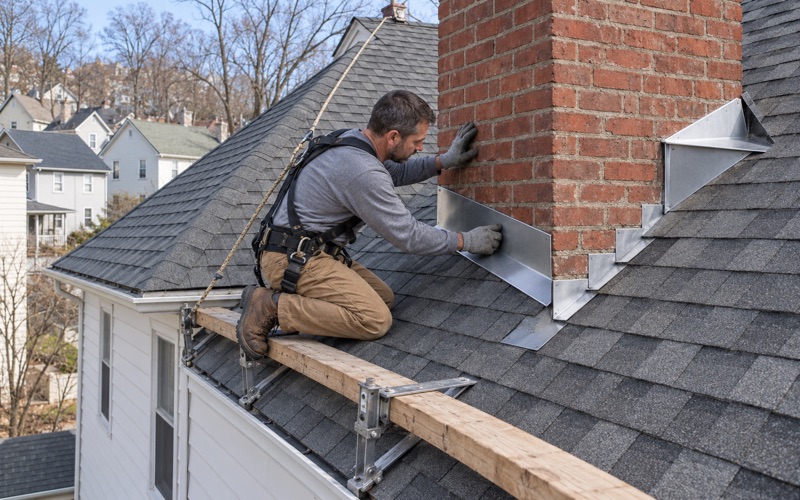
An older house with a chimney depends on its flashing more than on any one shingle. When we replace a roof, step, counter and chimney flashing are replaced with it rather than reused under new material. Decking that turns out to be damaged once the old roof comes off is photographed and shown to you before it is replaced, at a per-sheet price already set in the contract.
A house built in the 1970s may already have had a second layer of shingles laid over the first. Reroofing rules in the International Residential Code, as adopted in Pennsylvania, limit how many layers a roof may carry, so we confirm what is on the house before deciding whether a tear-off is needed. Gutters and downspouts are sized and pitched as part of the roof job instead of being left for later.
Low-lying ground near the river
The Susquehanna River drains the township, Solomon Creek flows through it, and the north side near the river is mainly low-lying. Hanover Township takes part in the National Flood Insurance Program under a flood map that took effect June 20, 2024, and it holds Community Rating System class 8, which carries a 10% premium discount. A roof cannot change a flood zone, but downspouts that release water well away from the foundation keep roof runoff from adding to wet ground around the house.
After a storm
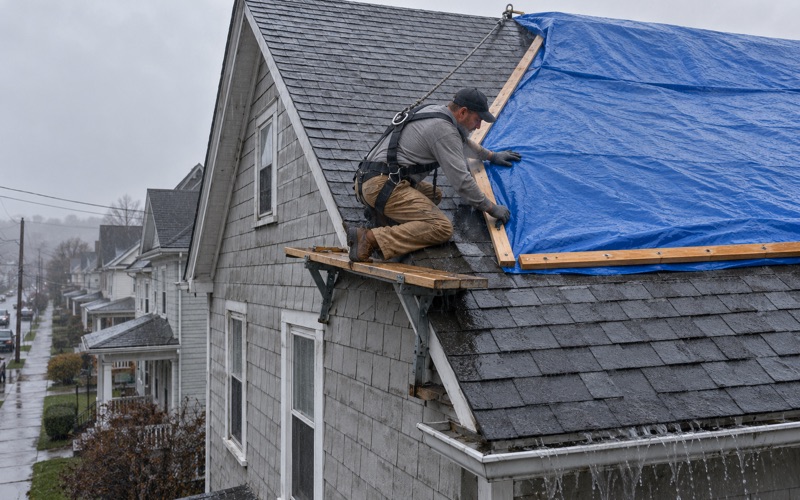
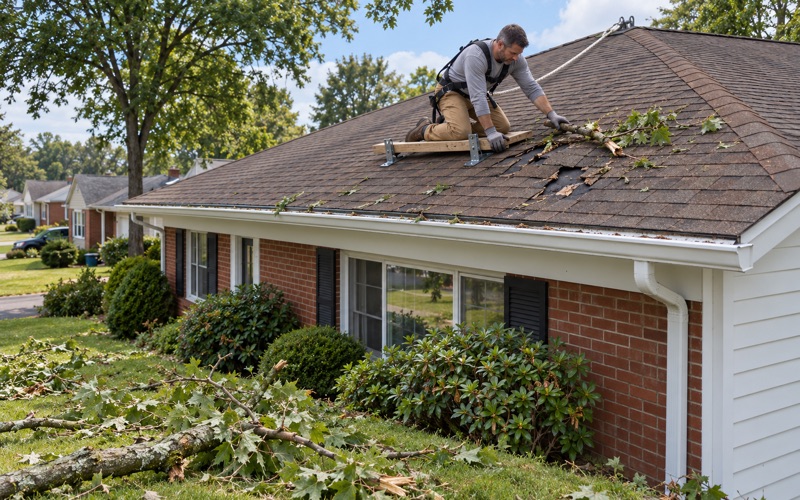
When wind or hail damages a roof, we photograph the damage and write it up for your own insurance claim. If you ask, our crew will meet the adjuster on site to show what we found, but we do not negotiate the claim on your behalf. The repair itself then follows the same path as any other job here, starting with a straight answer on whether the roof can be fixed.
- 20+ Years Roofing
- Free Written Estimates
- Repair Before Replace