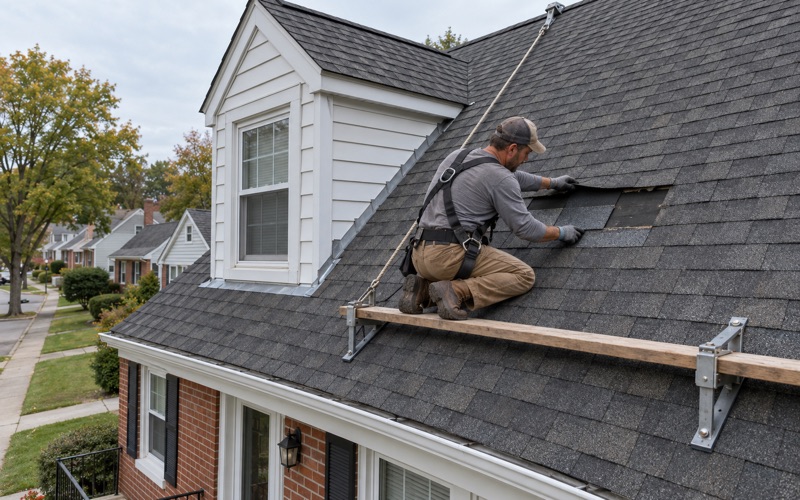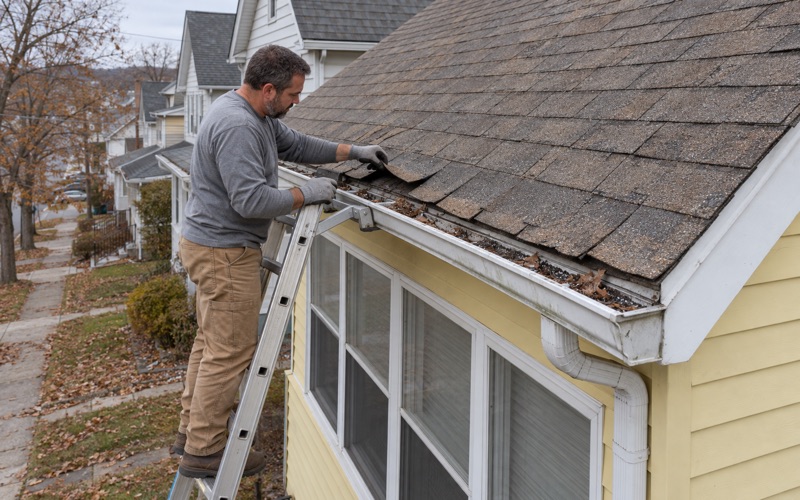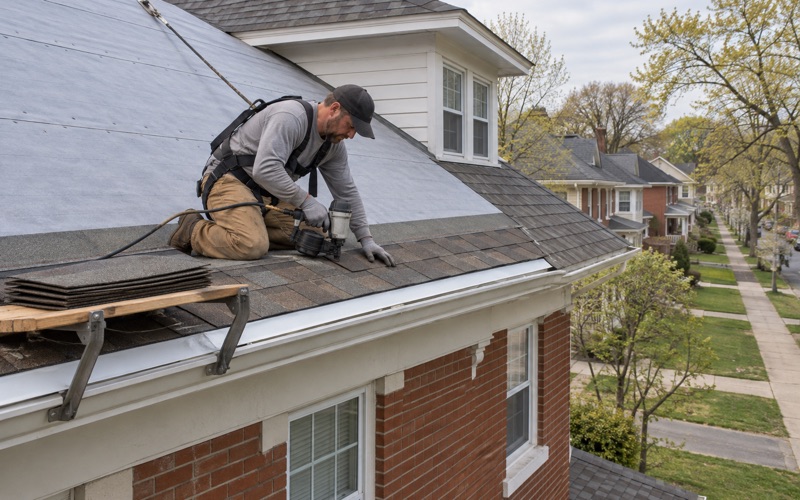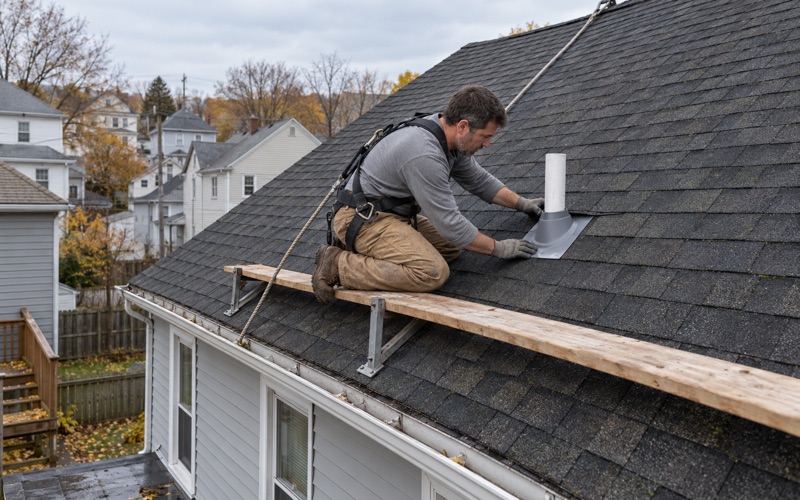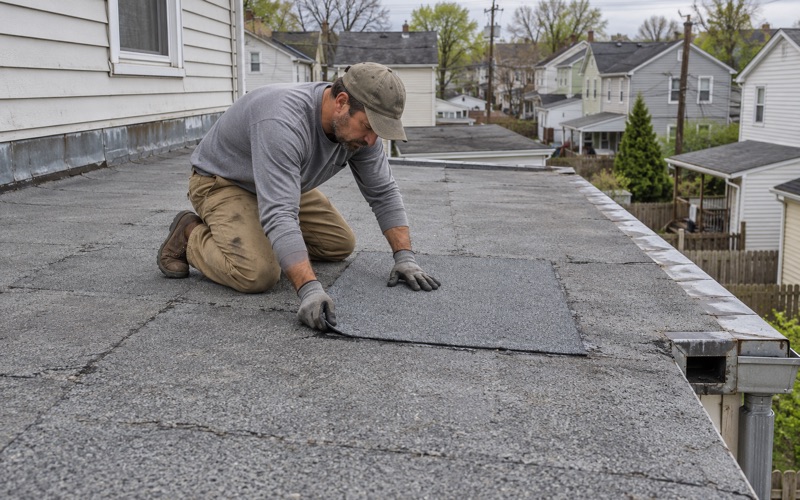
Scranton Quality Roofing has spent more than 20 years on roofing in Forty Fort and across the valley, and every job here begins the same way: someone climbs into the attic before anyone climbs onto the roof. A stain on a bedroom ceiling rarely sits under the spot where water gets in, so we follow the wet sheathing and the drip trail back to the real entry point before a single number goes on paper.
Once we know the source, you hear from us plainly whether the roof can be repaired. Replacement only comes up when repair genuinely will not hold. If it does come to a new roof, our written scope separates tear-off, decking, underlayment, flashing, ventilation and gutters into their own lines, so a homeowner comparing two estimates can lay them side by side and see exactly where they differ.
The sections below cover what is particular to working on houses in this borough: how old most of them are, what the borough charges for starting work without a permit, and how an emergency repair gets filed after the fact.
Hurricane Agnes and the Forty Fort Cemetery
The June 1972 flood
In June 1972 Hurricane Agnes pushed the Susquehanna River over its banks, and a portion of the levee protecting Forty Fort broke. The borough is built on a floodplain on the western bank of the river. The Times Leader, looking back in June 2025, put the 1972 crest at 40.9 feet, four feet above the great flood of 1936.
We raise it on a roofing page because it frames what a house here has already lived through. No source we have seen counts how many Forty Fort houses or roofs Agnes damaged, and we will not invent a figure. What the record does show is a borough where the water went far past anything planned for, and most of the houses standing today were already standing that summer.
What the cemetery lost
The flood is remembered most sharply at the Forty Fort Cemetery, and the published counts do not agree. Wikipedia says over 2,000 caskets were washed away. The Times Leader reported over 2,500 graves displaced. Chesapeake Bay Magazine wrote in November 2024 that more than 2,700 burial vaults and caskets were destroyed or washed away, and that about 1,400 were recovered.
Recovered remains were buried in a mass grave marked by a flood monument. The same magazine reported that remains turned up on back porches, roofs and in basements as late as 1977, which says more about how far that water traveled than any crest figure can.
The flood map today
Forty Fort has been in the National Flood Insurance Program since its first flood hazard map in March 1973, and its current effective map dates from June 20, 2024. The borough’s permit instructions note that stormwater, earth disturbance or floodplain permits may be required depending on location. We ask that question before any job that moves ground, such as rerouting a downspout discharge across a yard.
Looking for roofing closer to Carbondale? See Roofing in Carbondale.
Houses Older Than the Flood
Most of the borough predates 1950
The 2024 American Community Survey counts 1,957 homes in Forty Fort. Of those, 1,196 were built before 1950, 912 of them in 1939 or earlier, and only 107 have gone up since 1980. That is a housing stock with decades of roofing history layered on it, and the layers are usually literal.
On houses this age we routinely find two courses of old shingles, plank sheathing instead of plywood, and chimneys whose flashing has been tarred over more than once. Under IRC R908, a roof does not get a third layer; when two are already there, both come off. Painted fascia and trim on a pre-1978 house fall under the EPA’s lead-safe RRP rule, so we contain and clean up any paint we disturb at the eaves.
Decking, flashing and slate
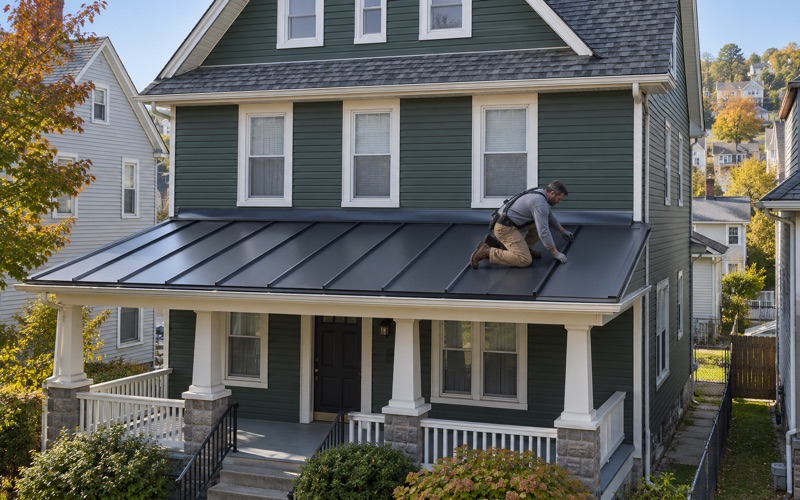
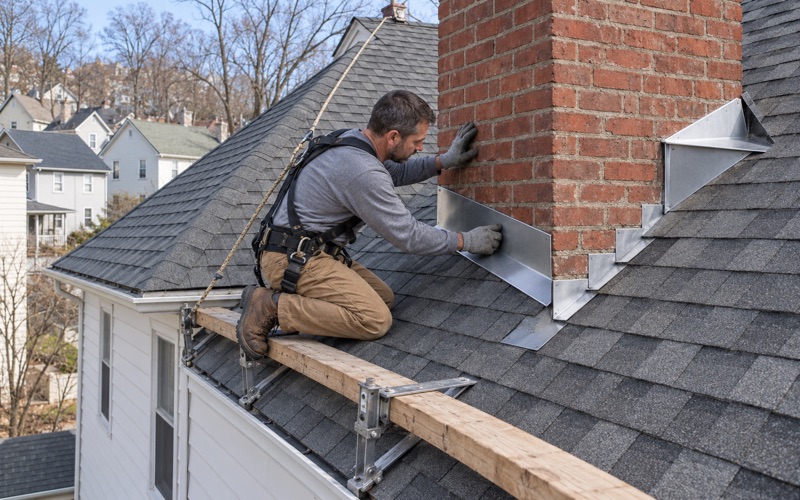
When the old roof comes off, any rotted or delaminated decking is photographed and shown to you before it is replaced, at a per-sheet price already written into the contract. Step, counter and chimney flashing are replaced along with the roof rather than bent back into service under new shingles, and a wide chimney on the uphill side gets a cricket so water and snow do not pile up behind it.
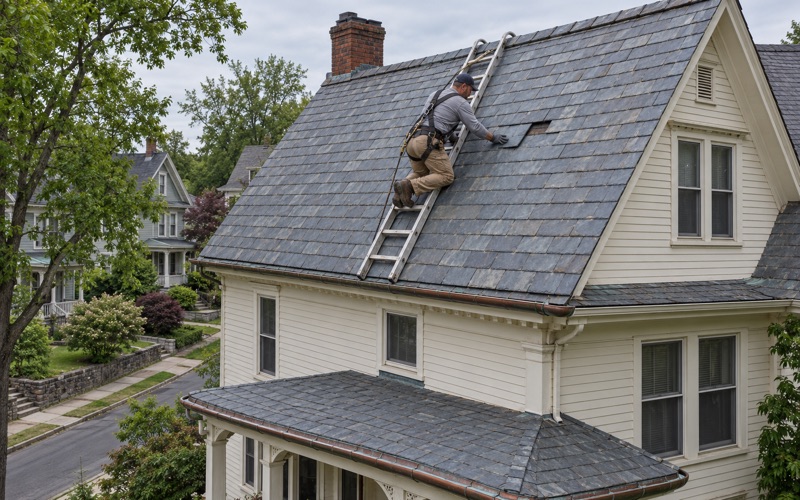
Some older houses here still carry slate. A sound slate roof with a handful of cracked or slipped pieces is repaired one slate at a time with copper nails and slate hooks. Tearing it off is a conversation for when the slate itself has failed, not when a few pieces have.
Two- to four-unit buildings
Forty Fort has a large share of small multi-family housing: 291 two-unit buildings and 387 with three or four units, against 1,061 detached houses. Renters occupy 792 of the borough’s 1,844 occupied homes, and most of them live in those two- to four-unit buildings.
For an owner with tenants upstairs, a roof job is also a scheduling job. The borough’s noise rules bar power tools and hammering between 9:00 p.m. and 7:00 a.m., so we plan tear-off for full daylight days and tell you in advance which days the crew will be overhead, so you can give your tenants notice.
Forty Fort’s $500 Fine for Working Without a Permit
What the borough code says
Forty Fort enforces its permit rule with a fine. Under Borough Code § 5-103, anyone who performs work requiring a permit without first getting one is issued a stop work order and owes $500 if paid within ten days, rising to $1,000, and each day the violation continues counts as a separate offense. An appeal goes to the UCC Board of Appeals within ten days, with a $100 fee.
The borough publishes no roof-specific rule. Its building permit application lists Repair / Renovation as a type of improvement but has no separate roofing line, and the general rule is that work needing a permit under the applicable codes needs one before it starts. Forty Fort opted into the Pennsylvania Uniform Construction Code on June 13, 2004, and administers it through its own Office of Code Enforcement.
How we handle it
Every municipality in our service area sets its own re-roof rule, so we check Forty Fort’s before we price your job rather than assuming what applied two boroughs over. Whether the work counts as an exempt repair under 34 Pa. Code 403.1(b)(9) or needs a permit is a question we put to the Office of Code Enforcement at 1271 Wyoming Ave., (570) 287-8586, not one we guess at with a $500 fine on the line.
The application itself asks a contractor for a Certificate of Insurance naming Forty Fort Borough as certificate holder and for a contractor License/HIC number, and we supply both with the application. The borough notes that residential permits may take up to 15 days to issue, so we file early enough that the permit is in hand before tear-off day.
The contract you sign
Our contracts follow Pennsylvania’s Home Improvement Consumer Protection Act. That means a written three-business-day cancellation notice, and on any contract over $5,000, a deposit held to no more than one-third of the price. You know what you are agreeing to before anyone orders material.
Emergency Roof Repairs and Building Inspection Underwriters
When it cannot wait
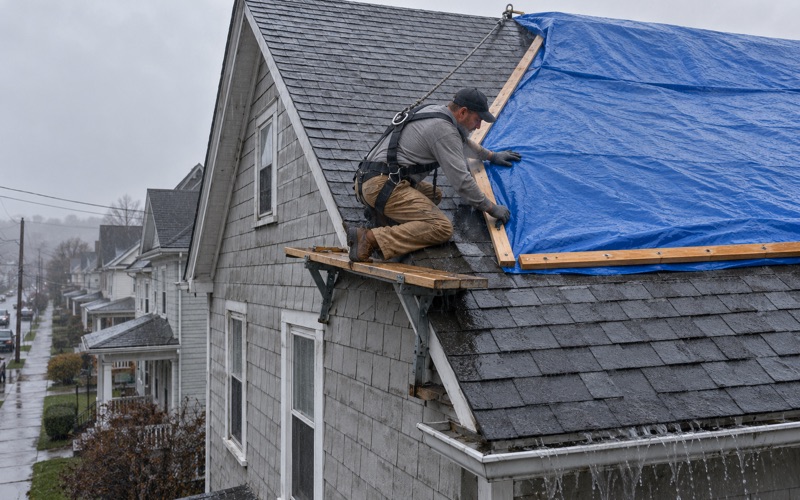
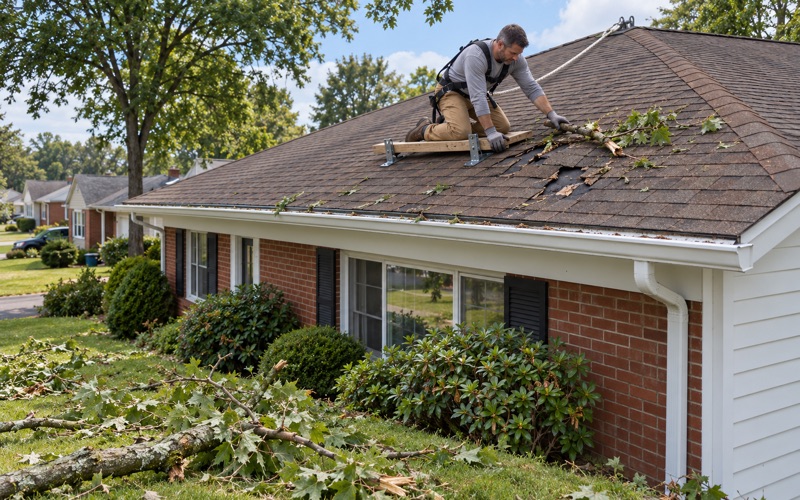
A tree limb through the roof or a valley that gives way in a downpour cannot sit for two weeks while a permit is processed, and the borough allows for that. Under § 5-103, emergency repairs as defined by the applicable codes may be performed with the permit application filed within the next working business day. The borough’s permit instructions separately require emergency permits to be obtained within three business days. We file on the next working business day, which keeps an emergency tarp-and-patch job inside both.
When a storm causes the damage, we photograph it and write it up for your own insurance claim. If you ask, a member of our crew will meet the adjuster on the roof and walk through what we found, but we do not negotiate your claim for you.
Inspections by Building Inspection Underwriters
Forty Fort’s inspections are performed by Building Inspection Underwriters, scheduled at (570) 344-9681. The permit instructions warn that any work covered before inspection may have to be uncovered, so when a permitted job calls for an inspection, we schedule it before the next layer goes down rather than after.
What goes on before we leave
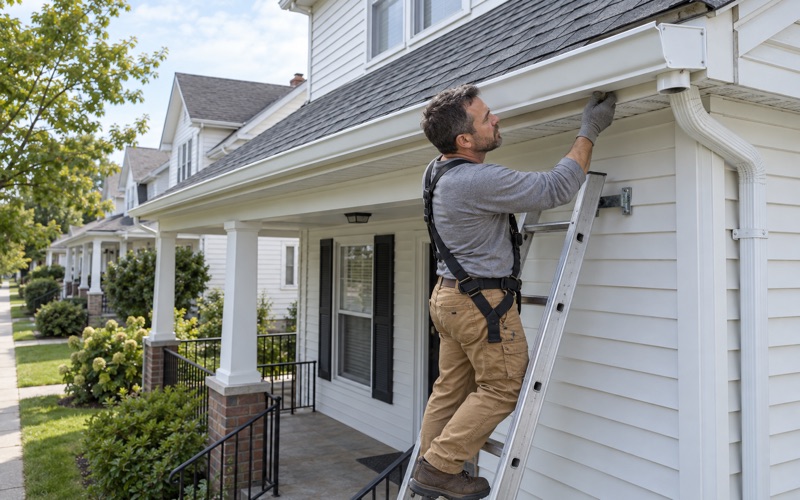
At the eaves, we install a self-adhering ice barrier sized to the actual overhang of your house, because northeastern Pennsylvania winters build ice dams on older homes. Ridge vent is balanced against soffit intake, and gutters and downspouts are sized and pitched as part of the roof rather than reattached as an afterthought.
We also watch the National Weather Service’s Luzerne forecast zone out of the Binghamton office before opening up a roof, and we do not strip more than we can close up that day. At the end of every work day the driveway, yard and gutters are cleaned, and a magnet sweep goes over the lawn for roofing nails before the crew packs up.
- 20+ Years Roofing
- Free Written Estimates
- Repair Before Replace