
Scranton Quality Roofing handles flat roof repair in Scranton, PA, serving surrounding cities including Dunmore, Moosic, Old Forge, Throop and Dickson City. Many houses here have at least one low-slope roof, over a rear kitchen addition, an enclosed porch, a bay or a detached garage, and those small roofs cause a large share of the leaks we are called about.
Flat roofs leak in predictable places: where the low roof meets the house wall, at seams and patches, around pipes and vents, and anywhere water sits after a storm. After more than 20 years of fixing them, we trace the leak inside first, then repair the membrane with material that matches what is already on the roof.
We also tell you honestly when a patch is not enough. A small low-slope roof that has been patched many times is often cheaper to replace than to keep repairing, and we explain the numbers both ways so you can decide.
Flat Roof Materials We Repair
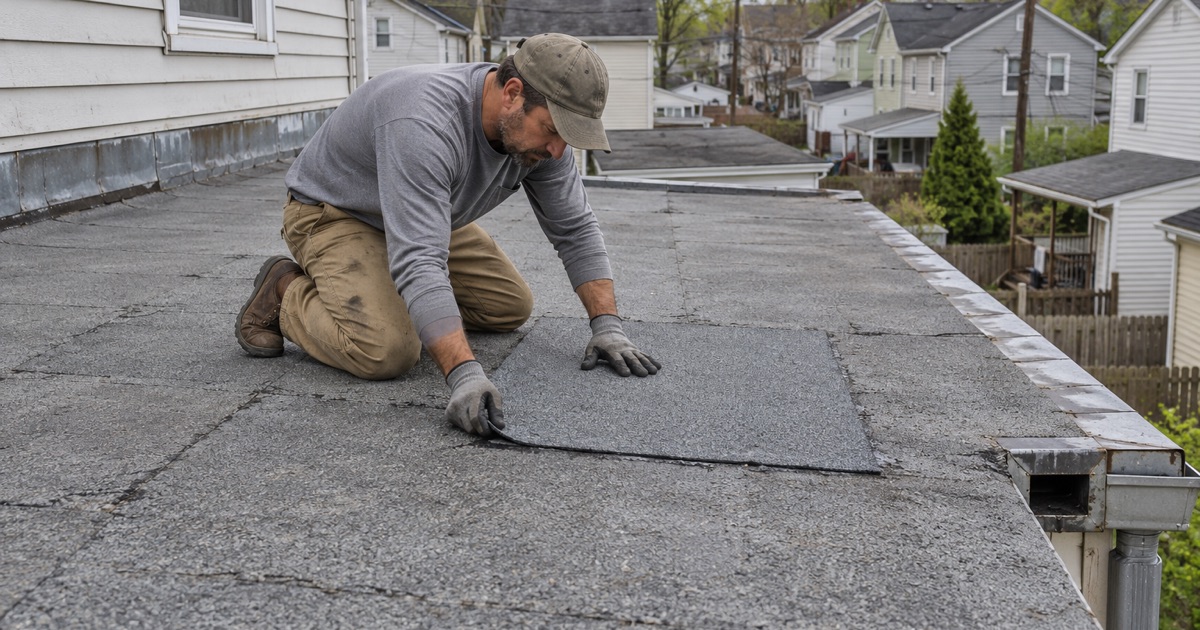
Torch-Down Modified Bitumen
Modified bitumen is the layered asphalt membrane found on many porch roofs and additions, often with a granulated cap sheet. It fails at seams, at blisters where air or moisture is trapped underneath and where the surface granules have worn away. We cut out damaged sections and install new modified bitumen with overlapping seams sealed to the old. Where torching near wood trim, siding or a wall cavity is a fire risk, we use cold-applied or self-adhered modified bitumen for the repair.
EPDM Rubber
EPDM rubber roofs are durable but rely on seam tape and adhesive that can let go after years of sun and cold. Shrinkage also pulls the membrane away from walls and edges. We clean and prime the rubber, re-seal open seams with new seam tape and install cover strips and flashing at walls where the membrane has pulled back. Punctures from branches or dropped tools are patched with EPDM and primer, not with roof cement, which does not bond to rubber.
TPO and PVC Membranes
TPO and PVC are heat-welded membranes. Repairs are welded with a hot-air tool, which creates a patch that becomes part of the membrane. We clean the old surface carefully, since weathered TPO needs preparation before a new weld will hold, and we probe every repair seam after welding.
Old Roll Roofing and Built-Up Roofs
Some older additions and garages still have roll roofing or built-up tar and gravel. These roofs can sometimes be patched, but once they are brittle and cracked across the surface, repairs rarely last. We explain when it is time to replace them with a modern membrane.
Where Flat Roofs Leak
The Joint Between the Low Roof and the House
The most common leak on a rear addition or porch is where the low roof meets the main house wall. The membrane has to turn up the wall and be covered by counter flashing or siding so water cannot run behind it. On many older houses that detail was never done properly, or the siding was replaced without it. We rebuild the wall flashing with the membrane carried up the wall and new counter flashing set into the brick or tucked behind the siding.
Ponding Water and Low Spots
Water that sits on a flat roof for more than a couple of days after rain speeds up wear, freezes in winter and finds every weak seam. Low spots usually come from sagging framing, settled decking or a roof that was built without enough pitch.
We can build up low areas with tapered insulation or crickets that send water toward the edge or drain, which is often the fix for a roof that keeps leaking in the same place.
Edges, Gutters and Drip Edge
Water leaving a flat roof has to drain over the edge cleanly. Missing or loose edge metal lets wind lift the membrane and lets water wick back into the decking. We replace edge metal, seal the membrane to it and make sure the gutter below is sized and pitched to take the runoff.
Pipes, Vents and Skylights
Penetrations through a flat roof need flashing made for low slopes. Old pitch pockets dry out and crack, and pipe flashing set in roof cement opens up. We install proper boots and curbs and re-flash skylights so water cannot pond against them.
Flat Roofs on Scranton Houses
Rear Additions and Kitchen Extensions
Many older Scranton houses were enlarged over the years with single-story rear additions, often roofed at a very shallow pitch. These roofs get less attention because they cannot be seen from the street, and leaks often show up first in the kitchen ceiling. We inspect the addition roof and the wall joint together, since the repair usually involves both.
Porches, Bays and Garage Roofs
Enclosed porches and bay windows often have small low-slope roofs that were shingled when they should have had a membrane. Detached garages commonly have rolled roofing nearing the end of its life. We repair or replace each with a material suited to its pitch, including standing seam metal where that suits the house.
Snow and Ice on Low-Slope Roofs
Scranton averages about 45 inches of snow a year, and low roofs collect snow sliding off the main roof above them. That extra snow adds weight, and meltwater can back up against the wall joint. We look for signs of sagging and keep the wall flashing high enough to stay above melting snow.
Repair or Replace a Flat Roof?
When a Repair Makes Sense
A roof with one or two leaks, seams that have opened in a few places and a dry deck underneath is a good candidate for repair. Fixing the specific problem can give years of further service.
When Replacement Is the Better Investment
Widespread blistering, cracking, wet insulation, soft decking or a history of repeated patches point toward replacement. On a small roof over an addition, replacement often costs less than people expect, and it lets us correct the slope and the wall flashing at the same time. We give you a written price for both options when the choice is close, with the decking, insulation, membrane and flashing listed as separate lines.
- 20+ Years Roofing
- Free Written Estimates
- Repair Before Replace