Selling a house in Exeter now starts with a notice to the borough, and that changes how roofing in Exeter should be timed. Under Ordinance No. 2 of 2025, an owner or agent notifies the Code Enforcement Officer when the house is listed, and an inspection follows within ten days. A roof dripping into a bedroom ceiling is not something a seller wants to be dealing with during that window.
Scranton Quality Roofing has spent more than twenty years on roofs in northeastern Pennsylvania, and our approach to a pre-listing roof is simple. We look in the attic as well as on the roof so the water is traced to where it really gets in, and we tell you plainly whether a repair will do before replacement comes up. For a seller on a deadline, that straight answer is worth more than a sales pitch.
This page covers what the borough’s occupancy rule asks of a seller, how we get a roof ready ahead of the inspection, what the permit side of roof work looks like in Exeter Borough, and the older housing that makes up much of the town. The ordinance itself lists no roof item, so we keep what it says separate from what simply makes sense.
Exeter’s Occupancy Inspection When a House Is Listed
The notice comes at listing, not at closing
Exeter Borough enacted Ordinance No. 2 of 2025 on February 4, 2025, and it moved the trigger point earlier than many sellers expect. Every owner or agent of a residential structure must notify the Borough Code Enforcement Officer upon listing, advertising or offering the house for sale. The clock starts when the sign goes up or the listing goes live, not when a buyer signs.
The inspection fee is $50 per dwelling unit and $75 per commercial unit. Skipping the notice is a summary offense, with a fine of not more than $300 plus expenses under Section 4. The cost of complying is small next to the cost of ignoring it, and a seller who misses the step can end up explaining it at the worst possible moment.
Ten days, the Zoning Ordinance and the Building Code
Within ten days of the notice, the officer conducts a physical inspection of the structure against the borough’s Zoning Ordinance and its Building Code. If the house complies, the borough issues an occupancy permit. If it does not, the seller is working through problems with a listing already active and buyers already booking showings.
We want to be precise about one point, because it is easy to overstate. The ordinance names no roof-specific inspection item, and it lays out no roof checklist. Our view that a failing roof is better handled before the listing is a practical judgment about the inspection window and the sale, not a reading of the ordinance text.
Change of occupant and rental turnover
The rule is not only for sales. An Exeter owner who intends to change the occupancy of a structure carries the same notice obligation, which reaches landlords between tenants. A turnover is a natural moment to have the roof looked at, since the unit is empty and the attic is easy to reach.
The 2024 American Community Survey counts 570 renter-occupied homes among the 2,494 occupied units in the borough. Some of those sit in two-unit and small multi-unit buildings where one roof covers more than one household. A stain on one tenant’s ceiling can trace back to a flashing failure over the other side, and we follow the water to its source either way.
Looking for roofing closer to Scott Township? See Roofing Services in Scott Township.
Getting the Roof Right Before the Ten-Day Inspection
Finding the leak before a buyer does
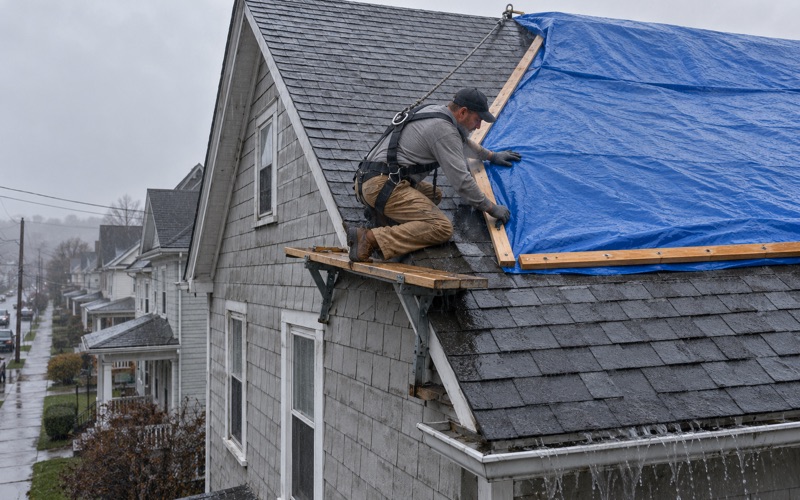
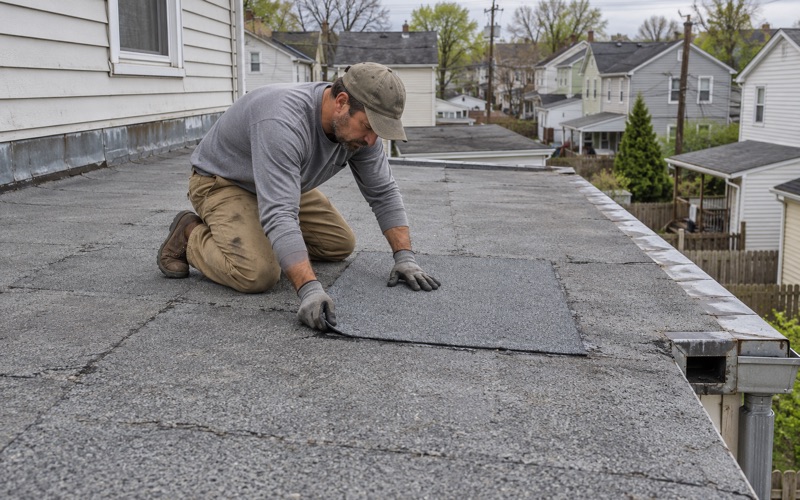
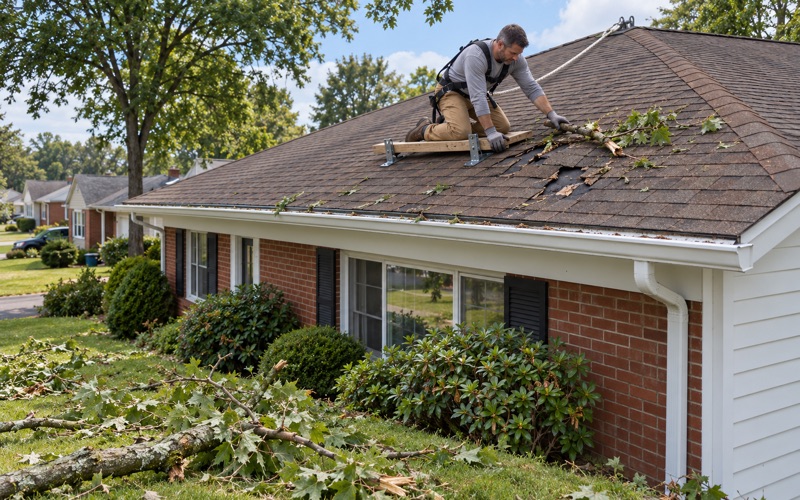
A seller has more control over a roof repair before the listing than at any point after it. Once the house is on the market, a buyer’s own inspector, the borough’s visit and the showing schedule all compete for the same few weeks. Fixing a known leak first means the seller decides the scope and the timing instead of reacting to someone else’s report.
Disclosure is part of this as well. Pennsylvania sellers complete a seller property disclosure statement, and known roof problems are among the things it asks about. A leak repaired properly, with a written scope showing what was done, gives the seller something concrete to point to in that section.
Tracing water from the attic side
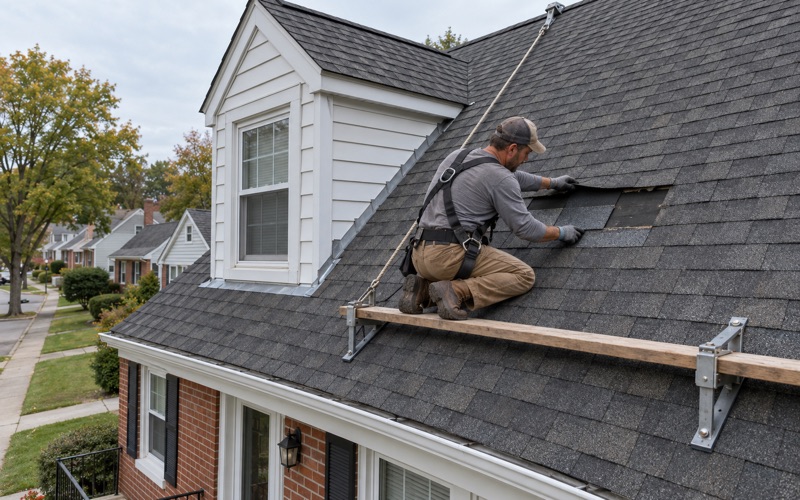
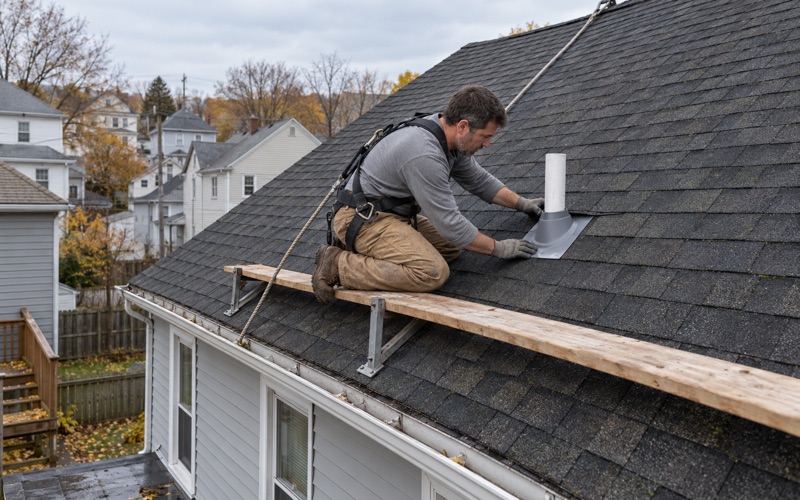
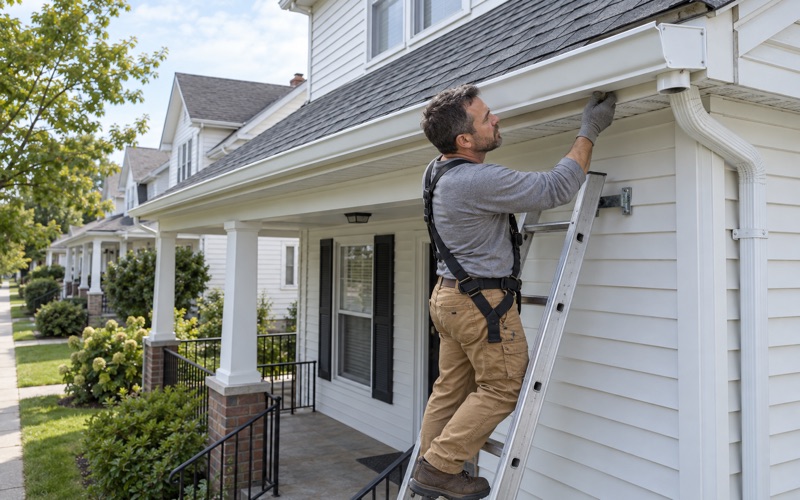
Every leak call we take includes time in the attic, not just on the shingles. Water often enters at a chimney, a plumbing vent or a valley and then runs along a rafter before it shows up as a stain several feet away. Pricing a repair from the outside alone is how a seller pays for a fix that misses the real entry point.
In the attic we look for darkened decking, rusted nail tips, wet insulation and daylight around penetrations. Those signs tell us whether the problem is a single failed pipe boot, a flashing joint at a chimney or broader wear across the field of the roof. That diagnosis is what sets up an honest answer on repair versus replacement.
Repair or replace for a house about to sell
We answer the repair question before replacement is ever on the table. For a seller, a sound roof with one failed detail is usually a repair job, and a full tear-off rarely makes sense unless the roof is genuinely at the end of its life. When it is, we say so plainly and show what we saw.
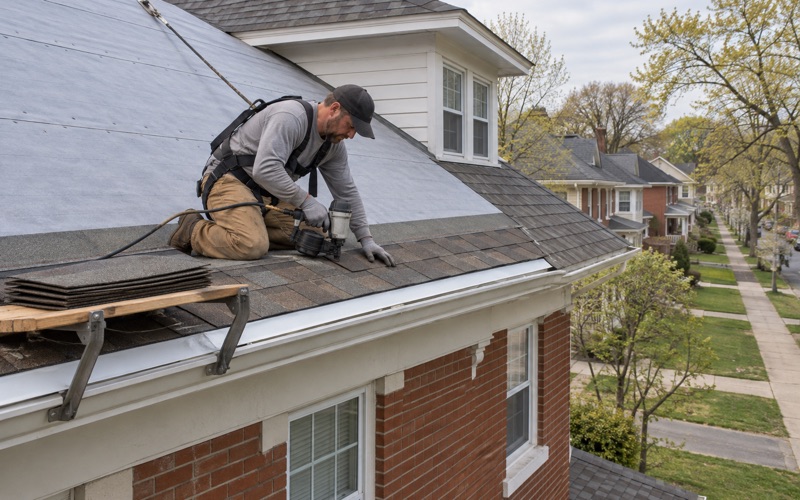
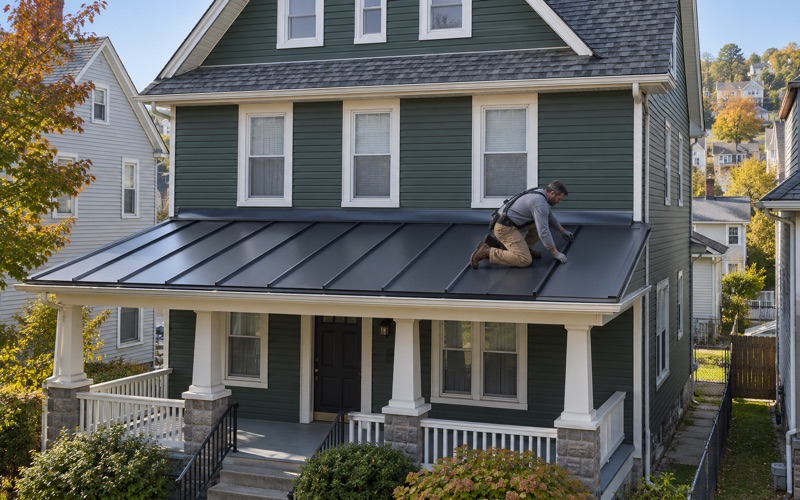
Our written scopes break out tear-off, decking, underlayment, flashing, ventilation and gutters as separate lines. A seller comparing two estimates can line them up item by item, which matters when the work is weighed against an asking price. If decking turns out to be damaged once old material is off, we photograph it and show the owner before replacing it at the per-sheet price set in the contract.
Permits for Roof Work in Exeter Borough
What the borough’s permit application shows
Exeter Borough handles permits from the municipal building at 1101 Wyoming Avenue, and its building permit application routes building inspections to Jason Humenanski, the borough’s building inspector. The type-of-work checkboxes cover new buildings, alterations, additions, demolition and the trades, but the form has no roofing box. The borough has not published its own stance on re-roofing.
Because every municipality in our service area sets its own rule, we check Exeter Borough’s position for the specific house before the job is priced. That check matters here in particular, since Exeter Borough and Exeter Township are separate municipalities with separate code elections. A homeowner searching for the rule online can easily land on the wrong one.
Doubled fees and failed inspections
The residential fee table on the application starts at $24.50 for the smallest jobs and rises with the cost of work, with a 25% administration fee and a $4.50 state fee added on top. A failed inspection carries an added charge of $65 per inspection. Those figures are modest on their own, but one line on the form changes the math.
Printed in capitals, it says fees will be doubled for those failing to secure a permit prior to the start of work. For a house heading toward an occupancy inspection, starting first and asking later is a poor trade. We confirm what applies before any material is ordered, so the seller is not paying twice for a shortcut.
The replacement sign-off form and the blight ordinance
The borough also has a Zoning Sign-Off Form for Replacements, with a $50 residential fee. It covers replacing a porch, deck or patio at the same size or smaller and enclosing part of a structure already under roof. It does not mention roof replacement, and it states that approval does not relieve the owner from securing a building permit.
Separately, Ordinance No. 4 of 2025, the Exeter Borough Neighborhood Blight Reclamation and Revitalization Ordinance, lets the borough deny permits and approvals for serious code violations. For most sellers it never comes into play. It is still one more reason to keep a property’s condition, roof included, from sliding toward the neglect that ordinance targets.
Roofing Older Exeter Houses Between Wyoming Avenue and the River
What the housing stock looks like
Exeter sits on the western bank of the Susquehanna River, and much of its housing went up long before modern roofing materials. The 2024 American Community Survey counts 620 homes built in 1939 or earlier and another 355 from the 1940s, out of 2,846 housing units in the borough. Detached single-family houses make up the largest share, at 1,883 units.
A later wave added 517 homes in the 1970s, and many of those roofs have already been replaced at least once. On any older house we count the layers on the deck before quoting, because the building code limits reroofing to two layers. Where two are already there, the scope has to include a full tear-off.
Slate, chimneys and flashing on older roofs
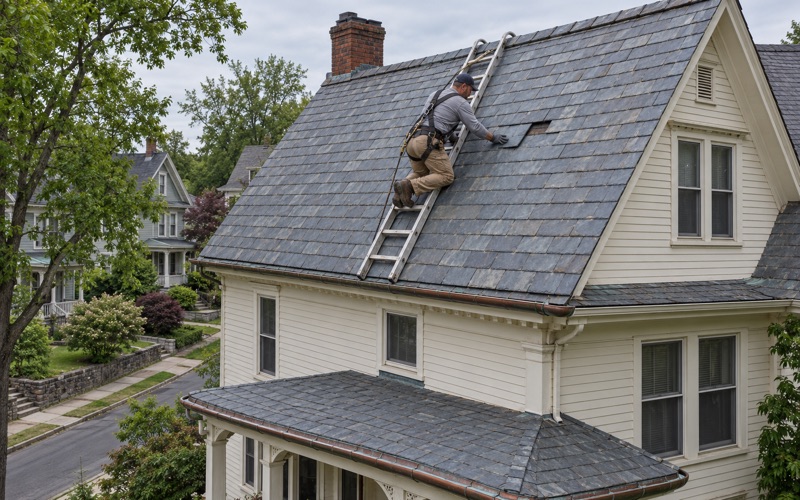
Where an older Exeter house still carries slate, we repair it one piece at a time with copper nails and slate hooks before anyone suggests tearing off a sound roof. A handful of broken slates is not a reason to discard a roof that can outlast its replacement. That is often the cheapest honest fix a seller can make.
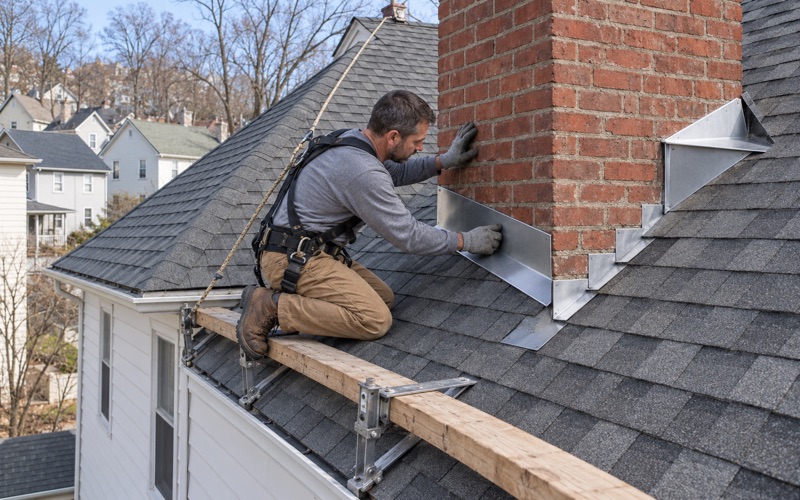
When a roof is replaced, step, counter and chimney flashing are replaced with it rather than reused under new shingles. Old flashing bent back into place is one of the most common sources of a leak a few years after a new roof goes on. Where a wide chimney sits on the uphill side of a roof, a cricket diverts water around it.
Eaves, gutters and the end of the work day
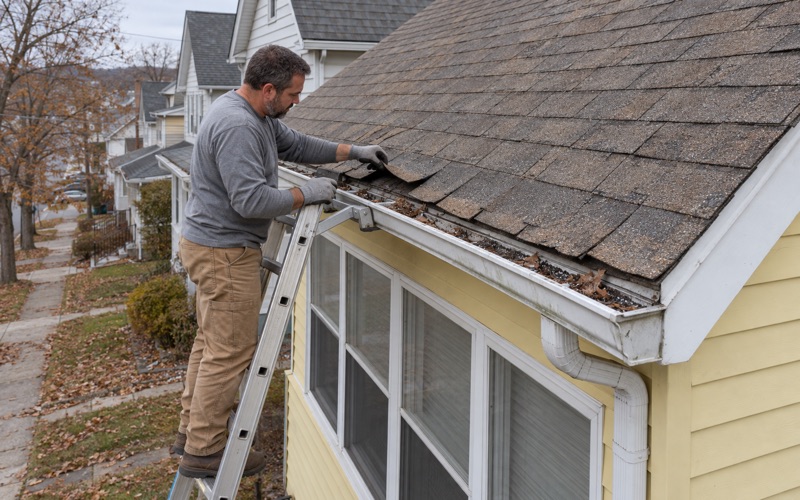
Northeastern Pennsylvania winters build ice dams on older homes, and Exeter’s houses are no exception. We install a self-adhering ice barrier at the eaves sized to the overhang of the specific house, and we size and pitch gutters and downspouts with the roof rather than as an afterthought. For a seller, the roof and drainage then present as one finished system.
At the end of each work day, the driveway, yard and gutters are cleaned and the ground gets a magnet sweep for nails. That matters on any job and more so on a house that may have showings scheduled within days. Leaving a listed property clean is part of finishing the work, not an extra.
- 20+ Years Roofing
- Free Written Estimates
- Repair Before Replace