Scranton Quality Roofing handles emergency roof repair in Scranton, PA, serving surrounding cities including Dunmore, Moosic, Old Forge, Throop and Dickson City. When water is coming through a ceiling, a limb has broken through the roof or wind has torn a section open, our first goal is to stop more water from getting inside, and our second is to fix the damage properly once it is safe.
After more than 20 years on roofs around the Lackawanna Valley, we know how storms damage older houses here: lifted shingles along exposed ridges, flashing pulled from chimneys, limbs from mature street trees and ice dams that push meltwater under the eaves. An emergency visit focuses on the immediate problem, but we also look for related damage you may not have noticed yet.
We document every emergency with photos and a written description for your own insurance claim. When you ask, we will meet the adjuster on site to show what we found, without negotiating the claim on your behalf.
What to Do Before We Arrive
Protect the People and the Interior
If water is dripping through a ceiling, move furniture, rugs and electronics out of the way and set out buckets. A ceiling that is sagging with water should be cleared of people below; poking a small hole at the lowest point lets the water drain into a bucket instead of bringing down the drywall.
Turn off power to any room where water is near light fixtures or outlets. Do not go into an attic or onto a roof during a storm.
Document the Damage
Take photos and video of the damage inside and outside, from the ground and from windows, before anything is moved or cleaned up. Note the date and time the damage happened and the weather that caused it.
These records help with your insurance claim and with our diagnosis. Keep receipts for anything you buy or pay for to protect the house, including our emergency work.
Stay Off the Roof
A storm-damaged roof is slippery and may have weakened decking under the shingles. Every year people are injured climbing onto roofs to place tarps themselves. Leave the roof to a crew with fall protection and the right equipment.
Emergency Repairs and Temporary Protection
Tarping and Temporary Covers
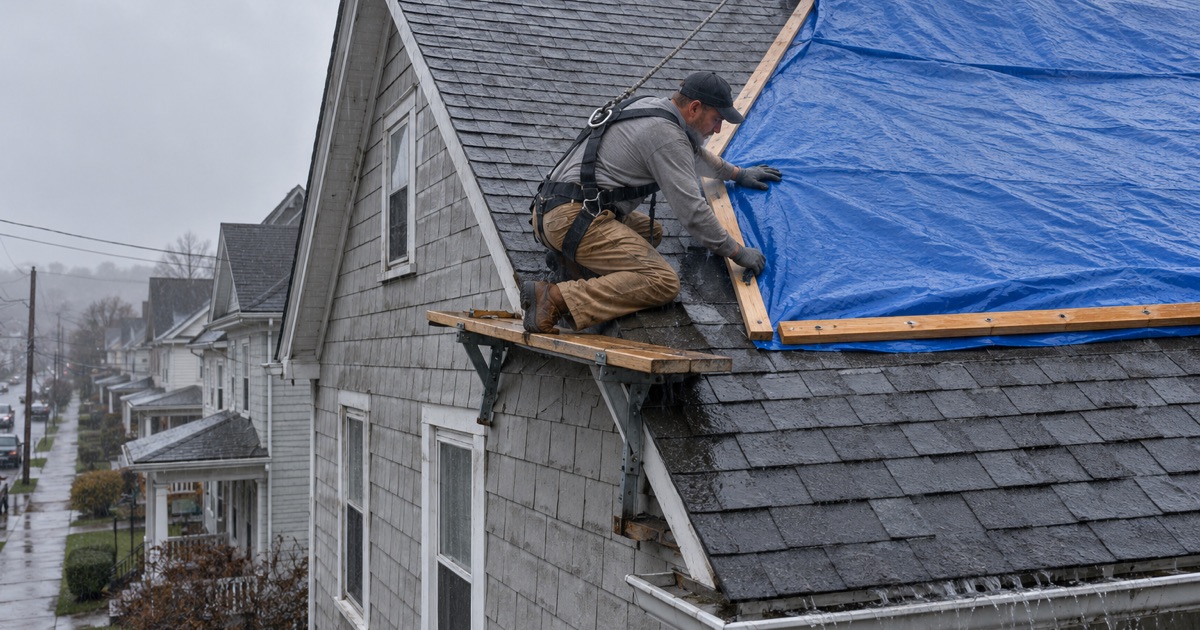
The fastest way to stop water from an open roof is a properly secured tarp. We extend the tarp over the ridge where possible and fasten it with battens so wind cannot get under it, rather than weighting it with loose bricks or boards that blow off.
Where the damage is small, such as a few missing shingles or a lifted flashing, we may make a quick temporary repair with underlayment and new shingles or metal instead of a tarp.
Fallen Trees and Large Limbs
Once a tree service has removed the weight from the roof, we cover the opening, look at the decking and rafters around it and note any structural damage. Broken rafters need to be repaired properly before new decking and roofing go on. We photograph the framing damage for the insurance adjuster and explain which repairs are roofing work and which need a carpenter or engineer.
Wind-Torn Shingles and Flashing
High winds can strip shingles down to the underlayment and peel flashing away from chimneys and walls. We secure loose materials, cover exposed areas and replace missing shingles where the weather allows. Damaged flashing at chimneys and walls gets a temporary seal until it can be rebuilt with new step and counter flashing.
Winter Roofing Emergencies
Ice Dam Leaks
Scranton averages about 45 inches of snow a year, and older homes with thin attic insulation often develop ice dams at the eaves. When meltwater backs up under the shingles and into the walls or ceilings, we create channels in the ice to let the water drain and clear the immediate leak without damaging the shingles.
We never chip ice off a roof with hammers or shovels, which damages shingles and gutters. After the emergency we recommend the long-term fixes: an ice barrier at the eaves, better insulation and balanced ventilation.
Heavy Snow on Older Roofs
Wet, heavy snow and drifts behind chimneys and dormers add significant weight. Signs of trouble include new cracks in interior walls or ceilings, doors that stick upstairs and sagging roof lines. If you see them, get people out of the affected area and call us. We remove snow carefully from the parts of the roof that need it and look for cracked rafters or sagging decking, then recommend structural repairs if they are needed.
Frozen Gutters and Downspouts
Gutters packed with ice can tear away from the fascia, and frozen downspouts send meltwater back onto the roof edge. We clear dangerous ice loads and resecure gutters that have pulled loose, then schedule repairs or replacement once the weather breaks.
From Emergency to Permanent Repair
Diagnosis After the Storm
Once the emergency is under control, we inspect the whole roof from the attic and from above. Storms often cause damage away from the obvious problem, such as creased shingles that will fail in the next wind or flashing loosened on the opposite side of the house. We give you a straight answer on whether the roof can be repaired or whether the storm has pushed an older roof past the point where repair makes sense.
Working With Your Insurance Claim
Our photos and written report go to you to submit with your own claim. Pennsylvania’s claim-handling rules require insurers to acknowledge a claim within 10 working days and decide it within 15 working days after receiving proof of loss. Only a licensed public adjuster may negotiate a claim on your behalf for a fee, so we document and explain, and the claim stays yours.
Commercial Roof Emergencies
For businesses, an active leak over inventory, equipment or customers is an emergency. We set up temporary protection, trace the leak under the membrane and plan the permanent repair around the business, keeping the owner informed with photos at each step.
- 20+ Years Roofing
- Free Written Estimates
- Repair Before Replace