Behind the earthen levee that runs along the Lackawanna River, a roof in Duryea is rarely just a roof. The borough has a levee of its own, separate from the Wyoming Valley levee on the Susquehanna, and FEMA has not accredited it. For an owner whose house sits inside that line, the question of what to do overhead comes tangled up with questions about water at ground level.
Our crew at Scranton Quality Roofing has spent more than 20 years on roofs across the Lackawanna Valley, and roofing in Duryea asks us to keep both pictures in view. We do not treat the levee as a reason to sell more work, and we do not pretend it settles anything. We look at the house, the drainage around it and the roof itself before a number goes on paper.
This page covers what the public record says about the Duryea Levee System, what has and has not changed since 2011, how that record shapes a re-roof or repair on a house in the impact area, and who signs off on permits in the borough. Every figure here comes from a named public source, and where the record stops, we say so.
Duryea’s Own Levee on the Lackawanna River
The Lackawanna River flows through the middle of Duryea, and most of the borough’s homes and businesses sit south of it. That geography is why the borough has a flood-control structure of its own. Since the 1970s, according to an NPR report from March 30, 2026, a tall earthen levee has protected the town from floodwaters, and it is the reference point for any conversation about a house near the river.
A Levee Separate From the Wyoming Valley System
Many people in Luzerne County think of one levee, the Wyoming Valley system along the Susquehanna. Duryea’s is a different structure on a different river. The two are linked by how water behaves, though: reporting from May 27, 2024 explains that the raised Wyoming Valley Levee creates backwater upstream that keeps the Lackawanna from draining into the Susquehanna where the two rivers meet in Duryea.
That backwater is part of why Duryea qualifies for mitigation money at all. It also means the borough’s flood picture is shaped partly by conditions downstream that no single homeowner controls. For a roof owner, that is a reason to understand the levee as shared infrastructure with its own open questions, rather than a fixed guarantee drawn on a map.
What the FEMA Fact Sheet Counts
FEMA’s Risk MAP fact sheet for the Duryea Levee System, dated June 10, 2020, puts numbers on the area behind it. The levee impact area holds 597 structures and 1,221 people, along with two critical facilities and 6.7 miles of roadway and railway. Those counts describe how much of the borough depends on the levee, not which addresses would or would not take on water.
The same sheet reports 69 flood insurance policies across the Borough of Duryea, with an average annual premium of $1,031. Compared with the number of structures behind the levee, that policy count is worth knowing. We are not insurance agents and do not advise on coverage, but an owner planning a large roof project often wants the whole risk picture before committing to the spend.
Why FEMA Has Not Accredited the Levee
The fact sheet is direct about accreditation. It notes that the November 2, 2012 Luzerne County flood map shows the Duryea Levee System as reducing flood hazards, then adds that “FEMA has found, however, that the community has not provided the data and documentation needed to accredit these levee systems.” Without that accreditation, the levee’s protection is not something the map simply assumes.
FEMA said its map update would keep the flood risk zones already shown for the areas the levee affects. The current effective map for Duryea, FEMA community 420603B, is dated June 20, 2024, according to the Community Status Book. We did not confirm whether the 2012 map note carries onto that newer map, and the fact sheet itself warns that levees can be overtopped or fail during floods larger than their design.
Looking for roofing closer to Jessup? See Roofing Services in Jessup.
After 2011: A Gap Closed and a Levee Still to Raise
The borough’s flood record turns on 2011. Flooding that year destroyed many homes and businesses along the Lackawanna River in Duryea, from Phoenix Street to Elm Street. What followed was a repair to the levee’s weakest point and a longer effort to bring the rest of the structure up to the standard FEMA applies today.
Closing the Two-Block Gap
Duryea’s levee is one mile long, and until the borough acted it had a two-block opening. According to the Times Leader, republished by The Sunday Dispatch and The Dallas Post on May 27, 2024, Duryea worked with the state to close that gap after 139 borough properties were flooded in 2011. That closure addressed the most obvious weak point.
Closing the gap fixed a specific hole. It did not, by itself, settle whether the older sections meet current requirements. A house that sat behind the gap in 2011 now sits behind a closed levee line, which matters, but the same article makes clear that the rest of the levee carries problems of its own that the borough cannot fix alone.
Freeboard, Storm Pipes and About 3 Feet
FEMA will not certify the older remaining levee, the 2024 reporting says, because its freeboard buffer was “deemed insufficient based on the latest flood threat modeling.” Freeboard is the extra height above a design flood level that gives a levee room for waves, debris and error. The same article reports that joints in some storm pipes running through the levee have separated.
The county flood authority’s director told NPR on March 30, 2026 that the Duryea levee needs to be raised by about 3 feet to adequately protect the town. NPR added that the cost of upgrading the local levee is about three times the borough’s total annual budget. That gap between need and means explains why the upgrade depends on outside money.
$9.2 Million, a Bridge and a Canceled Grant
The engineer’s estimate reported in May 2024 was $9.2 million, including a bridge closure system. The county was asked to decommission the Stephenson Street Bridge, a 268-foot span built about 1959 to replace one demolished by Hurricane Diane, so it can be removed for the project. The Luzerne County Flood Protection Authority works with Duryea on upgrading and maintaining the levee.
Funding has been the obstacle. WVIA reported on April 9, 2025 that the authority planned to seek federal BRIC funding to rehabilitate the levee, with the project still in design. The Conversation reported on September 12, 2026 that the canceled grants included the rehabilitation of the Duryea levee. We could not find the construction status as of October 2026, so we assume nothing either way.
Roof Work on a House Inside the Levee Impact Area
None of this levee history changes how a shingle is nailed. It does change how we think about a project on a house in the impact area, mostly south of the river. An owner deciding between a repair and a full replacement here is often weighing the roof against other costs the levee record raises, so we try to make that decision as clear as we can.
Reading Flood Risk and the Roof Plan Together
A flood comes from the ground up and a roof leak comes from above, but on a house behind a levee FEMA has not accredited, the two show up in the same budget. Some owners want to put money into the roof now, while others want to wait until the insurance and levee questions feel settled. We respect either choice and price the roof work on its own terms.
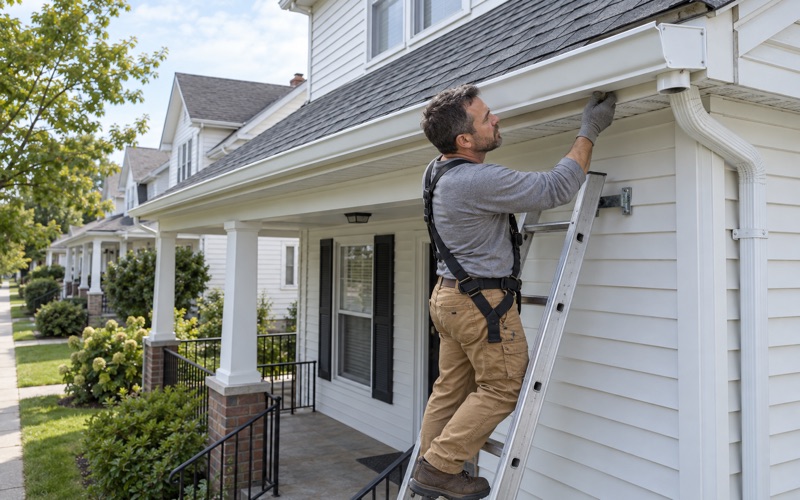
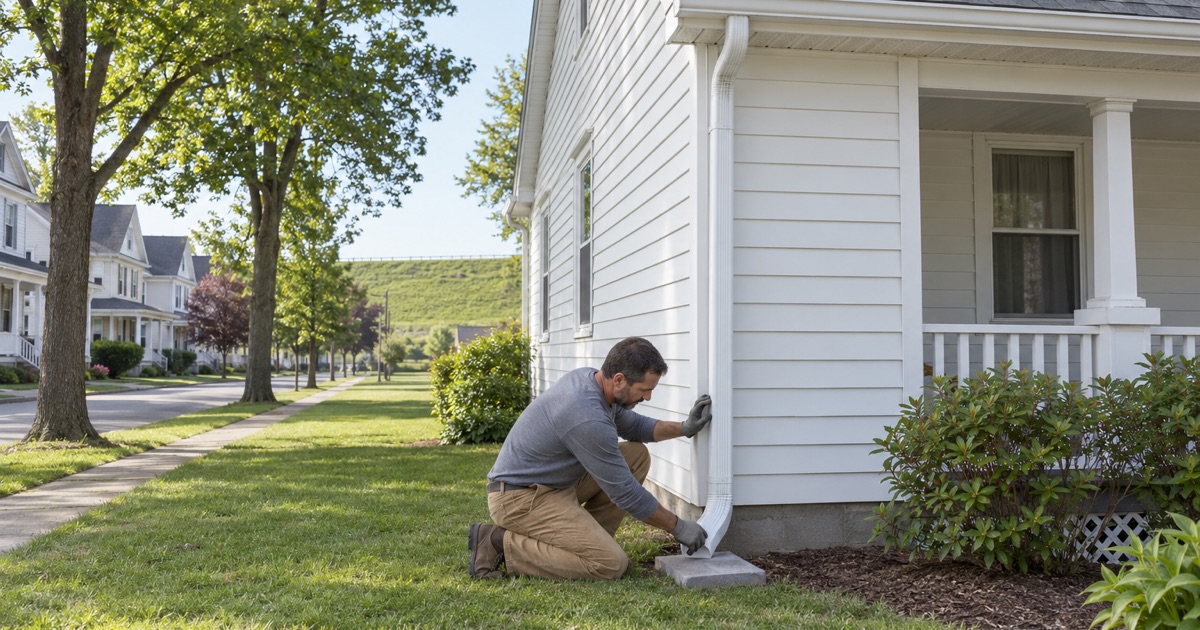
What we can do is make sure water from the roof is not adding to water problems at grade. Gutters and downspouts are sized and pitched with the roof, so runoff is carried away from the foundation rather than dumped beside it. On a lot near the Lackawanna, that detail belongs in the roof plan from the start rather than being treated as an afterthought.
Tracing the Water Before Anything Is Priced
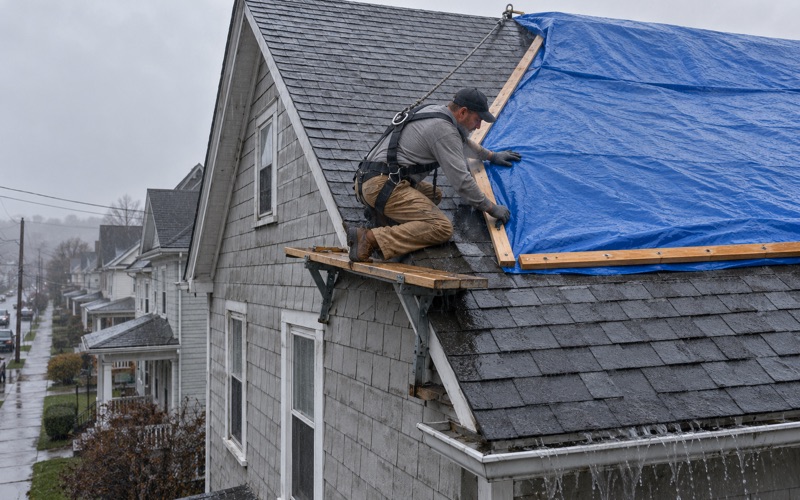
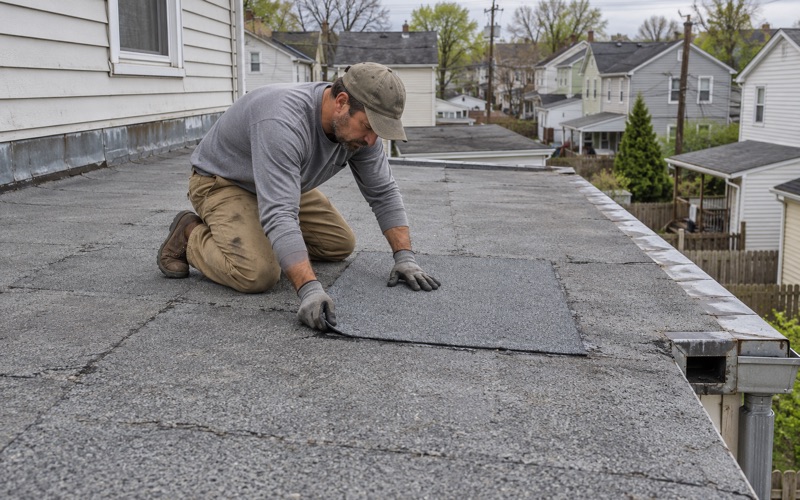
When a Duryea owner calls about a stain on a ceiling, we go into the attic as well as onto the roof. Water often enters at one spot and shows up somewhere else, running along a rafter or a sheet of decking before it drips. Finding the real entry point first keeps us from pricing a fix for the wrong problem.
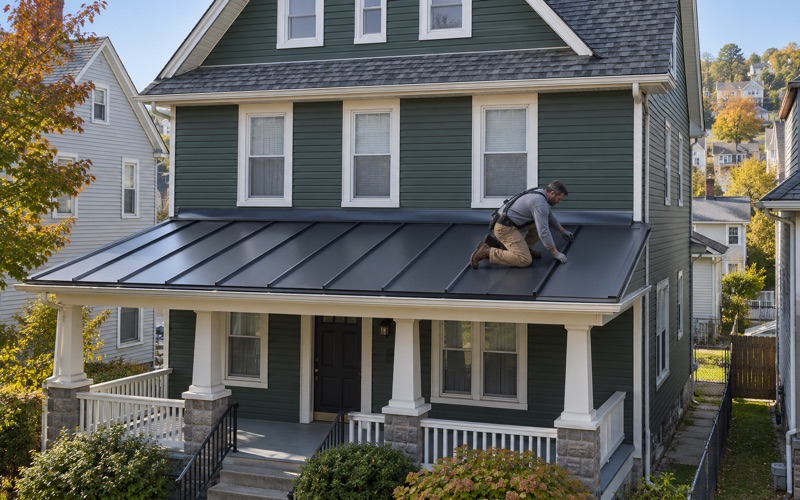
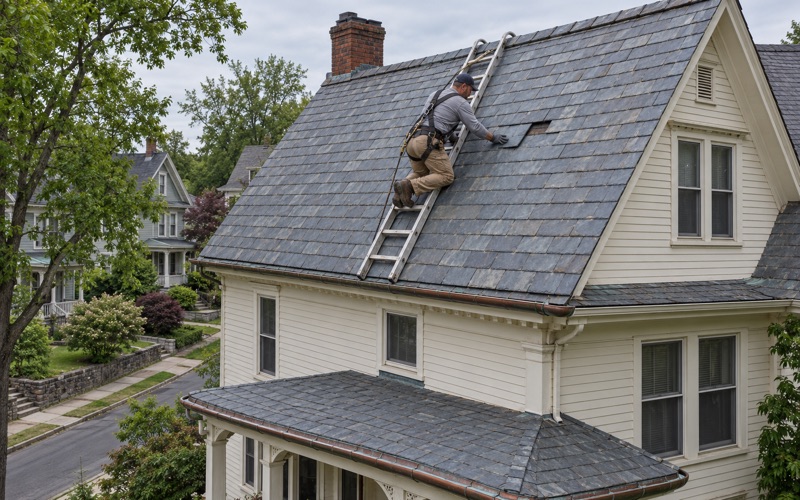
Once we know where the water gets in, we say plainly whether the roof can be repaired, and replacement only comes up after that answer. On a house where the owner is already weighing flood costs, a sound repair that buys several more years can be the right call. We would rather say so than talk anyone into a tear-off they do not need.
A Written Scope Broken Into Separate Lines
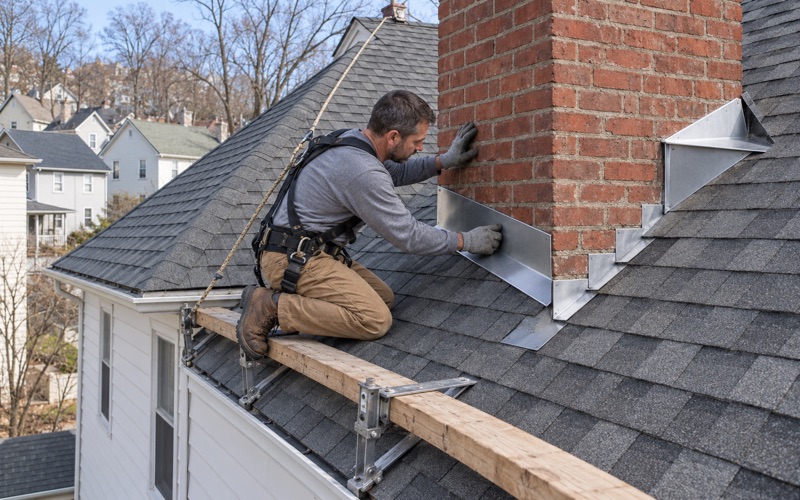
Our written scopes list tear-off, decking, underlayment, flashing, ventilation and gutters as separate lines. That lets an owner set two estimates side by side and see exactly where they differ, which matters when a large project competes with other costs. Step, counter and chimney flashing is replaced with the roof rather than reused under new material, and the scope says so.
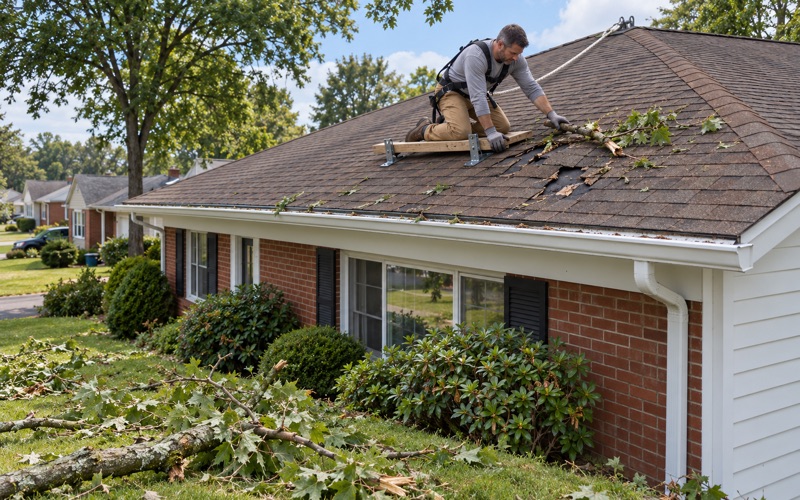
Decking is the one item nobody can fully see before the old roof comes off. If we find damaged sheets during tear-off, we photograph them and show the owner before replacing anything, at a per-sheet price already set in the contract. At the end of each work day the driveway, yard and gutters are cleaned, including a magnet sweep for nails.
Who Issues Permits and Inspects in Duryea
Every city, borough and township around Scranton sets its own rule for re-roof permits, so we check the rule for the house’s own municipality before pricing a job. In Duryea, that means starting with the borough and its third-party inspection agency. The borough building is at 315 Main Street, and the borough office is the first stop for questions about paperwork.
The Pisanchyn Inspection Agency
Duryea opted in to Pennsylvania’s Uniform Construction Code on May 12, 2004, with amendments, according to the state Department of Labor and Industry’s municipal table. The borough’s Building Inspections page states that the third-party inspection agency for Duryea Borough is the Pisanchyn Inspection Agency, and that Jeff Pisanchyn is the borough’s building inspector.
According to that same page, he will issue all building and remodeling permits and contractor’s licenses, as well as all inspections. For an owner, that means one office handles the whole permit side of a project in the borough. The page carries no text about roofing specifically, which is why we ask about each job rather than assume an answer.
What the Borough’s Permit Application Shows
Duryea’s building permit application, a scanned form dated March 2, 2022, lists permit types for building, plumbing, electrical, demolition and other work. Its improvement types include a box for repair, replacement and remodeling, but the form has no separate line for roofing. The fee recap lists inspection fees for the agency alongside a state permit fee.
The form says permits are good for six months from the date of issue. It also puts the responsibility on the applicant to notify the borough office when work is complete and to schedule inspections. When a permit applies to a roof job we handle, we keep those dates and that notice on our own checklist so nothing is left hanging after the crew leaves.
Checking Duryea’s Rule Before We Price
Duryea has not published its own position on re-roof permits, at least not anywhere we found. Rather than guess, we confirm with the inspection agency whether a particular job needs a permit before we write the price. A full tear-off with new decking and a small repair may not get the same answer, and that answer belongs in the estimate.
- 20+ Years Roofing
- Free Written Estimates
- Repair Before Replace