Wide, low-slope commercial decks on one side of the borough and steep roofs over houses built before 1950 on the other: that split defines roofing in Dickson City, and Scranton Quality Roofing plans every job here around which of the two it is. After more than 20 years on Lackawanna Valley roofs, we know the two ask completely different questions. A shopping-center deck is judged by its membrane, its drains and its parapet edges. A house is judged by its shingles or slate, its flashing and what the attic shows.
Both kinds of roof get the same first step from us. On a house leak call we look in the attic as well as on the roof, and on a commercial deck we check the ceiling side wherever access allows, so the water is traced to the place it actually gets in before anything is priced. Then we say plainly whether a repair will hold, and replacement only comes up if it will not.
Our written scopes break the work into separate lines, so an owner holding two estimates can compare them item by item instead of guessing. On a house that means tear-off, decking, underlayment, flashing, ventilation and gutters each priced on its own. The sections below cover the Commerce Boulevard corridor, its low-slope roofs, and the older homes that sit just off it.
Commerce Boulevard and Its Big-Box Roofs
Dickson City is the center of a retail corridor focused along Business Route 6, and Commerce Boulevard is where most of its largest buildings stand. Many of the nation’s big-box stores and chain restaurants are represented there. For a roofer, that means a concentration of broad, low-slope commercial roofs with little in common with the pitched roofs on the borough’s residential streets.
Shopping Centers Raised on Dormant Coal Lands
Dickson City was once dominated by coal mines, and John Jermyn sank the Johnson shaft here. The shopping centers that now line the corridor, including Dickson City Crossings, Dickson City Commons, Park Center and Commerce Plaza, were built during the 1990s and early 2000s on dormant coal lands. Original construction along the boulevard therefore dates back roughly three decades at most.
What ages first on a big retail building is rarely the structure. It is the membrane and its seams, the insulation beneath it, and the details where the roof meets a wall, a curb, a rooftop unit or a drain. Those are the parts we inspect and price on a commercial deck, and they are where a building from that era usually shows its years.
Dickson City Crossings and Its Neighbors
The owner lists Dickson City Crossings at 600-800 Commerce Boulevard with 311,991 square feet of building area, a marketing figure for the whole center and not a roof measurement. Its tenants include The Home Depot, T.J. Maxx, PetSmart, Barnes and Noble, Burlington and Dollar Tree. Farther along the boulevard, Walmart stands at 900 Commerce Boulevard and Target at 1140 Commerce Boulevard.
We name these buildings to describe the corridor, not to claim any of them as our work. They show the scale of roof that defines commercial property here: long, open spans where a small defect can move water a long way before it ever shows on a ceiling tile. A smaller pad building or strip center nearby faces the same physics at a lower scale.
What Low-Slope Means for an Owner
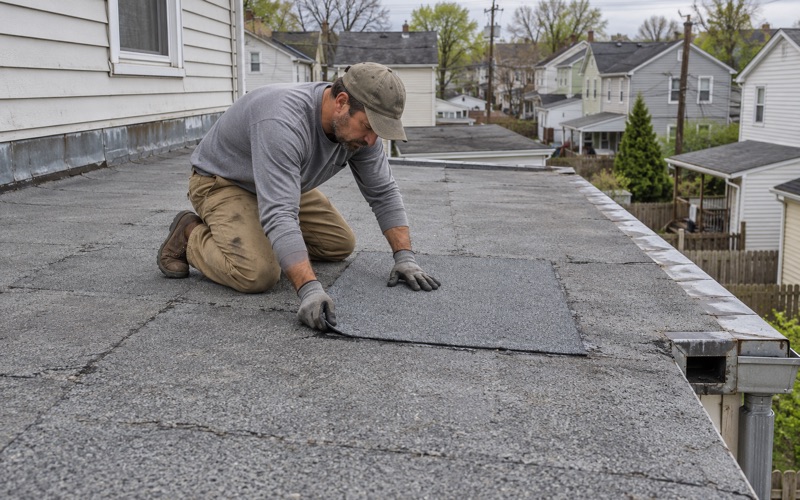
A low-slope roof drains slowly by design, so it depends on a continuous membrane and working drains rather than on overlapping pieces shedding water downhill. A pitched roof forgives a small flaw; a nearly flat deck does not. Owners of corridor buildings should expect a roofer to talk about seams, ponding and edge details, and to explain each one before proposing any work.
Looking for roofing closer to Olyphant? See Olyphant Roofing.
Dickson City Commons and Its 2026 Renovations
Dickson City Commons gives the corridor a dated, public example of roof work on a retail center. When the 110,254-square-foot center sold in September 2026, the trade coverage of the sale listed roof repairs among the recent improvements. That record says something useful about how centers along the boulevard are kept up and prepared for new ownership.
What the Sale Coverage Listed
Shopping Center Business reported on September 24, 2026, that Dickson City Commons, anchored by Marshalls and Michaels, had been sold by Meritus Realty Ventures to Getty Corp. Its tenant roster also includes Skechers, Famous Footwear, Pet Supplies Plus and Fine Wine & Good Spirits. The report placed the center roughly four miles north of Scranton.
The same report listed nearly $1 million of recent renovations: parking lot resurfacing, facade upgrades, roof repairs, LED lighting and landscaping. The coverage does not name who carried out the roof repairs, and we make no claim to that work. We cite it only because it is a documented case of roof maintenance on a Commerce Boulevard center.
Roof Repairs Within a Larger Refresh
Roof repairs sitting on the same list as new lighting and fresh asphalt reflect how a center is readied for a sale or a new leasing cycle. Buyers and tenants look hard at the roof, because a leak over a sales floor costs inventory and trading days, not just materials. A sound, documented roof makes the rest of the refresh easier to defend.
For an owner, the lesson is about records as much as repairs. Work done ahead of a transaction can be written up, and a written account is what a buyer’s inspector asks to see. We describe what we find on a commercial deck in plain terms, with photographs of each problem area, so the report stands on its own without us in the room.
Repair First, Then the Bigger Question
On a deck this large, full replacement is a major capital decision, so we start where we start on a house: is a repair sound, or is the membrane past saving? We give that answer before any replacement figure is discussed. A roof with a sound membrane and failing details can often be put right at the seams, flashings and drains.
Membranes, Drains and Parapet Flashing on Large Decks
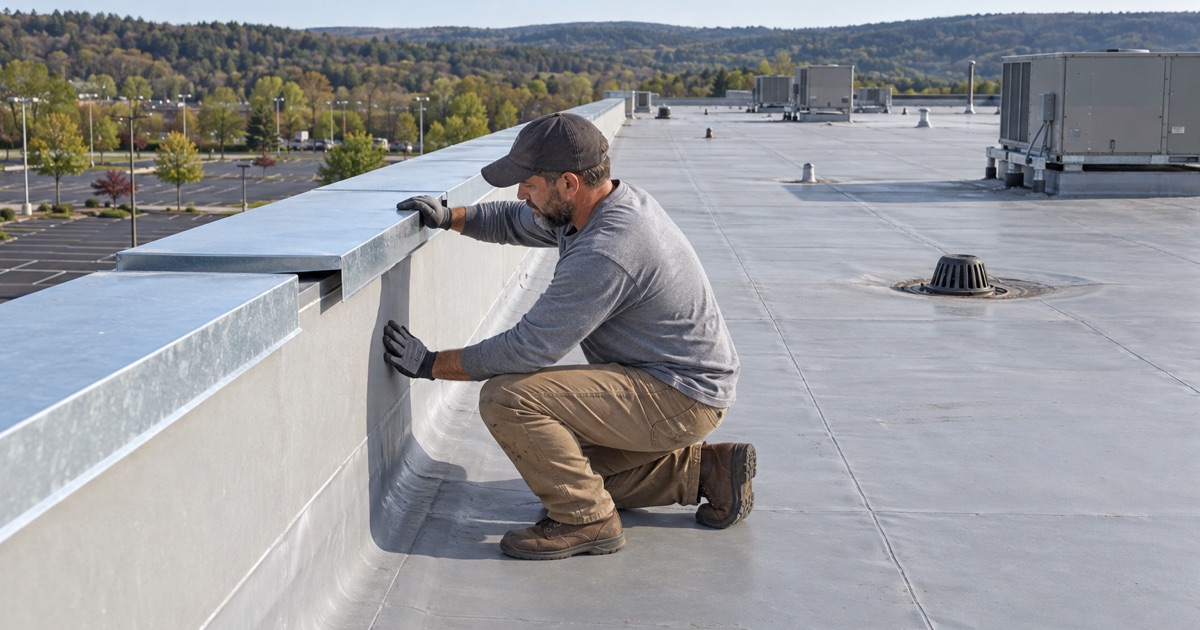
The work on a big retail roof in Dickson City comes down to three things: the membrane that keeps water out, the drains that carry it away, and the flashing where the deck turns up a parapet wall. Weakness in any one of them eventually shows up inside the store, usually at the worst possible time for the tenant below.
Identifying and Repairing the Membrane
Commercial decks carry EPDM rubber, TPO or PVC single-ply membranes, or torch-down SBS and APP modified bitumen. Each has its own seam method and its own compatible repair materials. So the first task on any commercial leak is confirming exactly what is on the roof, how old it is, and whether earlier patches used the right products.
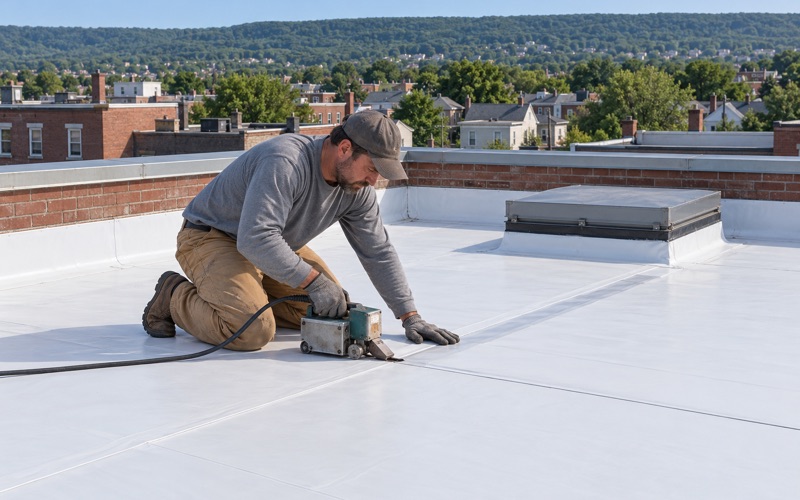
A patch has to match the system beneath it. Heat-welded seams on TPO and PVC, taped or adhered seams on EPDM, and torched laps on modified bitumen each fail in their own way, and a repair made with the wrong product tends to come back. Where a membrane is weathered but still watertight, a coating may extend its life; where it holds wet insulation, a coating only hides the problem.
Drains and Standing Water
Large low-slope roofs move water toward internal drains or scuppers, and a blocked or settled drain leaves ponding that stresses seams and adds weight to the deck. Leaves, wind-blown debris and loose drain clamping rings are among the first things we check. A clear strainer is cheap insurance on a roof that size.
After a heavy rain, we note where water stands and how long it stays. A pond that lingers around a drain usually points to a clogged strainer or a low spot in the deck near the bowl. Fixing that cause matters more than patching the membrane the standing water has worn thin, because the patch fails again if the water keeps sitting there.
Parapet Walls and Edge Flashing
Parapets are where many commercial leaks begin. The membrane turns up the inside face of the wall, and the termination bar, counter flashing and coping above it all have to stay sealed through each freeze and thaw. Any gap at those transitions lets water reach the wall cavity rather than the drain.
Water that gets behind a loose termination or a cracked coping joint can run down inside the wall and appear far from its source. That is why we trace a commercial leak from above and below before we price it, exactly as we would on a house. Guessing at the source on a deck this wide wastes the owner’s money on the wrong repair.
Dickson City’s Pre-1950 Houses Off the Corridor
Away from Commerce Boulevard, Dickson City is a borough of older single-family homes. The roofing questions on those streets have nothing to do with membranes and drains, and they deserve the same care. Here the work is about pitched roofs, chimneys, flashing and attics that have seen many decades of Lackawanna County weather.
What the Housing Numbers Show
The 2024 American Community Survey counts 3,106 housing units in Dickson City, and 1,801 of them, or 58.0%, were built before 1950. Some 66.8% of all units are single-family detached houses, and owners occupy 1,856 of the 2,778 occupied homes. That is a large share of owners responsible for an older roof.
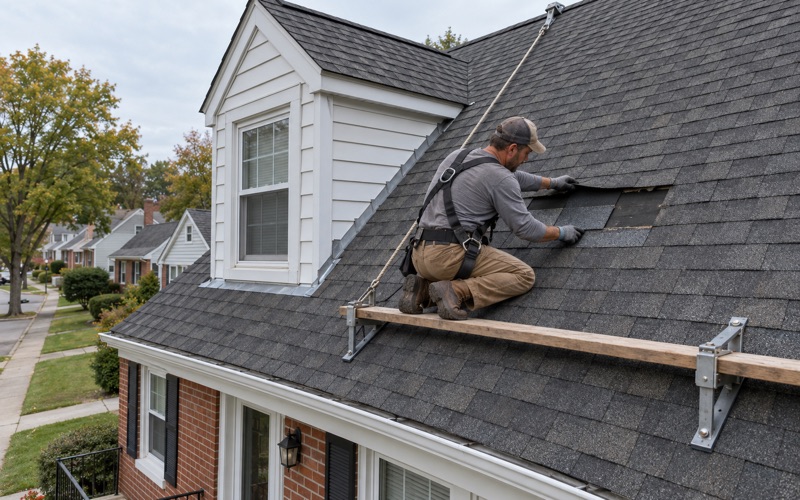
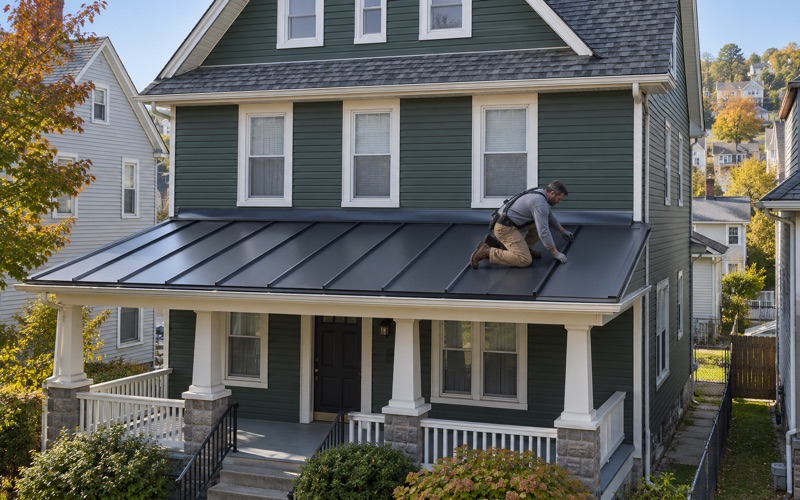
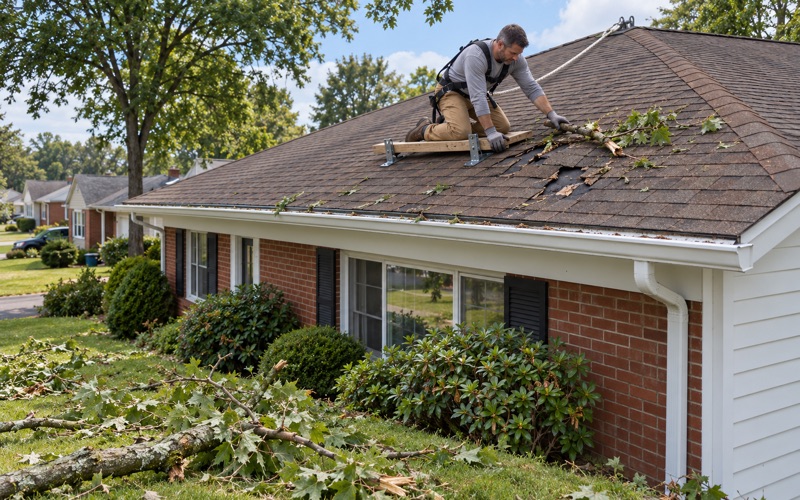
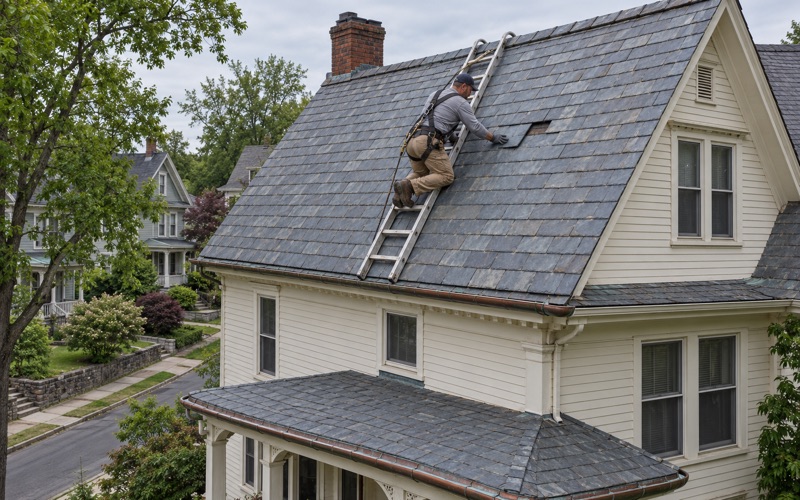
Houses of that age often carry several generations of repairs: layered shingles, reused flashing and chimneys patched rather than rebuilt. A roof replacement on one of them is rarely a simple matter of new shingles over old ones. Where a sound slate roof survives, we repair it slate by slate with copper nails and slate hooks before anyone suggests tearing it off.
Tracing a Leak on an Older House
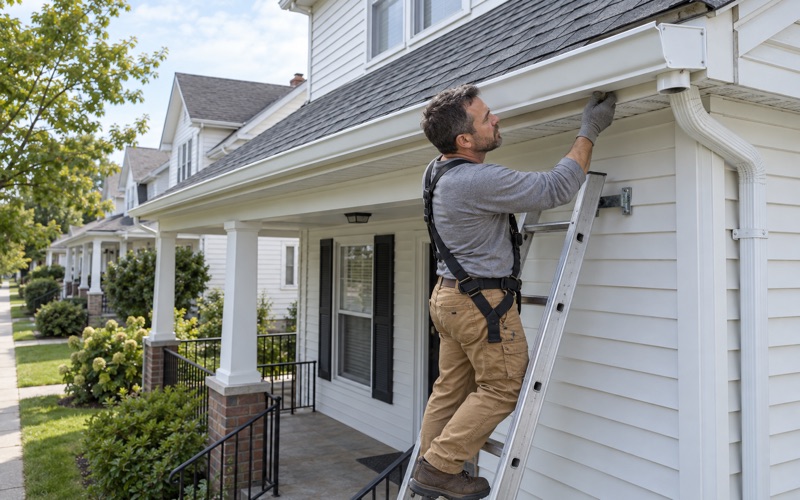
Our leak visits on these homes always include the attic. Stains on a ceiling seldom sit directly under the opening, and in an older attic the path water takes along rafters and old board sheathing can be long. Finding the entry point first keeps the repair small and keeps the estimate honest.
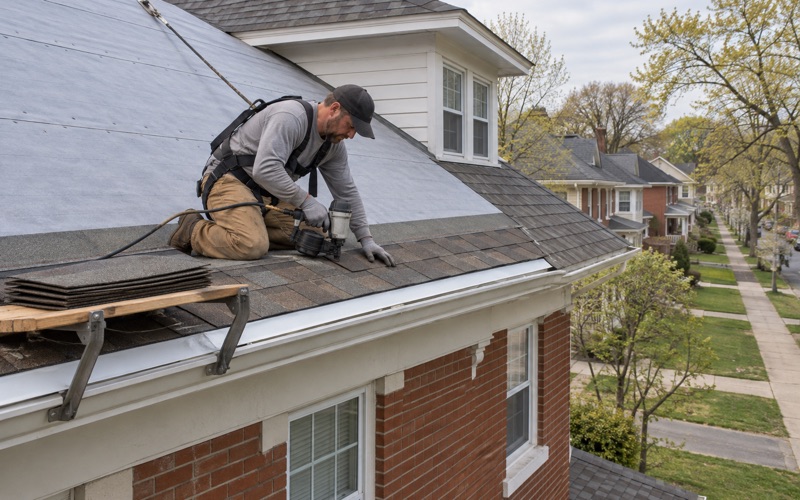
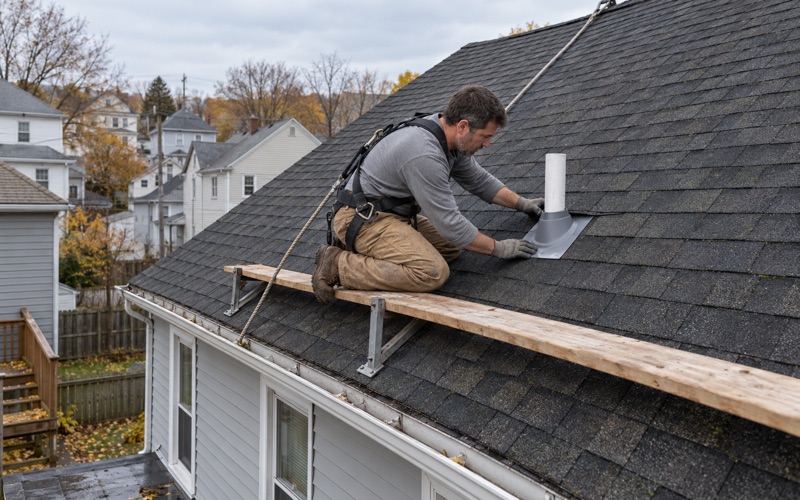
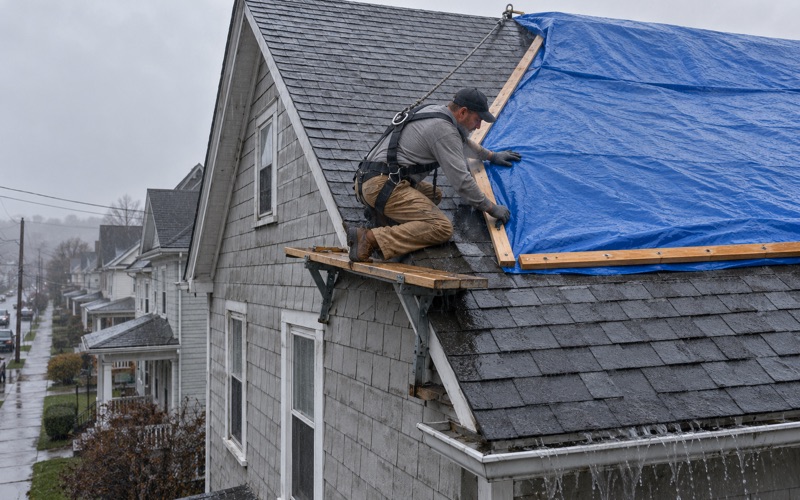
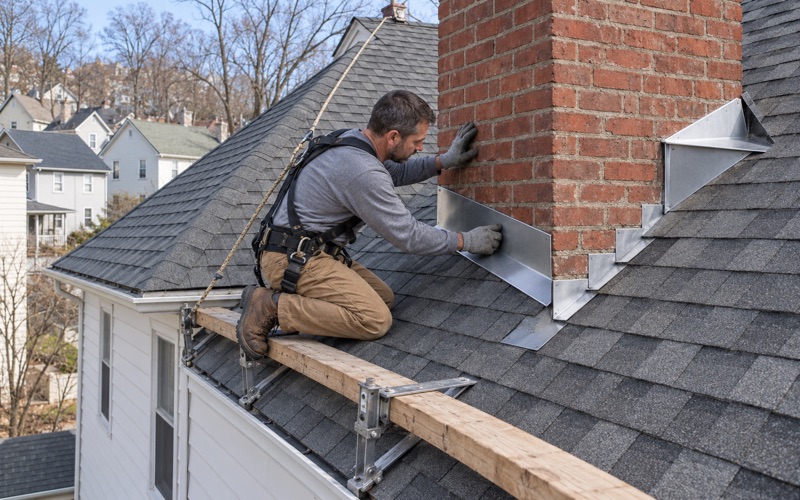
When an old roof does come off, any damaged decking is photographed and shown to the owner before it is replaced, at the per-sheet price written into the contract. Step, counter and chimney flashing is replaced with the new roof rather than reused, and the eaves get a self-adhering ice barrier sized to the overhang, because valley winters build ice dams on older homes.
Gutters, Cleanup and the Borough’s Own Rules
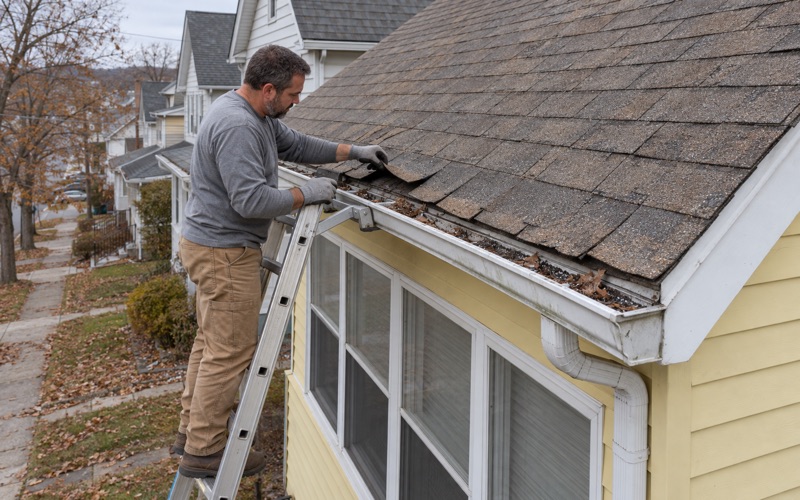
Gutters and downspouts are sized and pitched with the roof, so the water a new roof sheds has somewhere to go. At the end of each work day, the driveway, yard and gutters are cleaned, and a magnet sweep picks up stray roofing nails. Owners come home to a property that looks the way they left it.
Dickson City Borough publishes no permit list for roofing, so we confirm the borough’s current requirement for the specific house before pricing a re-roof. The Borough Building is at 901 Enterprise Street, and its staff list names a Zoning Officer. That check happens for every job, because each municipality around Scranton sets its own rule.
- 20+ Years Roofing
- Free Written Estimates
- Repair Before Replace