A roof that lets rain through is a code question in this borough, not only a repair, and that is the starting point for how Scranton Quality Roofing handles roofing in Clarks Summit. The borough holds every building to a written standard for roofs, flashing and drainage, so a stained ceiling or an overflowing gutter can draw a code official’s attention as well as the owner’s. We have worked on roofs across this region for more than 20 years, and we treat that standard as the floor for any job we take on here.
Our first visit on a leak call covers two places: the roof surface and the attic underneath it. Water rarely enters where the stain shows, so we follow it back to the point where it actually gets in before we put a price on anything. Then you get a plain answer on whether the roof can be repaired, and only after that do we talk about replacement.
This page explains what the borough’s code says about roofs, how a roof crosses into an unsafe condition, where an owner can turn when they dispute an order, and what all of it means for the detached houses that make up most of the borough.
Clarks Summit’s Property Maintenance Code Since 2012
The rules that govern a roof’s condition here come from one local ordinance and one model code. Knowing which document says what saves an owner from guessing when a letter arrives or a neighbor complains about water.
An Ordinance That Covers Every Building
The Council of Clarks Summit Borough enacted Ordinance Number 2012-02 on January 4, 2012, adopting the 2009 edition of the International Property Maintenance Code as the borough’s own Property Maintenance Code. The ordinance states that the code governs the conditions and maintenance of all property, buildings and structures. It took effect 10 days after final passage.
That wording matters because it does not single out one class of building. A house the same family has owned for decades sits under the same roof section as any other structure in the borough. When we look at a roof here, we are looking at something the borough has already said must be kept sound.
What the Borough Wrote Into the Code
The ordinance filled in the blanks the model code leaves for each town. It wrote the Borough of Clarks Summit into Section 101.1, set fees by council resolution, and inserted local dates and limits elsewhere in the text. The borough posts its copy of the 2009 code, with its own name written into that first section.
For a homeowner, the practical result is a single reference that applies to the house. The roof language did not need local edits, because it is already written in plain terms about rain, drainage and repair. We read it the same way a code officer would.
Who Handles Code Matters
Copies of the code are kept on file with the Borough Code Enforcement Officer, and the borough’s Code Enforcement page lists Building Inspection Underwriters and Northeast Inspection Consultants as its third-party agencies. Borough offices sit at 304 South State Street. The page does not lay out a separate roof rule, and the zoning permit application lists no roofing line.
Because each municipality in our service area sets its own re-roof permit position, we confirm the current requirement with the borough and its listed agencies before we price the job. That step costs nothing to the owner and keeps the schedule honest.
Looking for roofing closer to Blakely? See Blakely Roofing.
What Section 304.7 Says About Roofs, Flashing and Gutters
The roof section of the borough’s code is titled roofs and drainage. It is short, and every clause in it lines up with a part of the work we do.
Sound, Tight and Free of Defects That Admit Rain
Section 304.7 requires that the roof and flashing be sound, tight and without defects that admit rain. It also requires roof drainage adequate to prevent dampness or deterioration in the walls or the interior of the structure. A slow drip that rots a top plate or stains plaster is exactly what the code is written against.
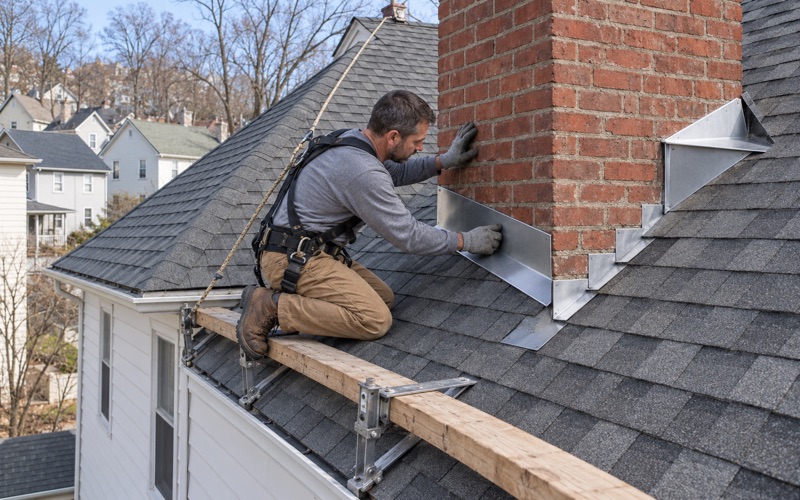
Flashing is named alongside the roof itself, and that is where many leaks start. We replace step, counter and chimney flashing with the roof instead of reusing old metal under new shingles. A new roof laid over tired flashing can still admit rain at the walls and chimney, which leaves the house out of step with the code on its first storm.
Gutters and Downspouts Kept Free From Obstructions
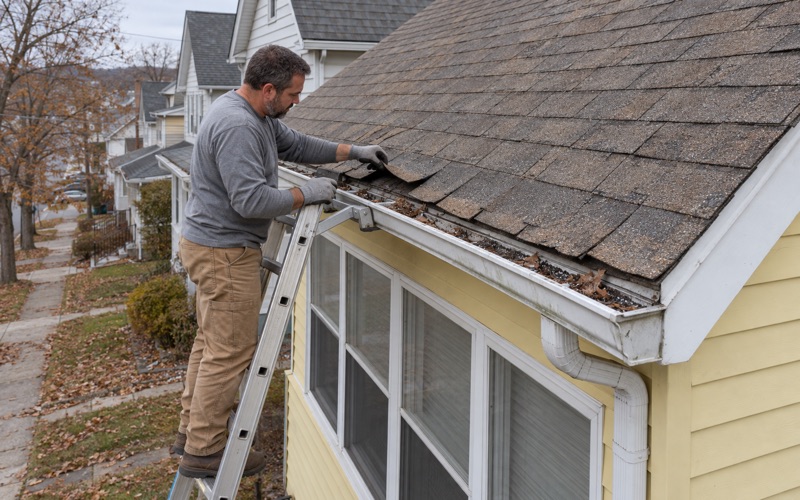
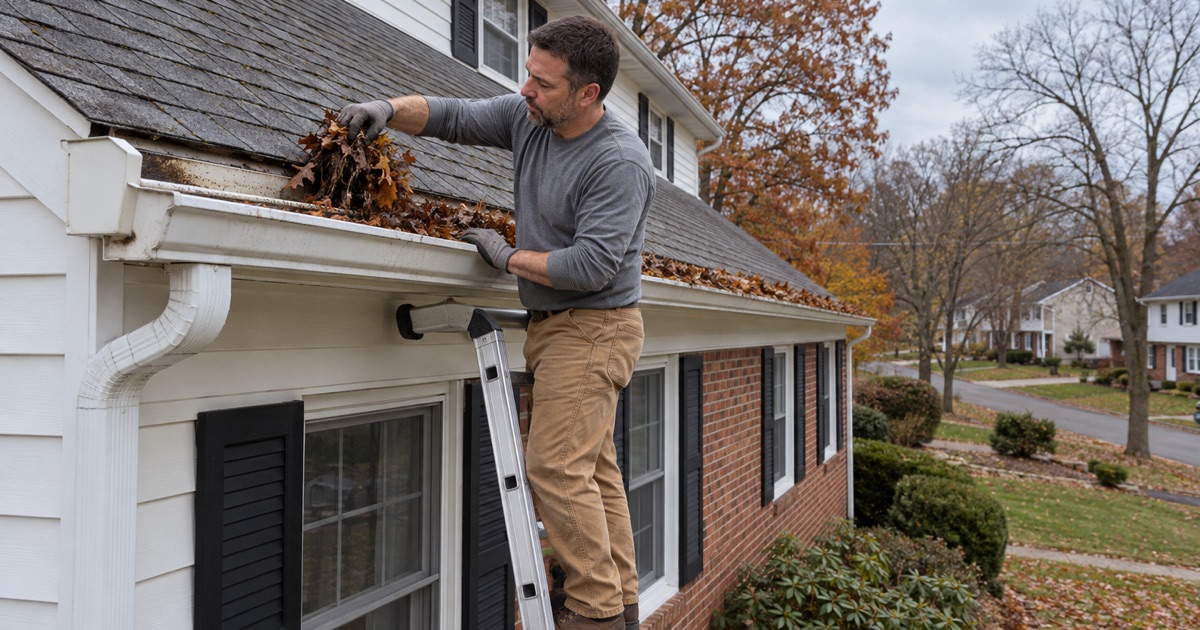
The same section says roof drains, gutters and downspouts shall be maintained in good repair and free from obstructions. In other words, a gutter packed with leaves or a downspout that has pulled away from the wall is part of the roof’s condition under this code. Drainage is not a separate subject from the shingles.
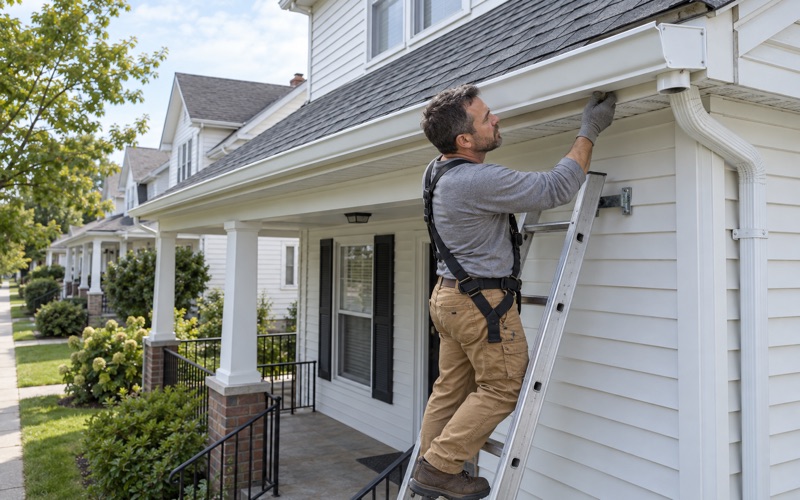
We size and pitch gutters and downspouts with the roof rather than treating them as an add-on at the end. A run that holds standing water or spills over the front edge will keep wetting the fascia and siding below it. Getting the slope and outlet count right is how a gutter stays in good repair instead of needing attention every season.
Roof Water and the Public-Nuisance Line
Section 304.7 closes with a sentence about where water goes: roof water shall not be discharged in a manner that creates a public nuisance. A downspout that empties onto a sidewalk or straight toward a neighbor’s foundation can raise a problem that has nothing to do with whether the roof leaks.
When we plan gutters on a Clarks Summit house, we look at where each downspout lets out and what sits downhill of it. Moving an outlet or adding an extension is usually a small change. It is far easier to settle during a roofing job than after a complaint.
When a Roof Becomes an Unsafe Condition, and the Right to Appeal
The code separates ordinary upkeep from conditions it treats as unsafe. Owners who disagree with an order also have a local board to hear them.
Item 8 on the Unsafe-Conditions List
Section 304.1.1 lists the exterior conditions the code considers unsafe, and item 8 is about roofs. It names roofing or roofing components with defects that admit rain, roof surfaces with inadequate drainage, and any portion of the roof framing that is not in good repair. Framing showing deterioration or fatigue, or lacking proper anchorage, also falls under that item.
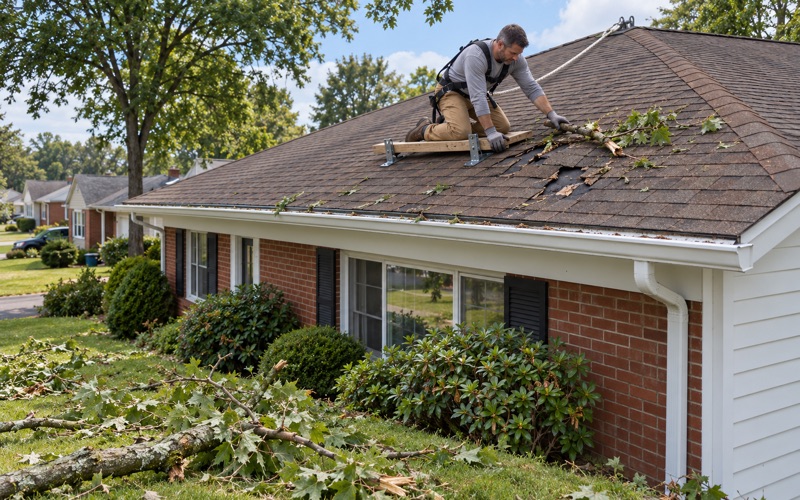
That last part reaches below the shingles to the structure. Rafters darkened by years of slow leaks or sheathing that gives underfoot are the conditions this item describes. Our attic check is often where those signs first show up, long before anything sags from the street.
Repairs Measured Against the Building Codes
The code says such unsafe conditions shall be repaired or replaced to comply with the International Building Code or the International Existing Building Code. A patch that hides damaged framing does not meet that test. The repair has to bring the roof back to sound condition.
When the old roof comes off and we find damaged decking, we photograph it and show the owner before any sheet is replaced, at a per-sheet price already written into the contract. You see what is underneath and what it costs before the work continues. Nothing about the decking is decided out of sight.
The Maintenance Code Board of Appeals
Ordinance Number 2020-01, enacted February 5, 2020, established a Maintenance Code Board of Appeals under the borough’s Property Maintenance Code. The board has at least three members appointed by council, and no borough employee may serve on it. It hears owners who dispute a code official’s order.
The same ordinance recites that the borough adopted penalties for violations of the code through a later ordinance. For an owner facing an order about a roof or gutters, the Board of Appeals is the borough’s own route to have that order reviewed. A written description of the roof’s actual condition, with photographs, is useful whether the owner complies or appeals.
Keeping a 1960s Clarks Summit House in Compliance
The code applies to every building, but the borough’s housing stock decides what that looks like on a given street. Most roofs we see here sit on detached houses of a certain age.
The Houses the Code Applies To
Census figures for Clarks Summit borough count 80.8% of housing units as detached single-family houses. About 25.1% of the stock was built during the 1960s, the largest single decade, and 30.7% predates 1950. Most homes are owner-occupied, so the owner is usually the one who reads any code letter.
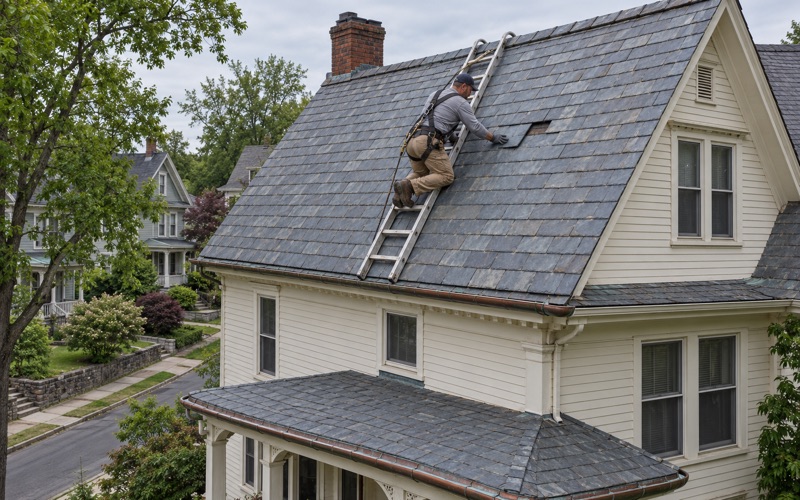
Houses from the 1960s often carry their second or third roof by now, with flashing and gutters that have been patched more than once. The older pre-1950 houses tend to have more complex rooflines, chimneys and dormers. Both groups have plenty of places where a roof can stop being sound and tight without anyone noticing from the yard.
Repair First, With the Attic in View
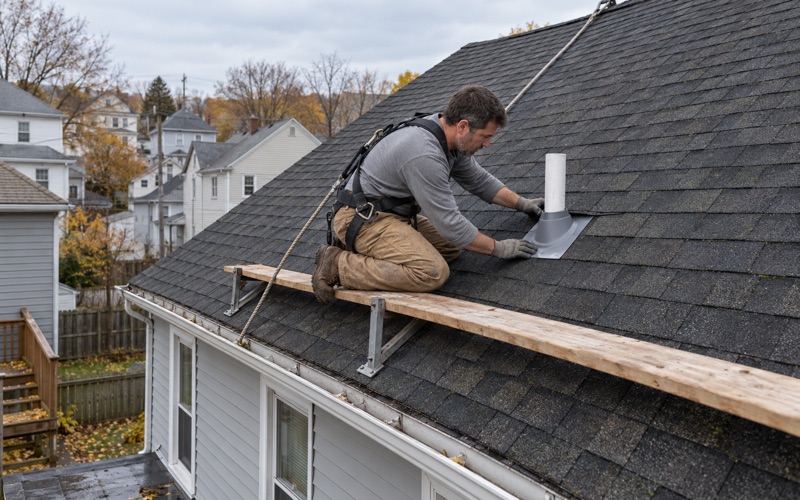
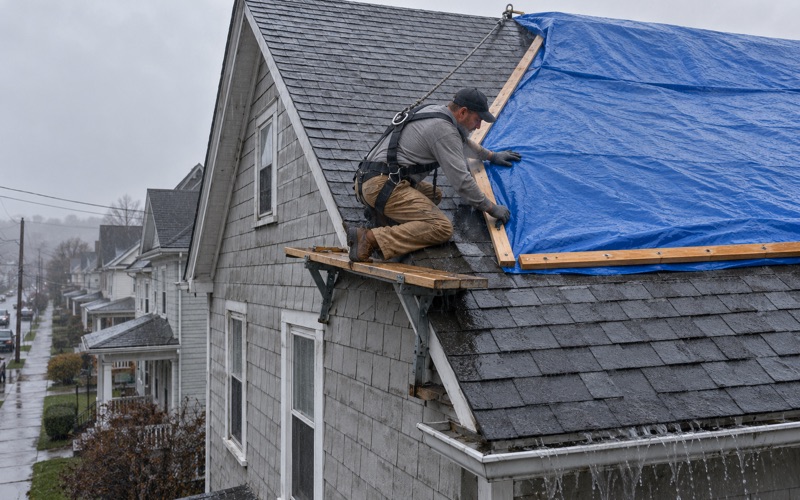
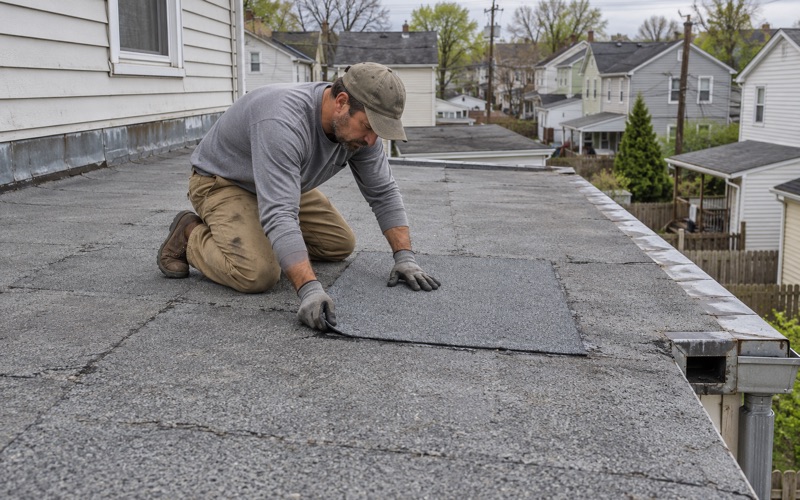
A roof that admits rain does not always need replacing to meet the code. A failed pipe boot, a lifted run of step flashing or a cracked chimney saddle can be the whole problem. We trace the water from inside the attic and tell you directly whether a repair will make the roof sound again.
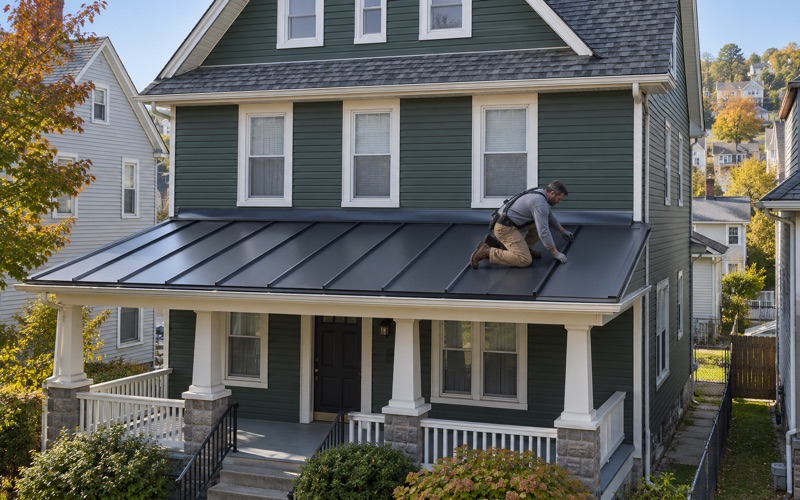
Where the decking, underlayment and flashing are worn out across the whole roof, a repair only buys time. In that case we explain why, show you what we found, and then talk about replacement. Either way, the goal is a roof that meets the borough’s roofs and drainage section rather than one that just looks better.
Written Scopes, Clean Sites
Our written scopes break tear-off, decking, underlayment, flashing, ventilation and gutters into separate lines. That lets you compare our estimate against another one item by item, and it shows exactly which parts of the code’s roof language each line addresses. Gutters appear on the same scope as the shingles because the code treats them together.
At the end of each work day we clean the driveway, the yard and the gutters, including a magnet sweep for roofing nails. On a tight Clarks Summit lot, that daily cleanup keeps debris out of the very downspouts the code says must stay free from obstructions.
- 20+ Years Roofing
- Free Written Estimates
- Repair Before Replace