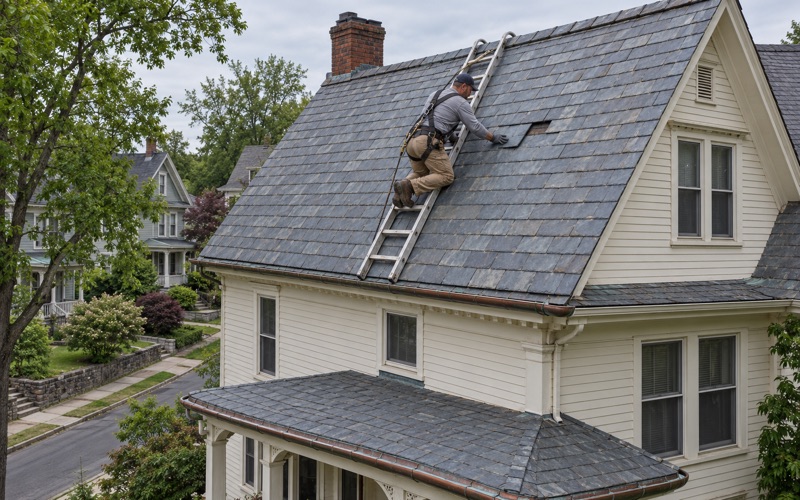
Scranton Quality Roofing brings more than 20 years of experience to roofing in Butler Township, where a growing share of the calls involve a first re-roof: the original roof a house was built with, coming to the end of its service life. That is a different job from replacing the third or fourth roof on a century-old home, and it deserves its own plan. The plan starts with an honest answer on whether the roof needs replacing yet at all.
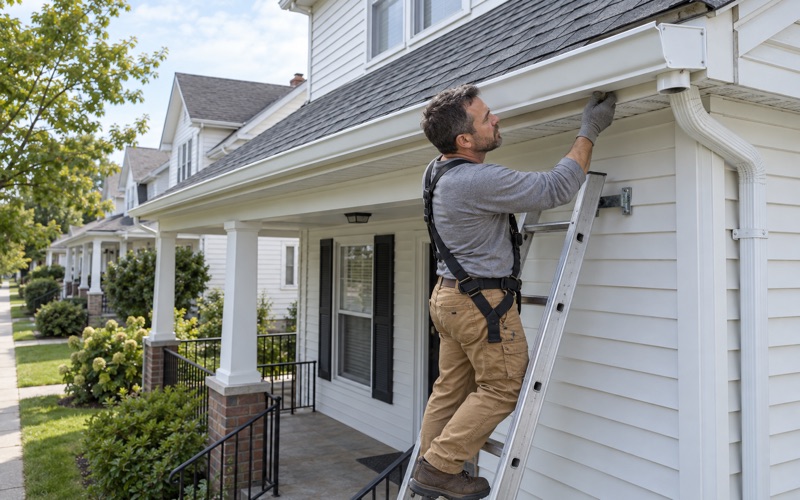
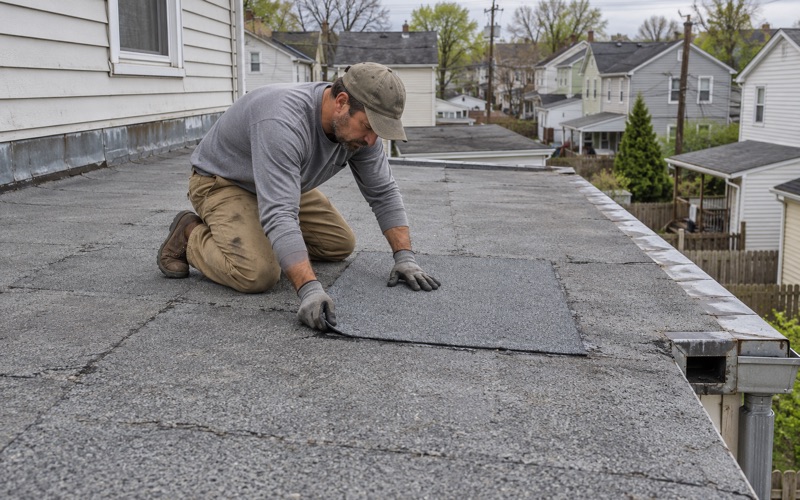
When a homeowner calls about a ceiling stain, we check the attic as well as the roof surface. Water often travels along rafters and sheathing before it shows indoors, and tracing it to the point where it actually enters is how we tell a flashing repair from a worn-out roof. You hear whether a repair will hold before anyone talks about replacement.
When replacement is the right call, we confirm the township’s own permit rule before pricing the work. Our written scope lists tear-off, decking, underlayment, flashing, ventilation and gutters as separate lines, so you can set our estimate beside another one and compare it item by item.
Sand Springs in Drums: New Homes and the Roofs They Come With
Butler Township is still building. At Sand Springs, a golf course community at 417 Long Run Road in Drums, Tuskes Homes markets three home styles: single-family homes, townhomes at The Greens at Sand Springs, and single-level twins at The Reserve at Sand Springs, with maintenance-free patio homes also offered. Listings describe the community’s 18-hole golf course and 13 ready-to-build plans with prices starting at $314,090.
The Cove at Sand Springs
The Cove at Sand Springs adds new single-family homes on homesites of about half an acre, with ranch plans that put the owners’ suite on the first floor alongside two-story designs. A ranch spreads its roof across a wide, low footprint, while a two-story plan puts a smaller roof over more wall. Those shapes change how much ventilation, eave protection and flashing a future replacement needs, so we size each one to the house rather than to a template.
Builder coverage comes first on a new roof
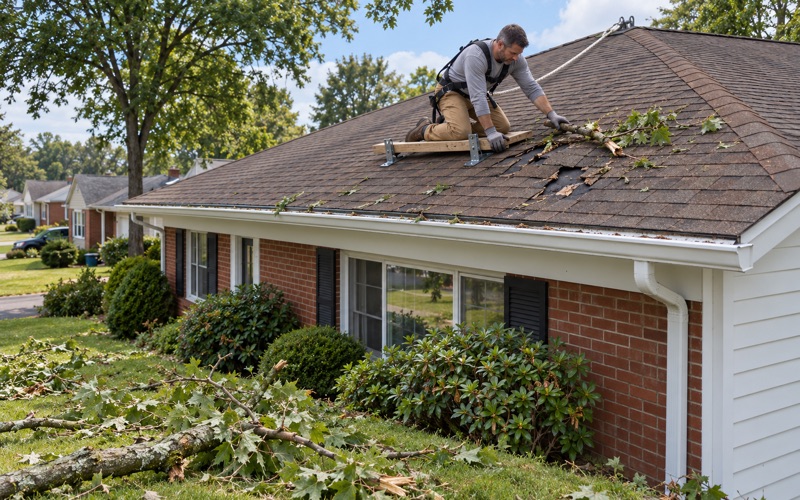
Owners of a brand-new house should begin with the paperwork that came with the closing. Any coverage on the roof is spelled out in the builder’s own documents, and we do not guess at terms we have not read. If something looks wrong on a new roof, such as a lifted shingle along a rake edge or a stain near a plumbing vent, the first call often belongs to whoever holds that coverage.
What we can offer is a clear, independent record. We inspect the roof and attic, photograph what we find and describe it in plain language, so you have something specific to bring to the party responsible. We do not work on behalf of any builder, and we will say so plainly when a problem looks like one the original installer should address first.
Keeping a young roof healthy
A new roof asks for little beyond a look after a hard storm and gutters that drain. Clear downspouts and unblocked attic vents do more for its lifespan than anything added later. When replacement eventually comes, the decisions will be the same ones the township’s older homes are facing now.
Looking for roofing closer to Dunmore? See Roofing in Dunmore.
Homes Built in the 1990s and 2000s Are Reaching a First Re-Roof
The housing numbers show why first re-roofs are coming up across Butler Township. Census estimates count 3,919 housing units in the township, and 2,031 of them, just over half, were built in 1990 or later. The 2000s were the township’s largest decade of construction, with 896 homes built between 2000 and 2009, after 715 in the 1990s.
That timing is an inference from when the houses went up, not a measured roof age, and many of these roofs still have years left. Still, a home built in the 2000s or the decade before is old enough that its original roof deserves a careful inspection. Owners occupy most of the homes here, so these are decisions households make for themselves, and they deserve clear information.
What a first tear-off reveals
Because there is usually only the original layer to remove, an overlay can look tempting, and IRC R908 does allow a second layer in some cases. We generally recommend a tear-off on a first replacement, because it is the only way to see the decking. Any damaged sheathing is photographed and shown to you before it is replaced, at the per-sheet price written into the contract, so the decking never becomes a surprise on the final invoice.
Flashing is replaced, not reused
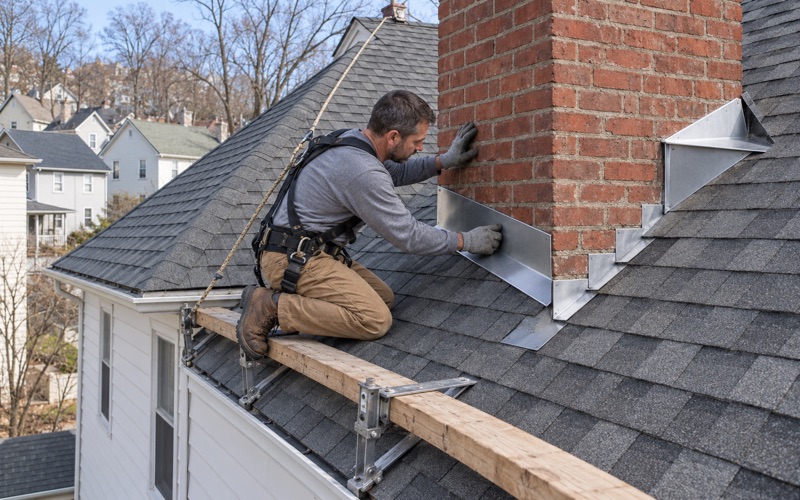
On a roof of this age, the flashing at chimneys, sidewalls and skylights is often where leaks begin. We replace step, counter and chimney flashing with the new roof instead of bending the old metal back into place under fresh shingles. Pipe boots get the same treatment, since a cracked boot is a common source of a slow leak that shows up first in the attic.
Choosing what goes back on
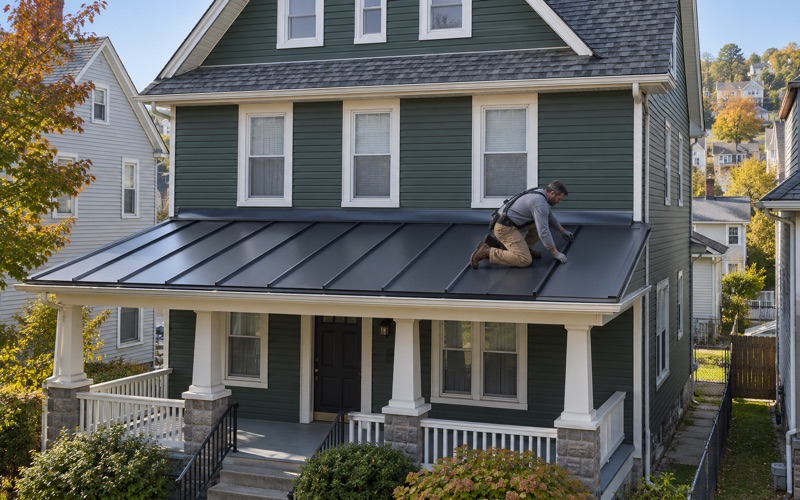
For a shingle roof, architectural (laminated) shingles such as GAF Timberline HDZ, Owens Corning Duration or CertainTeed Landmark are the usual choice, and we explain wind ratings like ASTM D3161 Class F so you know what a label means. Some owners planning to stay for decades weigh standing seam metal instead. At the eaves we install a self-adhering ice barrier under IRC R905.1.2, sized to the actual overhang of the house rather than a fixed width.
A Roof Needs a Permit in Butler Township
Butler Township sits in Luzerne County, mainly in the Sugarloaf Valley between Nescopeck Mountain and Buck Mountain, where Interstates 80 and 81 meet. The township’s code enforcement notice lists roofs among the projects that require permits, along with windows, decks, fences and plumbing. Every municipality we serve sets its own re-roof rule, and this one is stated plainly, so the permit is part of our plan before a price is quoted.
What the township’s form asks for
The township’s Repair and Alteration permit application asks for a Pennsylvania state registration number and, separately, for a Butler Township contractor’s license number. It also states that the permit expires one year after its approval date, which matters when a job is booked well in advance. Repairs to commercial or public buildings additionally need drawings approved by the Pennsylvania Department of Labor and Industry.
The state number on that form refers to registration under the Pennsylvania Home Improvement Consumer Protection Act, filed with the Attorney General. Pennsylvania has no statewide roofing license, so the township’s own license is a local requirement, and we confirm what the township needs for each job before work starts.
Who reviews the work
Butler Township opted in to enforcing the Pennsylvania Uniform Construction Code in 2004. Its building code official is Ralph ‘Sonny’ Kelchner, reached through the township office at 83 Corporate Drive in Drums, and the township also accepts applications through an online permit portal.
Contracts that follow state law
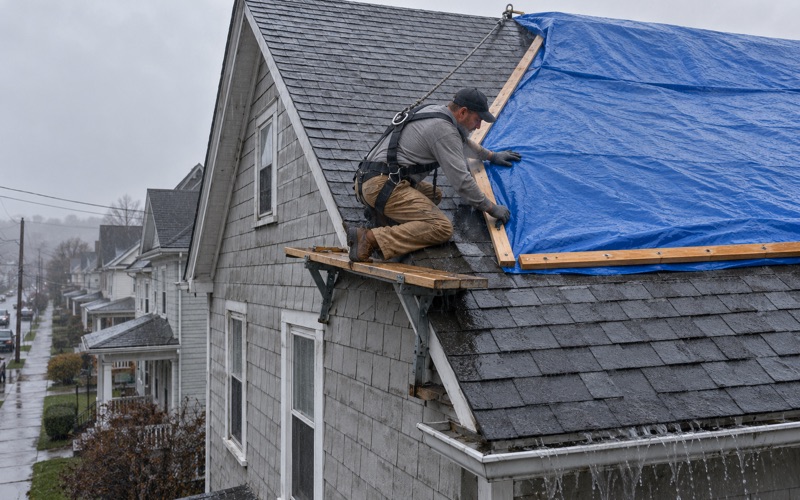
Our contracts follow Pennsylvania’s home improvement law. Each one carries the three-business-day cancellation notice, and deposits stay within the one-third limit that applies to contracts over $5,000. If a storm damages your roof, we photograph and document it for your own insurance claim and will meet the adjuster on site when you ask, without negotiating the claim for you.
Townhomes, Twins and Patio Homes: Who Owns the Roof
Most of Butler Township’s housing is detached, 3,165 of its 3,919 units, but 344 units are single-family attached homes, and that is where shared roofs come in. The townhomes at The Greens and the twins at The Reserve are newer examples of that form.
Read the community documents first
On an attached home, the roof over your unit may be your responsibility, an association’s, or split between the two. Pennsylvania’s Uniform Planned Community Act and Uniform Condominium Act frame how those documents work, but the answer for any one home sits in its own declaration and rules. We have not read any Sand Springs governing documents, so we ask owners to check theirs before we schedule work, and a maintenance-free label on a patio home is worth confirming in writing for what it covers on the roof.
Tying into a shared roofline
Where two units share a roof, the new roofing has to meet the neighbor’s at the party wall without leaving a seam that holds water. We keep the flashing continuous at that joint and line up the drip edge and ridge vent so both halves shed water and breathe as one roof. When both owners replace together, we plan one job; when only one does, we leave the neighbor’s side sealed and sound.
Gutters and cleanup on close lots
Attached homes often share downspout runs, so gutters and downspouts are sized and pitched along with the roof rather than treated as an afterthought. At the end of each work day we clean the driveway, yard and gutters and run a magnet sweep for roofing nails. That daily cleanup matters even more where a neighbor’s driveway sits a few feet from yours.
- 20+ Years Roofing
- Free Written Estimates
- Repair Before Replace