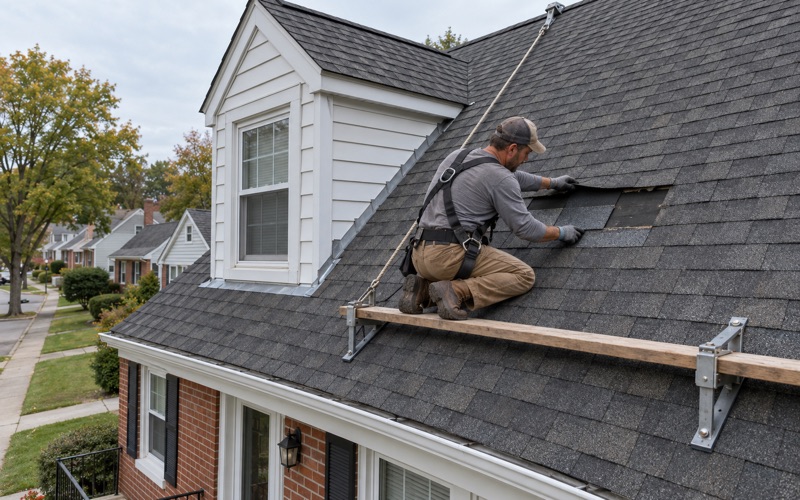
Roofing in Blakely runs on a schedule the borough put in writing, and Scranton Quality Roofing builds every job here around it. Ordinance No. 8-2023 sets the hours when construction and repair noise on buildings can become an offense, and an air-nailer re-roof is exactly the kind of work it describes. After more than 20 years on Lackawanna Valley roofs, we treat that clock as part of the scope rather than an afterthought.
The planning starts before anything is priced. We confirm the rule for the house’s own municipality, look in the attic as well as on the roof for every leak, and tell you plainly whether a repair will hold before replacement comes up. When an old roof does come off, our written scope lists tear-off, decking, underlayment, flashing, ventilation and gutters as separate lines you can compare.
This page covers what the ordinance means for the hours a crew works, why Sunday starts later, and how the borough’s older housing changes the work itself. It closes with who handles building code questions locally and what we confirm with that office before a crew ever arrives.
Blakely’s 2023 Noise Ordinance and Your Roofing Schedule
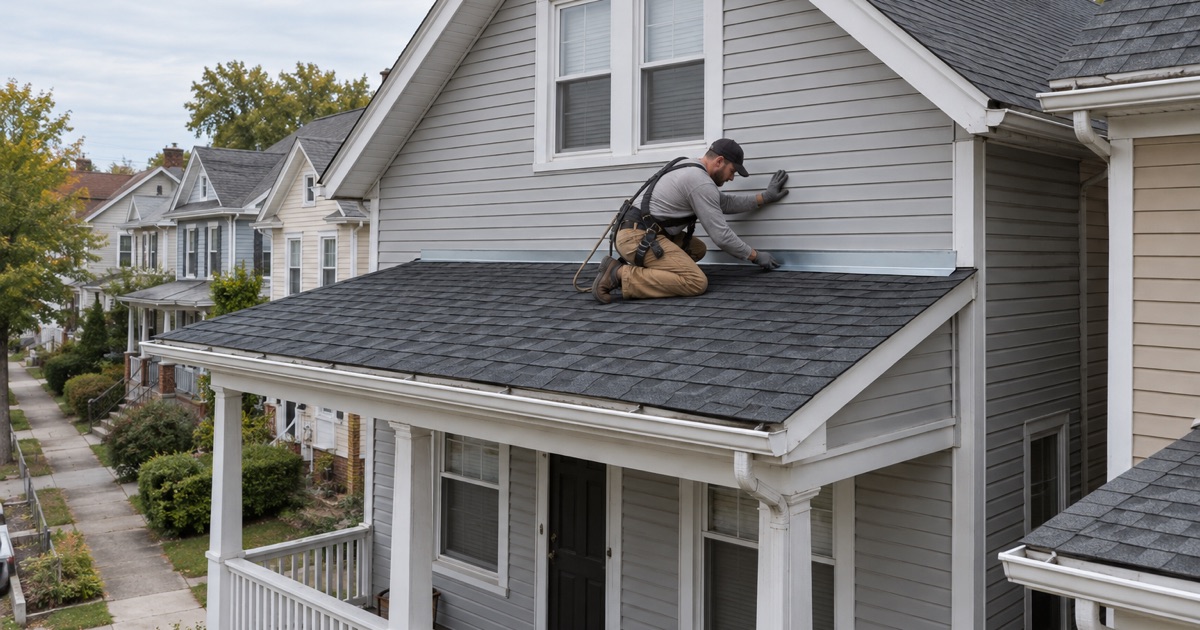
The Borough of Blakely adopted its Noise Control Ordinance on October 16, 2023, amending Section 809 of its zoning ordinance. It addresses construction, repair, alteration and demolition work on buildings by time of day, and it attaches a fine. For a homeowner, the practical result is a predictable working day that we plan around from the first phone call.
What the construction noise hours say
Under Section 3, construction noise is unlawful between 7:00 p.m. and 7:00 a.m. the following day on weekdays and Saturdays when it creates a noise disturbance. The text also covers the stretch from Saturday evening until 9:00 a.m. on Sunday. That qualifier matters, and we quote it rather than paraphrase it into a flat ban.
We read the condition carefully because it is easy to overstate. The ordinance ties the offense to a noise disturbance during those hours, so we keep loud roofing work inside the daytime window and avoid the question entirely. Our crews wrap up the noisy part of each day well before the evening limit on any Blakely job.
Power saws and drills have their own limit
A separate clause covers power saws, sanders, drills, grinders and similar tools used outdoors. Those are restricted overnight from 9:00 p.m. on weekdays and Saturdays, and from Saturday night until Sunday morning, again where they create a noise disturbance. On a roofing job, that means the circular saw cutting decking and the drill setting fasteners at the ridge.
In practice the tighter construction window governs our day, so the saw limit rarely changes the plan. Still, it shapes cleanup and small follow-up tasks, such as trimming a fascia board or cutting drip edge for a rake. We finish those during working hours rather than letting them slide into a long summer evening when the light still looks good.
The $300 fine and why each day counts
Section 5 sets the penalty for a violation at $300. The ordinance adds that a separate and distinct offense is committed each day, so a multi-day tear-off that ignored the hours could stack penalties quickly. That exposure attaches to work done at your property, which is why we take the schedule seriously.
We would rather spread a re-roof across an extra day than push a crew into an early start that wakes the neighbors. A full replacement can easily run more than one working day, so the daily start and stop times are set before materials are ordered. You will know them before the first shingle comes off.
Looking for roofing closer to Duryea? See Roofing in Duryea.
Compressors, Nail Guns and Sunday Starts
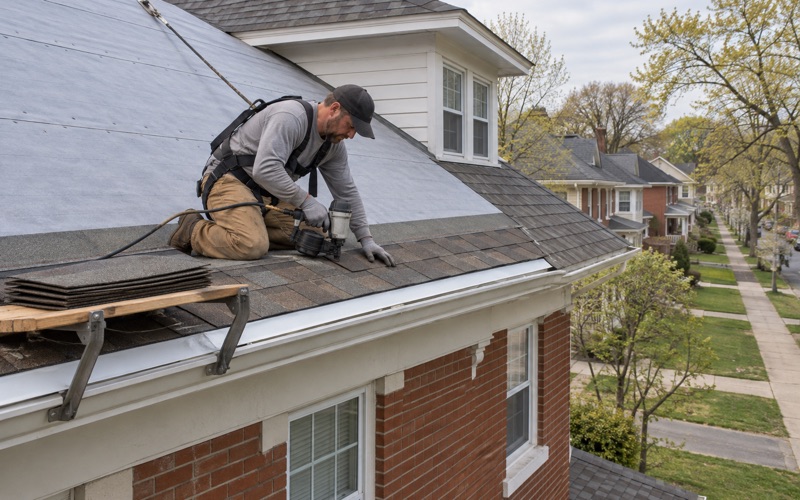
Most modern roofing runs on air. Pneumatic nailers fed by a compressor set the shingles, and that equipment is named directly in the borough’s exemption language. Knowing those exemption hours is how we schedule a full tear-off in Blakely without guesswork.
The daytime window for compressors
Section 4 exempts heavy construction equipment, including compressors and pneumatic power equipment, when it runs from 7:00 a.m. to 7:00 p.m. on weekdays and Saturdays. The exemption also requires the equipment to operate within manufacturer specifications with its noise-reducing parts intact. That is the window a nail-gun crew works inside.
We keep our compressors maintained, with their mufflers and housings in place, for exactly that reason. A compressor that rattles because a shroud is missing is louder for the neighbors and falls outside the conditions the exemption describes. Equipment checks happen at our yard, not on your driveway first thing in the morning.
Sunday work begins at 9:00 a.m.
Sundays are treated differently. The exemption for compressors and pneumatic tools runs from 9:00 a.m. to 7:00 p.m. on Sundays, two hours later than the rest of the week. For a Blakely homeowner hoping to fit a repair into a weekend, that later start is the number to remember.
If a Sunday repair makes sense after a week of rain, the crew plans the morning so air tools start no earlier than the exemption allows. Ladders, tarps and material staging can be handled quietly without running a compressor. That keeps a weekend repair from turning into a complaint on a street of closely spaced houses.
What the ordinance says about emergencies
The ordinance defines emergency work as work alleviating or resolving an emergency, and it lists property damage which demands immediate action as one. The text we read does not name emergency roofing as exempt from the hour limits. We will not tell you otherwise, because the borough has not said so in the sources we checked.
If a storm tears shingles loose after hours, call us and describe what you see. We will talk through what can safely wait for the daytime window and confirm the borough’s position before any after-hours work. We also photograph and write up storm damage for your own insurance claim, and we will meet the adjuster on site when asked, without negotiating the claim.
Pre-1940 Homes and Two-Unit Houses in Blakely and Peckville
The borough was created in 1867, includes the village of Peckville, and has the Lackawanna River running through it. Census estimates count 1,456 of its 3,337 homes as built during 1939 or earlier, along with 590 buildings holding two units. Those numbers shape the work as much as the clock does.
Older framing and board decking
A house built before 1940 often carries board sheathing rather than plywood, and some carry more than one layer of old roofing. On these homes the tear-off tells us what the decking really looks like. We would rather find that out with you than guess at it from the driveway.
Any damaged decking found once the old roof is off is photographed and shown to you before it is replaced. The contract sets a per-sheet price in advance, so a soft board near the eaves never becomes an open-ended charge. On an older Peckville home, that single step often decides the final cost.
Two-unit buildings and shared roofs
A two-unit building can be a side-by-side house where one roof covers two households. Census figures show far more of those units rented than owner-occupied, which often puts an owner who lives elsewhere in charge of the roof. Coordinating access, parking and the daily schedule for both sides is part of the job.
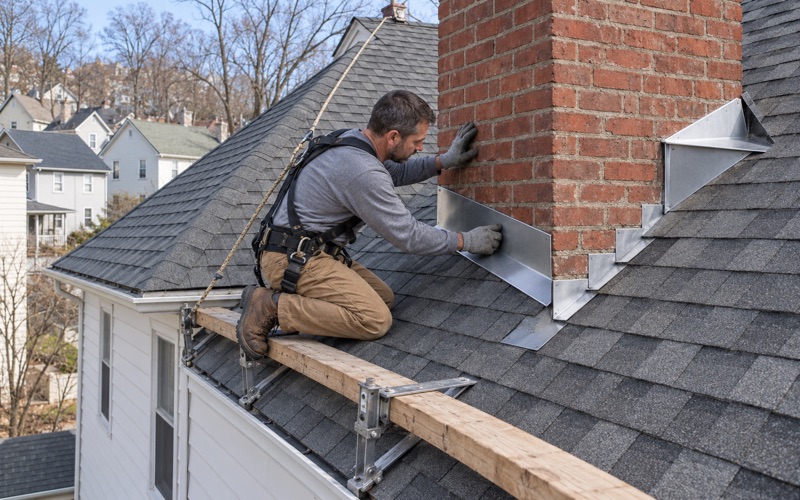
On a shared roof, the line between the two halves often runs past flashing, a dividing wall or a chimney. We replace step, counter and chimney flashing along with the roof rather than reusing it under new material. That matters most where one side was patched years ago and the other side was not.
Slate, chimneys and attic checks
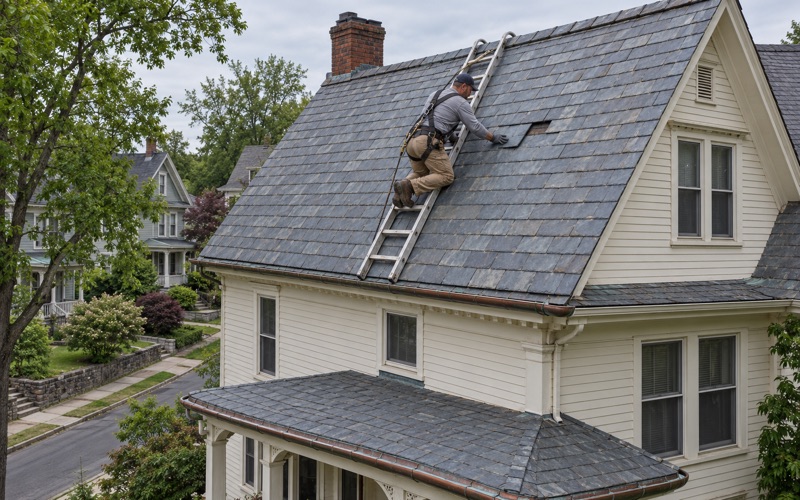
If an older Blakely house still wears slate and the slate itself is sound, we repair it piece by piece with copper nails and slate hooks. Tearing off a sound slate roof is not the first suggestion we make. A straight answer on repair versus replacement always comes first.
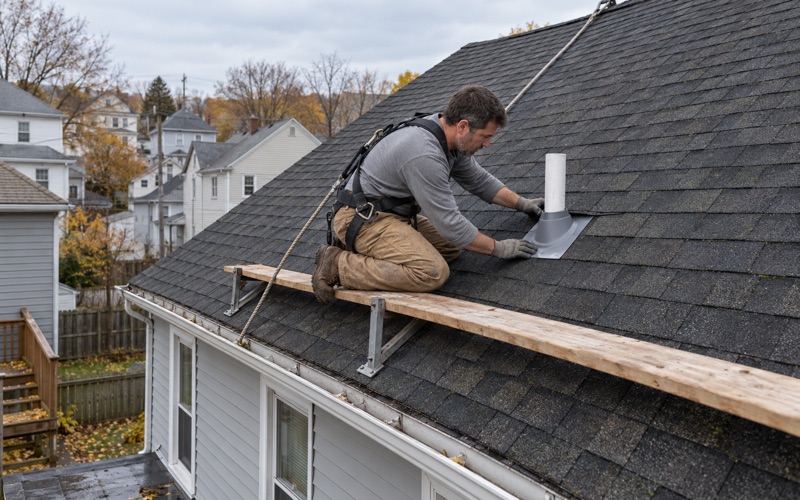
Old chimneys and dormers are common leak points on houses of this age. Every leak call includes a look in the attic as well as on the roof, so we trace the water to where it actually enters before pricing anything. On these homes the ceiling stain is often well away from the real opening.
Permits, the Code Official and Vacant Properties
Noise hours are only one part of the local rules. Blakely enforces the state building code through its own arrangement, and it runs a separate vacant property program. We check both before a job is priced so nothing surprises you after the contract is signed.
Who handles building code questions
The state’s municipal election list shows Blakely opted in to Uniform Construction Code enforcement on July 5, 2004, with no amendments. The listed building code official can be reached at (570) 280-2111. The Blakely Borough Permit Office answers at (570) 383-3343.
We did not find a published re-roof permit stance in the sources we read. So we call before every Blakely job and confirm the rule for that address rather than assuming what applies. The answer goes into the written scope, where you can see it alongside the price.
Vacant properties and Ordinance 5 of 2023
Blakely also adopted Ordinance 5 of 2023, which requires vacant properties to file an application with the borough. The Permit Office lists a $200 fee per property for new, renewal and transfer applications, and the form records a date of inspection. Its text states that an unrectified violation will be corrected by the borough and the cost liened against the property.
We have not seen a roof clause in that ordinance, so we do not claim one. If you own a vacant house in Blakely or Peckville and the borough has raised a condition with you, bring the notice when we inspect. We will look at the roof and tell you plainly what it needs.
Forecasts, gutters and a clean site
Blakely sits in National Weather Service forecast zone PAZ044, issued by the Binghamton office, and that is the forecast we check before opening a roof. A tear-off should never start under a forecast that leaves no room to dry the house in before the evening limit. That is one more place where the borough’s clock and the sky work together.
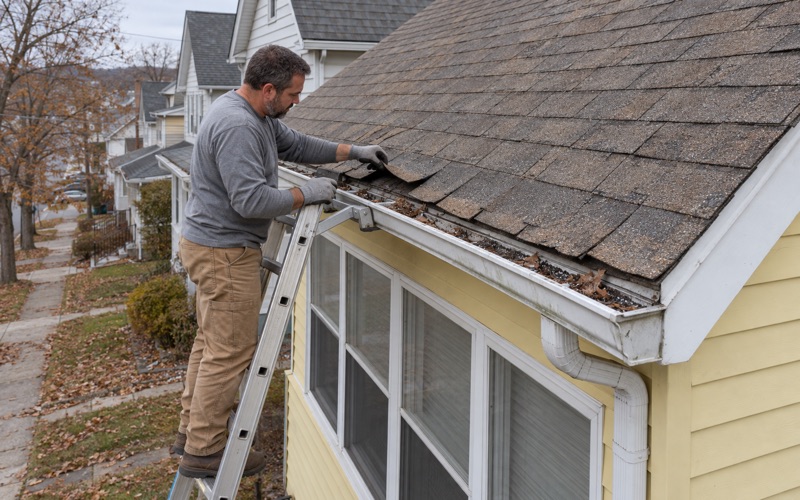
Eaves get a self-adhering ice barrier sized to the house’s overhang, and gutters and downspouts are sized and pitched with the roof rather than added later. At the end of each working day, the crew cleans the driveway, yard and gutters. That cleanup includes a magnet sweep for roofing nails before anyone leaves.
- 20+ Years Roofing
- Free Written Estimates
- Repair Before Replace